Seven new substances have been added to the U.S. Department of Health and Human Services’ list of cancer-causing agents. Six of these substances are listed as “known” to cause can…
Source: 7 carcinogens added to the list

Affordable in home care | starts at $28 per hr
Seven new substances have been added to the U.S. Department of Health and Human Services’ list of cancer-causing agents. Six of these substances are listed as “known” to cause can…
Source: 7 carcinogens added to the list
Seven new substances have been added to the U.S. Department of Health and Human Services’ list of cancer-causing agents.
Six of these substances are listed as “known” to cause cancer, while one is “reasonably anticipated to be a human carcinogen,” according to a statement today (Nov. 3) from the National Institutes of Health (NIH).
Five of the new substances on the list are viruses, and all of those are among the “known carcinogens,” the NIH says. The viruses include human T-cell lymphotropic virus type 1, Epstein-Barr virus, Kaposi sarcoma-associated herpesvirus, Merkel cell polyomavirus and human immunodeficiency virus type 1 (HIV-1). [10 Do’s and Don’ts to Reduce Your Risk of Cancer]
Together, the viruses have been linked to more than 20 different types of cancer, according to the NIH. For example, HIV-1, which is the virus that causes acquired immune deficiency syndrome, or AIDS, weakens the immune system and increases a person’s risk of infection from other cancer-causing viruses, the NIH says. There is “sufficient evidence” that HIV-1 can lead to cervical cancer, conjunctival eye cancer and non-melanoma skin cancer, among others, according to the NIH.
“Approximately 12 percent of human cancers worldwide may be attributed to viruses,” Linda Birnbaum, the director of the National Institute of Environmental Health Sciences and the National Toxicology Program, said in the statement. However, there are currently no vaccines available for the five viruses that have been added to list, Birnbaum said. Because of this, prevention strategies to avoid these viruses are “even more critical,” she said.
A chemical called trichloroethylene was also added to the list as a “known carcinogen,” according to the NIH. Trichloroethylene is an industrial solvent used to make hydrofluorocarbons, which are in a number of appliances and products. It’s also used by the military to degrease metal, the NIH says. Studies have shown a cause-and-effect link between the chemical and kidney cancer.
The other substance added to the list was the element cobalt. Cobalt is a naturally occurring metal, and can be found in rechargeable batteries and blue pigmented glass, tiles and ceramics, according to the NIH. It may also be used in some medical devices and solar panels.
Cobalt is “reasonably anticipated to be a human carcinogen,” the NIH says. This means that although studies have not shown a cause-and-effect link between cobalt and cancer in humans, the element has been shown to cause cancer in animals, and lab studies have demonstrated a possible mechanism for how this metal could cause cancer.
Cobalt is thought to be linked to cancer because it can release charged particles called ions in the body. These particles may damage a person’s DNA and lead to cancer, the NIH says.
Cobalt is also found in vitamin B12; however, this form of cobalt does not release ions and is therefore not considered to be linked to cancer, according to the NIH.
The NIH noted in the statement that inclusion in the report “does not by itself mean that a substance or a virus will cause cancer.” Many factors, including how susceptible a person is to the substance, how much of it they are exposed to and for how long also play a role, according to the statement.
The seven substances bring the total list of carcinogens on the list to 248, according to the NIH. This is the 14thtime the agency has issued its Report on Carcinogens.


Hi, My name is Connie Dello Buono, born and raised in the Philippines. I have been in the bay area since 1992, has two children both born at home with midwives in San Jose California, wrote an eboo…
Source: About
How do we know where we are? How can we find the way from one place to another? And how can we store this information in such a way that we can immediately find the way the next time we trace the s…
Source: The Brain’s GPS Tells You Where You Are and Where You’ve Come from
How do we know where we are? How can we find the way from one place to another? And how can we store this information in such a way that we can immediately find the way the next time we trace the same path? This year’s Nobel Laureates have discovered a positioning system, an “inner GPS” in the brain that makes it possible to orient ourselves in space, demonstrating a cellular basis for higher cognitive function.
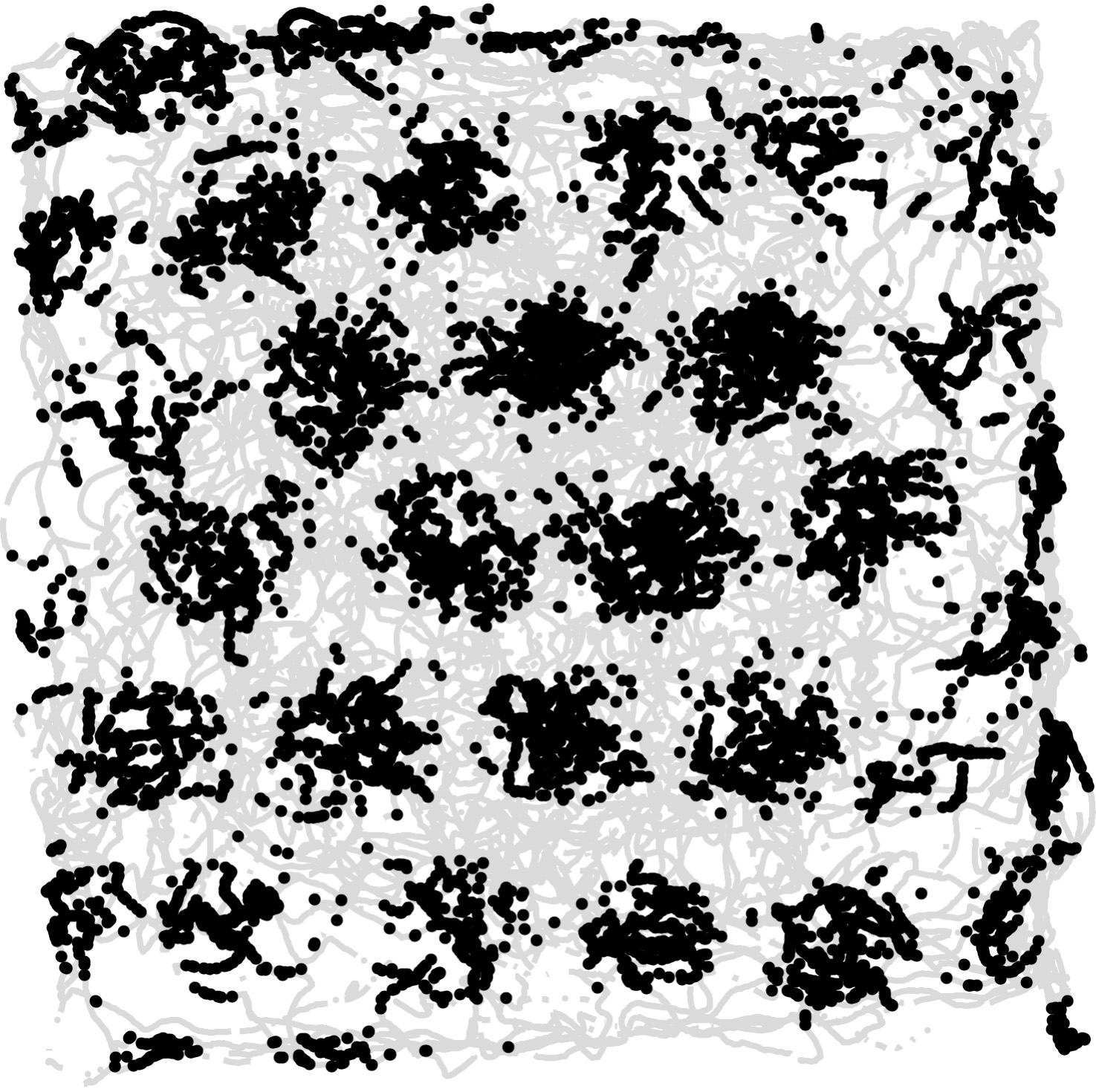
In mammals, great insights have been obtained for early stages of sensory systems where signals can be followed through hierarchical networks from receptors to primary sensory cortices. But how the mammalian brain generates its own codes, deep in the association cortices, has remained deeply mysterious. Yet this is where the understanding of subjective experience begins. A path was opened in this terra incognita in 2005 when the Mosers and their students discovered grid cells – the metric of the brain’s map for space.
Grid cells are place-modulated neurons whose firing fields define a triangular array across the entire environment.
These cells are thought to form an essential part of the brain’s coordinate system for metric navigation. Because their matrix-like firing is generated in the brain, far away from specific sensory inputs, grid cells provide unprecedented access to algorithms of neural coding in high-end cortices.
The simplicity and the crystal-like structure of the grid cells offers opportunities for understanding, maybe for the first time, a mammalian behaviour at the level of neuronal network computation.
In 1971, John O’Keefe discovered the first component of this positioning system. He found that a type of nerve cell in an area of the brain called the hippocampus that was always activated when a rat was at a certain place in a room. Other nerve cells were activated when the rat was at other places. O’Keefe concluded that these “place cells” formed a map of the room.
More than three decades later, in 2005, May-Britt and Edvard Moser discovered another key component of the brain’s positioning system. They identified another type of nerve cell, which they called “grid cells”, that generate a coordinate system and allow for precise positioning and pathfinding. Their subsequent research showed how place and grid cells make it possible to determine position and to navigate.
The discoveries of John O’Keefe, May-Britt Moser and Edvard Moser have solved a problem that has occupied philosophers and scientists for centuries – how does the brain create a map of the space surrounding us and how can we navigate our way through a complex environment?
The sense of place and the ability to navigate are fundamental to our existence. The sense of place gives a perception of position in the environment. During navigation, it is interlinked with a sense of distance that is based on motion and knowledge of previous positions.
Questions about place and navigation have engaged philosophers and scientists for a long time. More than 200 years ago, the German philosopher Immanuel Kant argued that some mental abilities exist as a priori knowledge, independent of experience. He considered the concept of space as an inbuilt principle of the mind, one through which the world is and must be perceived. With the advent of behavioural psychology in the mid-20th century, these questions could be addressed experimentally. When Edward Tolman examined rats moving through labyrinths, he found that they could learn how to navigate, and proposed that a “cognitive map” formed in the brain allowed them to find their way. But questions still lingered – how would such a map be represented in the brain?
John O’Keefe was fascinated by the problem of how the brain controls behaviour and decided, in the late 1960s, to attack this question with neurophysiological methods. When recording signals from individual nerve cells in a part of the brain called the hippocampus, in rats moving freely in a room, O’Keefe discovered that certain nerve cells were activated when the animal assumed a particular place in the environment (Figure 1). He could demonstrate that these “place cells” were not merely registering visual input, but were building up an inner map of the environment. O’Keefe concluded that the hippocampus generates numerous maps, represented by the collective activity of place cells that are activated in different environments. Therefore, the memory of an environment can be stored as a specific combination of place cell activities in the hippocampus.
May-Britt and Edvard Moser were mapping the connections to the hippocampus in rats moving in a room when they discovered an astonishing pattern of activity in a nearby part of the brain called the entorhinal cortex. Here, certain cells were activated when the rat passed multiple locations arranged in a hexagonal grid (Figure 2). Each of these cells was activated in a unique spatial pattern and collectively these “grid cells” constitute a coordinate system that allows for spatial navigation. Together with other cells of the entorhinal cortex that recognize the direction of the head and the border of the room, they form circuits with the place cells in the hippocampus. This circuitry constitutes a comprehensive positioning system, an inner GPS, in the brain (Figure 3).
Recent investigations with brain imaging techniques, as well as studies of patients undergoing neurosurgery, have provided evidence that place and grid cells exist also in humans. In patients with Alzheimer’s disease, the hippocampus and entorhinal cortex are frequently affected at an early stage, and these individuals often lose their way and cannot recognize the environment. Knowledge about the brain’s positioning system may, therefore, help us understand the mechanism underpinning the devastating spatial memory loss that affects people with this disease.
The discovery of the brain’s positioning system represents a paradigm shift in our understanding of how ensembles of specialized cells work together to execute higher cognitive functions. It has opened new avenues for understanding other cognitive processes, such as memory, thinking and planning.
How these two scientists discovered the brain GPS
We started recording in this region, and got invaluable help from Menno Witter, a neuroanatomist who was then located at the Free University of Amsterdam, but later moved to become a part of the Kavli Institute in Trondheim. Witter had by that time worked out much of the connectivity between the entorhinal cortex and hippocampus and helped us in the delicate task of guiding electrodes to the right spot. By 2002, the research group had grown and we now had an outstanding team of students working side by side with us in the lab and on the computer.
The long road to realization
Sometimes scientific discoveries are portrayed as “Eureka” moments, where the researcher suddenly understands the significance of what he or she has found. In our case, it didn’t quite work that way: We didn’t immediately realize that the cells we recorded from were grid cells. At first we noticed that many entorhinal cells spiked every time a rat went to a particular spot, like the place cells in the hippocampus. However, each cell had multiple firing locations and those firing locations formed a peculiarly regular pattern – a hexagonal grid – much like the arrangement of marbles in a Chinese checker board. Every cell did it this way, with actual firing locations differing between cells. The cells were organized topographically in the sense that the size of and distance between grid fields increased from dorsal to ventral. Moreover, cells maintained firing relationships from one environment to the next, suggesting that we were on track of a universal type of spatial map – a map whose activity pattern in many ways disregarded the fine details of the environment. With their strict regularity, the cells had the metrics of the spatial map that had not been found in the hippocampus.
Grid cells and beyond
These discoveries were published in a series of papers that began in 2004, only two years after we published the hippocampal disconnection study. The grid pattern itself was published in 2005. Since then we have continued to explore how grid cells operate, how they are generated, and how they interact with other spatial cell types. There is still a lot to find out. Grid cells have helped us better understand the neural representation of space, but they also provide a window into some of the innermost workings of the brain. Perhaps the most fascinating thing is that the hexagonal pattern is generated by the cortex itself. There is no grid pattern in the outside world – this is made by the brain alone. Because the pattern is so reliable and so regular, it may put us on the track of understanding the fundamental computations of the cortex.
By Ferris Jabr Matthew Brien has struggled with overeating for the past 20 years. At age 24, he stood at 5′10′′ and weighed a trim 135 pounds. Today the licensed massage therapist tips the scales a…
By Ferris Jabr
Matthew Brien has struggled with overeating for the past 20 years. At age 24, he stood at 5′10′′ and weighed a trim 135 pounds. Today the licensed massage therapist tips the scales at 230 pounds and finds it particularly difficult to resist bread, pasta, soda, cookies and ice cream—especially those dense pints stuffed with almonds and chocolate chunks. He has tried various weight-loss programs that limit food portions, but he can never keep it up for long. “It’s almost subconscious,” he says. “Dinner is done? Okay, I am going to have dessert. Maybe someone else can have just two scoops of ice cream, but I am going to have the whole damn [container]. I can’t shut those feelings down.”
Eating for the sake of pleasure, rather than survival, is nothing new. But only in the past several years have researchers come to understand deeply how certain foods—particularly fats and sweets—actually change brain chemistry in a way that drives some people to overconsume.
Scientists have a relatively new name for such cravings: hedonic hunger, a powerful desire for food in the absence of any need for it; the yearning we experience when our stomach is full but our brain is still ravenous. And a growing number of experts now argue that hedonic hunger is one of the primary contributors to surging obesity rates in developed countries worldwide, particularly in the U.S., where scrumptious desserts and mouthwatering junk foods are cheap and plentiful.
“Shifting the focus to pleasure” is a new approach to understanding hunger and weight gain, says Michael Lowe, a clinical psychologist at Drexel University who coined the term “hedonic hunger” in 2007. “A lot of overeating, maybe all of the eating people do beyond their energy needs, is based on consuming some of our most palatable foods. And I think this approach has already had an influence on obesity treatment.” Determining whether an individual’s obesity arises primarily from emotional cravings as opposed to an innate flaw in the body’s ability to burn up calories, Lowe says, helps doctors choose the most appropriate medications and behavioral interventions for treatment.
Traditionally researchers concerned with hunger and weight regulation have focused on so-called metabolic or homeostatic hunger, which is driven by physiological necessity and is most commonly identified with the rumblings of an empty stomach. When we start dipping into our stores of energy in the course of 24 hours or when we drop below our typical body weight, a complex network of hormones and neural pathways in the brain ramps up our feelings of hunger. When we eat our fill or put on excess pounds, the same hormonal system and brain circuits tend to stifle our appetite.
By the 1980s scientists had worked out the major hormones and neural connections responsible for metabolic hunger. They discovered that it is largely regulated by the hypothalamus, a region of the brain that contains nerve cells that both trigger the production of and are exquisitely sensitive to a suite of disparate hormones.
As with so many biological mechanisms, these chemical signals form an interlocking web of checks and balances. Whenever people eat more calories than they immediately need, some of the excess is stored in fat cells found throughout the body. Once these cells begin to grow in size, they start churning out higher levels of a hormone called leptin, which travels through the blood to the brain, telling the hypothalamus to send out yet another flurry of hormones that reduce appetite and increase cellular activity to burn off the extra calories—bringing everything back into balance.
Similarly, whenever cells in the stomach and intestine detect the presence of food, they secrete various hormones, such as cholecystokinin and peptide YY, which work to suppress hunger either by journeying to the hypothalamus or by acting directly on the vagus nerve, a long, meandering bundle of nerve cells that link the brain, heart and gut. In contrast, ghrelin, a hormone released from the stomach when it is empty and blood glucose (sugar) levels are low, has the opposite effect on the hypothalamus, stimulating hunger.
By the late 1990s, however, brain-imaging studies and experiments with rodents began to reveal a second biological pathway—one that underlies the process of eating for pleasure. Many of the same hormones that operate in metabolic hunger appear to be involved in this second pathway, but the end result is activation of a completely different brain region, known as the reward circuit. This intricate web of neural ribbons has mostly been studied in the context of addictive drugs and, more recently, compulsive behaviors such as pathological gambling.
It turns out that extremely sweet or fatty foods captivate the brain’s reward circuit in much the same way that cocaine and gambling do. For much of our evolutionary past, such calorie-dense foods were rare treats that would have provided much needed sustenance, especially in dire times. Back then, gorging on sweets and fats whenever they were available was a matter of survival. In contemporary society—replete with inexpensive, high-calorie grub—this instinct works against us. “For most of our history the challenge for human beings was getting enough to eat to avoid starvation,” Lowe says, “but for many of us the modern world has replaced that with a very different challenge: avoiding eating more than we need so we don’t gain weight.”
Research has shown that the brain begins responding to fatty and sugary foods even before they enter our mouth. Merely seeing a desirable item excites the reward circuit. As soon as such a dish touches the tongue, taste buds send signals to various regions of the brain, which in turn responds by spewing the neurochemical dopamine. The result is an intense feeling of pleasure. Frequently overeating highly palatable foods saturates the brain with so much dopamine that it eventually adapts by desensitizing itself, reducing the number of cellular receptors that recognize and respond to the neurochemical. Consequently, the brains of overeaters demand a lot more sugar and fat to reach the same threshold of pleasure as they once experienced with smaller amounts of the foods. These people may, in fact, continue to overeat as a way of recapturing or even maintaining a sense of well-being.
Emerging evidence indicates that some hunger hormones that usually act on the hypothalamus also influence the reward circuit. In a series of studies between 2007 and 2011, researchers at the University of Gothenburg in Sweden demonstrated that the release of ghrelin (the hunger hormone) by the stomach directly increases the release of dopamine in the brain’s reward circuit. The researchers also found that drugs that prevent ghrelin from binding to neurons in the first place curtail overeating in people who are obese.
Under normal conditions, leptin and insulin (which become abundant once extra calories are consumed) suppress the release of dopamine and reduce the sense of pleasure as a meal continues. But recent rodent studies suggest that the brain stops responding to these hormones as the amount of fatty tissue in the body increases. Thus, continued eating keeps the brain awash in dopamine even as the threshold for pleasure keeps going up.
A kind of surgery that some obese people already undergo to manage their weight underscores ghrelin’s importance in weight control and has provided some of the biological insights into why many of us eat far beyond our physiological needs. Known as bariatric surgery, it is a last-resort treatment that dramatically shrinks the stomach, either by removing tissue or by squeezing the organ so tightly with a band that it cannot accommodate more than a couple of ounces of food at a time.
Within a month after such surgery, patients are typically less hungry overall and are no longer as attracted to foods high in sugar and fat—possibly because of changes in the amount of hormones that their much smaller stomach can now produce. Recent brain-scanning studies reveal that these reduced cravings mirror changes in neural circuitry: postsurgery, the brain’s reward circuit responds much more weakly to the images and spoken names of tempting foods, such as chocolate brownies, and becomes resensitized to smaller amounts of dopamine.
“The idea is that by changing the anatomy of the gut we are changing levels of gut hormones that eventually get to the brain,” says Kimberley Steele, a surgeon at the Johns Hopkins University School of Medicine. A few studies have documented lower levels of hunger-stimulating ghrelin and increased levels of appetite-suppressing peptide YY following bariatric surgery. As recent experiments suggest, these hormones act not only on the hypothalamus but also on the reward circuit. “In the long term, we can probably mimic the effects of bariatric surgery with drugs,” says Bernd Schultes of the eSwiss Medical & Surgical Center in St. Gallen, Switzerland. “That is the great dream.”
In the meantime, several clinicians are using recent revelations about hedonic hunger to help people like Brien. Yi-Hao Yu, one of Brien’s doctors at Greenwich Hospital in Connecticut, proposes that obesity takes at least two distinct but sometimes overlapping forms: metabolic and hedonic. Because he believes Brien struggles primarily with hedonic obesity, Yu recently prescribed the drug Victoza, which is known to reduce pleasure-driven eating. In contrast, drugs that typically target the hypothalamus would work better if a patient’s underlying problem was a flaw in the body’s ability to maintain a steady weight.
Drexel’s Lowe, for his part, has focused on new approaches to behavior modification. “The traditional idea is that we can teach overweight people to improve their self-control,” Lowe says. “The new idea is that the foods themselves are more the problem.” For some people, palatable foods invoke such a strong response in the brain’s reward circuit—and so dramatically alter their biology—that willpower will rarely, if ever, be sufficient to resist eating those foods once they are around. Instead, Lowe says, “we have to reengineer the food environment.” In practical terms, that means never bringing fatty, supersweet foods into the house in the first place and avoiding venues that offer them whenever possible.
Elizabeth O’Donnell has put these lessons into practice. A 53-year-old store owner who lives in Wallingford, Pa., O’Donnell learned to modify her personal food environment at home and on the road after participating in one of Lowe’s weight-loss studies. She says she is particularly helpless before sweets and pastries and so has committed to keeping them out of her home and to avoiding restaurants with all-you-can-eat dessert tables—which in the past led her to consume “an excess of 3,000 or 4,000 calories.” On a recent visit to Walt Disney World, for example, she bypassed the park’s many buffet-style restaurants in favor of a smaller, counter-service eatery, where she bought a salad. That’s exactly the kind of simple change that can make a huge difference in the struggle to maintain a healthy weight.
Health Effects Oxford researchers have estimated that a 15% reduction in sugar consumption through such a tax would prevent 180,000 people in the UK from becoming obese within a year and a larger n…
Oxford researchers have estimated that a 15% reduction in sugar consumption through such a tax would prevent 180,000 people in the UK from becoming obese within a year and a larger number from becoming overweight.[4] But the scientific evidence reveals that the positive health benefits for the whole population of such a tax goes beyond a mere reduction in calories:
The fact that it took 50 years before the first links between smoking and lung cancer were published in the British Medical Journal and before effective regulation was introduced is testament to how Big Tobacco was able to defend its practices. Key to the strategy was denial, planting doubt, confusing the public, buying the loyalty of scientists, and giving ammunition to political allies.[16]
The similarities between Big Tobacco and the sugar industry are disturbing. As a recent publication in JAMA Internal Medicine showed, the sugar industry paid three influential Harvard scientists to downplay sugar’s role in heart disease and to shift the blame to fat.[17] Last year, the New York Times exposed that the Coca-Cola Company paid millions of dollars to fund research that downplayed the role of sugary drinks in obesity and push lack of exercise as the main factor.[18] And, according to one former UK shadow health minister, the incorrect advocacy of a low-fat, high-carbohydrate, and high-sugar diet by “morally corrupt scientists and politicians who allowed themselves to be manipulated by food suppliers” is to blame for global obesity.[19]
The recent calls by the WHO to tax sugary drinks are very welcome news for health campaigners. The public health messaging, however, has to be more clear. There is nothing wrong with the occasional treat, but sugar has no place as part of a “healthy balanced diet.” Similar to smoking, any further regulatory measures to reduce sugar consumption, such as banning of sugary drink advertising and dissociating sugary drinks with sporting events, will have a further impact on improving population health within a short time. The science is more than sufficient; the case against sugar is overwhelming. Sugar is the new tobacco, so let’s start treating it that way.
Being overweight/obese is already known to increase the risk for certain cancers, but this association has just become much wider. Another eight cancers have been added to the list, joining the fiv…
Taking a “medical food” product to treat hyperhomocysteinemia (HHcy) may delay the rate of brain atrophy in patients with Alzheimer’s disease and related disorders (ADRD), new res…
Source: Foods that delay the rate of brain atrophy in patients with Alzheimer’s disease
Taking a “medical food” product to treat hyperhomocysteinemia (HHcy) may delay the rate of brain atrophy in patients with Alzheimer’s disease and related disorders (ADRD), new research suggests.
In a study of 67 participants, those with both HHcy and ADRD who took the L-methylfolate, methylcobalamin, and N-acetyl-cysteine product for 2 years had an adjusted hippocampal atrophy rate more than 4 times slower than that in the participants with ADRD and no HHcy who did not take the prescription medical food. The rate of cortical atrophy was more than 11 times slower in the treatment group.
In addition, the rate of forebrain parenchymal atrophy was significantly less in those with HHcy who also had cerebrovascular disease (CVD).
Lead author William R. Shankle, MD, director of the Orange County Vital Brain Aging Program at the Hoag Neurosciences Institute, Newport Beach, California, told Medscape Medical Newsthat the reductions in rate of brain tissue loss “were quite dramatic” and he especially didn’t expect the cortical finding.
 |
|
Dr William R. Shankle
|
“Seeing that big of a treatment effect with a medical food was very surprising,” said Dr Shankle, who is also the Voltmer Chair in Memory and Cognitive Disorders at Hoag Hospital.
“The take-away message…is that elevated homocysteine is common and should be regularly checked for in all persons over 50 years old, and it should be treated when found.”
The findings are published in the current issue of the Journal of Alzheimer’s Disease.
HHcy Linked to Dementia, Heart Attack, Stroke
The investigators note that HHcy has a worldwide prevalence of 5.1% to 29% in individuals who are older than 65 years. “Furthermore, the odds of brain atrophy are up to 10 times higher in HHcy patients than in those with normal homocysteine levels,” they add.
Past research has also suggested that elevated levels of homocysteine can affect cognitive impairment and other outcomes, said Dr Shankle.
“In fact, with an elevated level you’re twice as likely to become demented, twice as likely to have a heart attack, and twice as likely to have a stroke,” He continued.

Methycobalamin: Vitamin B12 is naturally found in animal products, including fish, meat, poultry, eggs, milk, and milk products. Vitamin B12 is generally not present in plant foods, but fortified breakfast cereals are a readily available source of vitamin B12 with high bioavailability for vegetarians.

Cysteine is found in granola and oat flakes. Vegetables like broccoli, red pepper and onion are significant sources of cysteine. Other plant sources include bananas, garlic, soy beans, linseed and wheat germ. Cysteine and methionine are important amino acids, but deficiency is relatively rare.

Being overweight/obese is already known to increase the risk for certain cancers, but this association has just become much wider. Another eight cancers have been added to the list, joining the five already there.
The new findings come from the International Agency for Research on Cancer (IARC), which is part of the World Health Organization (WHO). They are published in the IARC Handbooks of Cancer Prevention, Volume 16: Body Fatness, which provides an update of part of IARC Handbooks of Cancer Prevention Volume 6: Weight Control and Physical Activity, published in 2002.
A summary was published online August 25 in the New England Journal of Medicine.
Rather than saying that overweight/obesity increases the risk for cancer, the IARC has presented its findings another way: “the absence of excess body fatness reduces the risk of cancers.”
The IARC confirmed its previous findings (published in 2002) for five cancers ― colorectal, esophageal (adenocarcinoma), renal cell carcinoma, breast cancer in postmenopausal women, and uterine endometrial cancer.
Now, from a new evaluation of published scientific literature, the agency has added eight more cancers to that list: stomach (gastric cardia), liver, gall bladder, pancreas, ovarian, thyroid, meningioma, and multiple myeloma.
There is also limited evidence suggesting a link for three other cancers ― fatal cancer of the prostate, breast cancer in men, and diffuse large B-cell lymphoma.
Several mechanisms linking excess body fat with carcinogenesis were identified, including chronic inflammation and dysregulation of the metabolism of sex hormones, the IARC notes.
The identification of new obesity-related cancer sites will add to the number of deaths worldwide attributable to obesity.
“The identification of new obesity-related cancer sites will add to the number of deaths worldwide attributable to obesity,” the IACR warns.
In 2013, there were an estimated 4.5 million deaths worldwide attributable to overweight and obesity, it adds.
Worldwide Obesity Epidemic
It is a worldwide problem ― globally, more people are overweight or obese than are underweight, the agency notes. Up to 40% of the population are overweight or obese in some countries or regions.
Worldwide, an estimated 640 million adults were obese in 2014, which is a sixfold increase since 1975. There were 110 million obese children and adolescents in 2013 (a twofold increase since 1975).
What to Do?
Obviously, the best way forward would be to prevent people from becoming overweight (defined as having a body mass index [BMI] ≥ 25 kg/m2) and obese (BMI ≥ 30 kg/m2) in the first place.
“The new evidence emphasizes how important it is to find effective ways, at both the individual and societal level, to implement WHO recommendations on improving diets and physical activity patterns throughout life if the burden of cancer and other noncommunicable disease is to be tackled,” commented IARC director Christopher Wild, PhD.
There would need to be a concerted effort across many different groups to achieve this. “Changes in dietary and physical activity patterns are often the result of environmental and societal changes associated with development and lack of supportive policies in sectors such as health, agriculture, transportation, urban planning, environment, food processing, distribution, marketing, and education,” the IARC comments in a question-and-answer document released with the latest findings.
But once people have excess body fat, does reducing it also reduce the increased risk for cancer? Here, there is evidence from animal studies, but not yet from studies in humans.
“Caloric or dietary restriction in overweight animals reduces the risk of cancers of the mammary gland, colon, liver, pancreas, skin and pituitary gland,” the IACR notes.
Some data from mechanistic studies add to these data from experimental animals. Together, they “suggest a causal cancer preventive effect of intentional weight loss,” but the authors add that “the evidence in humans remains to be established.”
By Kurt Straif, MD, PhD, MPH
By Erin Allday A large percentage of women with early-stage breast cancer who have been identified as having a high risk of recurrence should consider forgoing chemotherapy based on the biological …
Source: Gene test can help some breast cancer patients avoid chemo
Copyright © 2026 KRM Digital Solutions