408-854-1883 starts at $30 per hr home care

Affordable in home care | starts at $28 per hr

Big 4 Medicare Mistakes

I’ve seen a few people make mistakes with Medicare here’s the four mistakes I see most often and how you can avoid them. The first is misunderstanding is:

  1. Misunderstanding Enrollment Periods

You know the system would be so much easier to understand if there was just one enrollment period but there’s not there are several and they all have different purposes. There’s the initial enrollment period which is a seven month period runs three months prior to when you turn 65 and three months after this when you first sign up for Medicare.

General Enrollment Period 

Which is for someone for someone who missed their initial enrollment period. It typically runs from January 1st to March 31st.

Open Enrollment Period 

Which happens every year between October 15th and December 7th this is where you can make changes to a Medicare Advantage Plan or where you can switch to a new Part C or Part B plan but in addition to these there are a few other enrollment periods that only apply in certain circumstances.

2. Choosing the Wrong Medicare

One of the big medicare decision you’ll have to think through this is you should stay with Medicare Parts A and B add a supplement or should you go with a Medicare Advantage plan or decide later on that you don’t like the coverage and you want to go back to traditional Medicare. You’ll be subject to help Thunder riding except in a certain narrow circumstances. This means that if you’ve gotten sick, you may not have the option if switching back.

3. Not Reading Your Annual Notice of Change

If you have a Part D or Medicare Advantage Plan you’re going  to receive an annual notice of change typically in September. This notice tells you how your plan is changing in the year ahead and there’s always something that changes it maybe something simple like the premium changing potentially going up for going down or it could be something really big like your family doctor is no longer in the network or an expensive medication that you take is no longer covered this notice is very important but unfortunately it’s really easy to miss – because they come in September. Blowing mail box in September is pretty famous. So Annual notice can easily mixed up with a bunch of mails and might lose in the process.

4. Not Using Your Resources 

There’s an abundance of free resources that you can find quickly and easily online. One of the best resources will be finding  an awesome insurance agent who really knows their stuff. You need an agent who knows your situation and fit you with a plan that meets your individual needs. Before you do, you need to do some basic research. You can start with the Medicare and you brochure that’s an official publication of Medicare.

If you’re making Medicare decisions, you’ve probably noticed that the program is not exactly straightforward and easy to understand. It’s full of confusing language, plans that seem awfully similar, a lot of different deadlines, and more than a few hidden costs that can take you and your budget by surprise. Here are the mistakes that I see most often and how you can avoid them.

Free Medicare Mini-Course ⬇️ https://devincarroll.com/medicarecourse

Skip the course and contact Boomer Benefits directly: https://boomerbenefits.com/find-a-med… .

Resources: ➡️Medicare & You Brochure https://www.medicare.gov/pubs/pdf/100…

Top health hacks 8-1-2019

Nicotine and cocaine have same effects
MEDICATIONS TO AVOID that worse PD (Parkinson’s disease)
Eggplant and apple cider vinegar for skin cancer
Disease prediction with HELO wearable, own a piece of the market
DMSO, hydrogen peroxide and Vit C fight cancer cells
Acidic carbonated soda, bone loss and early menopause, magnesium deficiency
Luncheon meat, nitrosamines and cancer
When an old man died in the geriatric ward of a nursing home in an Australian country town, it was believed that he had nothing left of any value
Kidney health factors by Dr Mercola
Aspirin is harmful to our kidneys
Chewing tobacco and oral cancer
Non pasteurized beers have more health benefits
Mullein herb for lung and breast health – COPD signs, symptoms and diagnosis
Browning or caramelized sugar is a carcinogen
Salted caramelized sugar and brain opioids
Apple cider vinegar kills parasites, cleansing to the liver and prevents stroke
Soda and Diabetes
Foods to eat and avoid when you have Gout and leg pains
Cigarettes and nutrient depletion
Canada simvastatin drug prices
Water filtering – reverse osmosis,charcoal filtering and deionization
Fried foods, hydrogenated and trans fats
Milk and parasites
We service bay area for in home care
Unhealthy margarine, trans fat, parasites
Caffeinated coffee and pure caffeine promote proteostasis – good for worms
Natural Laxative
Daily Kos Recommended
Ultrasound kills bacteria , frequency and music killing cancer cells
Surviving prostate cancer by Dr Mercola
130/80 new guideline for blood pressure – causes of high BP
MSM powder benefits – Alzheimer is a sulfur deficiency
Signs of the preactive and active phase of dying, medications for terminally ill
130/80 new guideline for blood pressure – causes of high BP
Soak, sprout, and ferment grains and legumes to remove toxic lectins
Iodine prevents cancer growth; up avocado and reduce caffeine intake to prevent Thyroid cancer
Chewing stimulates the hippocampus – brain function for approach-avoidance conflict
Toxic protein, aging and wrinkled skin
Shingles Natural Treatments
Alcohol Abuse Linked to Sepsis, Mortality in Critical Patients
Longevity foods, herbs and nutrients
Last words before dying
Milk and parasites
Dry mouth and bad breath by Dr Mercola
Philippines Coconut Wine -Tuba
Gout, Dementia, Chelation Therapy
Fatigue and Red (bloodshot) eyes from WebMD
Dr Mercola on Knee Osteoarthritis
Cash flow analysis worksheet template
Joint pain gone with Anti-inflammatory yellow powder, UltraX360
Belly Fat: Can Poor Thyroid Function Increase Your Waistline?
Prostate health, intensive nutrition and AGELOC Youth as anti-inflammatory

Salted caramelized sugar and brain opioids

Led by the University of Florida, scientists tested salted caramel on 150 lucky participants and found that when we scoff something sweet, salty or fatty, the brain releases heroin-like chemicals called endogenous opioids.

Opioid dependence poses significant public health risks arising from associated morbidity and mortality caused by accidents, infectious disease, and social ramifications of crime and unemployment, among other complications. Opioid use, acute and chronic, is also associated with weight gain, glycemic dysregulation, and dental pathology. The literature supporting the connection between opiate use and development of preference for sweet tastes is reviewed, and further association with dental pathology, weight gain, and loss of glycemic control are considered. We discuss the impact of sweet tastes on the endogenous opioid system as well as clinical implications for analgesia and treating the opiate-dependent patient.

Researchers agree that high-sugar foods can stimulate the brain in the same way that drugs … Science has shown that high salt foods may be addictive as well. Foods like pizza and chips may stimulate opiate and dopamine receptors in the brain’s reward and pleasure center, … Salted caramel ice cream

Acidic carbonated soda, bone loss and early menopause, magnesium deficiency

Carbonated beverages can cause osteoporosis. … However, it should be noted that according to the Framingham Osteoporosis Study, colas, but no other carbonated beverages, were associated with significantly lower bone mass density in the hips of older women.

Phosphoric acid in soda can also impair your body’s ability to use other minerals, such as iron, zinc, and magnesiumPhosphoric acid is dangerous if you come into contact with it as a chemical substance. The toxic fumes can irritate your skin, eyes, and respiratory system.

Carbonated water gets its fizz from carbon dioxide. A chemical reaction in your mouth turns the CO2 into carbonic acid, not only giving the drink a tangy, zesty, refreshing bite, but also making it more acidic.

Most soft drinks contain caffeine, which is a nervous system stimulant that causes stress on the adrenal glands and the body, contributing to nervous stomach, anxiety, depression, high blood pressure and increased mineral loss from the body.

Even though Mg ( magnesium ) is by far the least abundant serum electrolyte, it is extremely important for the metabolism of Ca, K, P, Zn, Cu, Fe, Na, Pb, Cd, HCl, acetylcholine, and nitric oxide (NO), for many enzymes, for the intracellular homeostasis and for activation of thiamine and therefore, for a very wide gamut of crucial body functions.

Mg absorption and elimination depend on a very large number of variables, at least one of which often goes awry, leading to a Mg deficiency that can present with many signs and symptoms. Mg absorption requires plenty of Mg in the diet, Se, parathyroid hormone (PTH) and vitamins B6 and D. Furthermore, it is hindered by excess fat. On the other hand, Mg levels are decreased by excess ethanol, salt, phosphoric acid (sodas) and coffee intake, by profuse sweating, by intense, prolonged stress, by excessive menstruation and vaginal flux, by diuretics and other drugs and by certain parasites (pinworms). The very small probability that all the variables affecting Mg levels will behave favorably, results in a high probability of a gradually intensifying Mg deficiency. It is highly regrettable that the deficiency of such an inexpensive, low-toxicity nutrient result in diseases that cause incalculable suffering and expense throughout the world. The range of pathologies associated with Mg deficiency is staggering: hypertension (cardiovascular disease, kidney and liver damage, etc.), peroxynitrite damage (migraine, multiple sclerosis, glaucoma, Alzheimer’s disease, etc.), recurrent bacterial infection due to low levels of nitric oxide in the cavities (sinuses, vagina, middle ear, lungs, throat, etc.), fungal infections due to a depressed immune system, thiamine deactivation (low gastric acid, behavioral disorders, etc.), premenstrual syndrome, Ca deficiency (osteoporosis, hypertension, mood swings, etc.), tooth cavities, hearing loss, diabetes type II, cramps, muscle weakness, impotence (lack of NO), aggression (lack of NO), fibromas, K deficiency (arrhythmia, hypertension, some forms of cancer), Fe accumulation, etc. Finally, because there are so many variables involved in the Mg metabolism, evaluating the effect of Mg in many diseases has frustrated many researchers who have simply tried supplementation with Mg, without undertaking the task of ensuring its absorption and preventing excessive elimination, rendering the study of Mg deficiency much more difficult than for most other nutr

Chewing tobacco and oral cancer

Risk Factors for Oral Cavity and Oropharyngeal Cancers

A risk factor is anything that changes a person’s chance of getting a disease such as cancer. Different cancers have different risk factors. For example, exposing skin to strong sunlight is a risk factor for skin cancer. Smoking is a risk factor for many cancers.

There are different kinds of risk factors. Some, such as your age or race, can’t be changed. Others may be related to personal choices such as smoking, drinking, or diet. Some factors influence risk more than others. But risk factors don’t tell us everything. Having a risk factor, or even many, does not mean that a person will get the disease. Not having any risk factors doesn’t mean that you won’t get it, either.

Some people who have oral cavity or oropharyngeal cancer have few or no known risk factors, and others who have risk factors never develop the disease. Even if someone does have risk factors, it’s impossible to know for sure how much they contributed to causing the cancer.

Tobacco and alcohol

Tobacco and alcohol use are 2 of the strongest risk factors for oral cavity and oropharyngeal cancers.

Tobacco use

Most people with oral cavity and oropharyngeal cancers use tobacco, and the risk of developing these cancers is related to how much and how long they smoked or chewed.

Smokers are many times more likely than non-smokers to develop these cancers. Tobacco smoke from cigarettes, cigars, or pipes can cause cancers anywhere in the mouth or throat. It can also cause cancers of the larynx (voice box), lungs, esophagus (swallowing tube), kidneys, bladder, and many other organs.

Pipe smoking is linked to a very high risk for cancer in the part of the lips that touch the pipe stem.

It’s important for smokers who have been treated for oral cavity or oropharyngeal cancer to quit smoking, even if their cancer seems to be cured. Continuing to smoke greatly increases their risk of developing a second cancer in the mouth, throat, larynx (voice box), or lung.

Oral tobacco products (snuff, dip, spit, chew, or dissolvable tobacco) are linked with cancers of the cheek, gums, and inner surface of the lips. Using oral tobacco products for a long time is linked to a very high risk. These products also cause gum disease, destruction of the bone sockets around teeth, and tooth loss. It’s also important for people who have been treated for oral cavity or oropharyngeal cancer to give up all oral tobacco products.

Please call us for help quitting tobacco or see How to Quit Smoking or Smokeless Tobacco for more information.

Cigarettes and nutrient depletion

Your airways are lined with tiny brush like hairs, called cilia. The cilia sweep out mucus and dirt so your lungs stay clear. Smoking temporarily paralyzes and even kills cilia. Smokers get more colds and respiratory infections than non-smokers.

Benzo(a)pyrene, a constituent in cigarette smoke, induces vitamin A depletion.

Low concentrations of several micronutrients, especially the antioxidants vitamin C, folate and Vitamin B and beta-carotene, are also associated with smoking.

Nicotine and cocaine have same effects

Tobacco, cigar, cigar pipes contain nicotines with same effects as cocaine and alcohol.

Bumblebees that have been infected by parasites seek out flowers with nicotine in the nectar, likely to fight off the infection, new research has found. The nicotine appears to slow the progression of disease in infected bees but has harmful effects when consumed by healthy bees.

Nicotine and its interaction with a systemic fungal infection. While a cigarette is a toxic cocktail of chemicals, none is so powerful as nicotine. None of the chemicals in a cigarette are good for you, but they are primarily designed to act as a delivery service for the star of the show, nicotine, which is absorbed within seconds and heads straight for your brain. There, the nicotine mimics acetylcholine, the most prevalent neurotransmitter in the brain. Acetylcholine assists in basic muscle functions, hand-eye coordination, and complex neurological reactions such as the release of another neurotransmitter, dopamine, which in turn stimulates the body to feel pleasure.

Acetylcholine is a substance manufactured in the brain and its release is strictly regulated. Nicotine is not regulated by the brain, meaning the amount that you consume is the amount that stimulates the acetylcholine receptors. When acetylcholine receptors are activated, they release dopamine, which then creates the calming dopamine response most smokers experience when they have a cigarette.

Another neurotransmitter that is activated by nicotine is glutamate. Involved in both long-term and short-term memory retention, the stimulation of glutamate while dopamine is being released creates a deeply entrenched memory of pleasure related to the consumption of nicotine. This chemical reaction, repeated multiple times daily, is what creates such an intense addiction.

While the nicotine is fooling your brain into thinking it is acetylcholine, it is also doing something else. Nicotine minimizes the growth of parasites and fungi, but does not prevent them from spreading their infectious offspring all over the body. When a smoker stops consuming nicotine, suddenly all of these disease-causing elements that have been scattered throughout the body begin to proliferate, creating an infestation in a very short amount of time.

So, does this mean you should continue to smoke? Absolutely not. Cigarettes and nicotine are toxic. What this means is that you need to rebuild your immune system and support your body while you quit smoking to minimize fungal growth. Not only will this improve your overall health, but it will help to curb your cravings and lessen the withdrawal process.

In fact, many symptoms that are commonly associated with ending the habit are actually signs that there is a serious systemic fungal infection that is apearing for the first time. While it is true that there are significant symptoms from nicotine withdrawal, often carbohydrate cravings, weight gain, and low blood sugar originate from the infection growing.

Nicotine suppresses both your appetite and the fungus, so the amount that you eat decreases significantly, leading to smokers’ average weight dropping 10 pounds from the rest of us. Once smokers quit, their appetite returns to normal and the fungus jumps into action, gobbling up all of the sugars and carbohydrates in their blood stream. This causes carbohydrate cravings and low blood sugar, which causes people to eat more, leading to weight gain.

Xu’s lab previously demonstrated that the worms exhibit behavioral responses to nicotine similar to what mammals experience, and that some of the genes involved in nicotine dependence in worms are conserved in mammals—meaning the worms are a good genetic and behavioral model for studying nicotine dependence.


Genotoxic and anti-parasitic

Macías Garcia’s earlier studies suggest the habit is harmful too. “The butts cause [genetic] damage to finches by interfering with cell division, which we assessed by looking at their red blood cells,” he says.

“I think the anti-parasite effects the cigarette butts provide must outweigh any negative problems they cause,” says Portugal. “Alternatively, the genotoxic effects take longer to manifest, and the adult birds aren’t aware of any problem.”

https://www.newscientist.com/article/2138655-birds-use-cigarette-butts-for-chemical-warfare-against-ticks/

Caffeinated coffee and pure caffeine promote proteostasis – good for worms

Caffeine is implicated in many different health problems.  It is a diuretic causing loss of potassium, calcium, magnesium, zinc and other minerals and B vitamins (thiamine and Vitamin C).

Caffeine raised blood pressure in sensitive people.  It increases the consumption of alcohol.  It overstimulate the adrenal glands causing hypo-function and fatigue.

———

As the population ages, there is a critical need to uncover strategies to combat diseases of aging. Studies in the soil-dwelling nematode Caenorhabditis elegans have demonstrated the protective effects of coffee extract and caffeine in promoting the induction of conserved longevity pathways including the insulin-like signaling pathway and the oxidative stress response.

Protein homeostasis or ‘proteostasis‘ is the process that regulates proteins within the cell in order to maintain the health of both the cellular proteome and the organism itself.
This means our normal cells and parasites are protected from aging from coffee and caffeine.

C Elegans is a roundworms and threadworms, a phylum of smooth-skinned, unsegmented worms with a long cylindrical body shape tapered at the ends; includes free-living and parasitic forms both aquatic and terrestrial.

We were interested in determining the effects of coffee and caffeine treatment on the regulation of the heat shock response. The heat shock response is a highly conserved cellular response that functions as a cytoprotective mechanism during stress, mediated by the heat shock transcription factor HSF-1. In the worm, HSF-1 not only promotes protection against stress but is also essential for development and longevity.

Induction of the heat shock response has been suggested to be beneficial for diseases of protein conformation by preventing protein misfolding and aggregation, and as such has been proposed as a therapeutic target for age-associated neurodegenerative disorders.

In this study, we demonstrate that coffee is a potent, dose-dependent, inducer of the heat shock response. Treatment with a moderate dose of pure caffeine was also able to induce the heat shock response, indicating caffeine as an important component within coffee for producing this response.

The effects that we observe with both coffee and pure caffeine on the heat shock response are both dependent on HSF-1. In a C. elegans Huntington’s disease model, worms treated with caffeine were protected from polyglutamine aggregates and toxicity, an effect that was also HSF-1-dependent.

In conclusion, these results demonstrate caffeinated coffee, and pure caffeine, as protective substances that promote proteostasis through induction of the heat shock response.

Source:

https://www.ncbi.nlm.nih.gov/pmc/articles/PMC5741582/

Fried foods, hydrogenated and trans fats

Prepare your food by broiling, baking or grilling.  Cut out all sources of hydrogenated fats such as fried foods, increases intake of free radical from oxidized or rancid fat.  Avoid eating fast foods which uses unhealthy oils.

Damaged/bad fats/trans fat decreases calcium absorption.

———

Eating trans fat raises the risk of coronary heart disease, and evidence suggests that no amount of it is safe. But more than a third of packaged foods found in grocery stores likely contain trans fat, found a new analysis by the Environmental Working Group (EWG).

Trans fats used by the food industry are manmade by adding hydrogen to vegetable oil, which makes it solid at room temperature and good at extending the shelf life of snacks. The World Health Organization supports “virtual elimination” of trans fats from the food supply.

But still it persists, found the EWG. The group used their Food Scores databaseto analyze more than 87,000 foods for trans fat-containing ingredients: most famously partially hydrogenated oil. Seeing that phrase on an ingredient list is a red flag for trans fat.

WORD OF THE DAY: IMPORTUNE

It’s not the only ingredient that signifies trans fat, according to EWG’s investigation. Refined oils like soybean, canola, cottonseed and corn oil, fully hydrogenated oils and perhaps even some emulsifiers like monoglycerides and diglycerides contain trans fat in smaller amounts, the report says. Flavors and colors even use partially hydrogenated oils sometimes and are a “likely source” of trans fat, according to EWG.

27% of the analyzed foods contained partially hydrogenated oils, refined oils or fully hydrogenated oils on their ingredient lists. EWG identified more than 400 foods with four or more grams of trans fat per serving.

And another 10% of foods likely have trans fat, the report concluded—even those labeled “zero” grams of trans fat. Food companies are allowed to claim a product has no trans fat if it contains less than 0.5 grams of trans fat per serving. “Serving sizes are notoriously small,” says Dawn Undurraga, report author and registered dietitian at EWG, so even fractions of a gram can add up quickly.

The biggest sources of trans fat were the foods with a non-zero amount of trans fat listed on the label. The 16 foods with the most trans fat were breakfast sandwiches (0.94 g/serving), frozen pies (0.83 g), frosting and icing (0.75 g), eclairs and snack cakes (0.65 g), frozen cakes (0.50 g), frozen mini burgers (0.47 g), croissants (0.43 g), frozen cheesecakes (0.41 g), pastry shells (0.37), canned chili (0.36 g), heady-to-heat potatoes (0.33 g), frozen muffins (0.33 g), beef in a can (0.32 g), snack pies (0.32 g), cheese sauce (0.32 g) and popcorn (0.31 g).

“In some ways these products are bad, but at least they let you know that they’re bad,” says Undurraga.

Of equal concern were the foods claiming to have 0 grams of trans fat but which included partially hydrogenated oil on their ingredient lists—some brands of breakfast bars, granola, peanut butter, pretzels, crackers, bread, fruit snack candies, cereal, graham crackers, whipped topping, non-dairy creamer, pudding mixes, cupcakes and ice cream cones. “There’s a lot of kids foods here,” Undurraga says. “It’s really disconcerting.”

Even though we’re eating less trans fat than ever, Americans still have a long way to go towards adopting a diet free of trans fats. The findings add to recent research that trans fat lurks in all kinds of packaged foods. One study last yearfound that 9% of the packaged foods it surveyed listed partially hydrogenated oils in their ingredients, yet 84% of those claimed to be trans-fat free.

“It’s a little bit disingenuous to say trans fat intake is decreasing,” says Undurraga. “It is decreasing, but without data to be able to drive your analysis, how are you really getting an accurate picture of what is actually happening?”

In response to a request for comment, an FDA spokesperson said the government body is still reviewing the report. The FDA is currently in the midst of litigation about trans fat; in 2013, 98-year-old heart disease researcher Fred Kummerow sued the FDA for failing to ban the use of partially hydrogenated oil, claiming it “calcifies both the arteries and veins and causes blood clots.” The FDA said it will file a status update with the court today.

Write to Mandy Oaklander at mandy.oaklander@time.com.

Luncheon meat, nitrosamines and cancer

Nitrites in luncheon meat becomes nitrosamines in the stomach, a carcinogen.

When you do eat luncheon meat, eat it with tomatoes and Vitamin C rich foods and high fiber greens.

For most people, eating leftover vegetables would not significantly increase the risk of cancer. Yet, caution should be taken when feeding infants with vegetables. Vegetables naturally contain nitrate and nitrite. Some processed foods such as cured meats also contain nitrate and nitrite as food additives.

Some vegetables are a rich source of nitrates, but vegetables also contain ascorbic acid ( Vitamin C ), which is an inhibitor of nitrosamine formation. No one knows whether the vegetables’ ascorbic acid completely counteracts the nitrosamine formation.

Unhealthy margarine, trans fat, parasites

Margarine , a man-made fat, causes an essential fatty acid deficiency, causing muscle fatigue and skin problems. Trans fatty acides block the body’s production of naturally occurring anti-inflammations.  
On Thursday the FDA proposed changing its classification of trans fats to no longer “generally recognized as safe,” which means food companies would have to prove that the partially hydrogenated oils are harmless before using them. This new, higher bar could mean that trans fats will disappear from our diets altogether, since the most recent research shows that they contribute to plaque buildup in the arteries and heart attacks.

 (JOEINSOUTHERNCA/FLICKR)

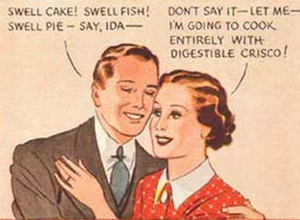
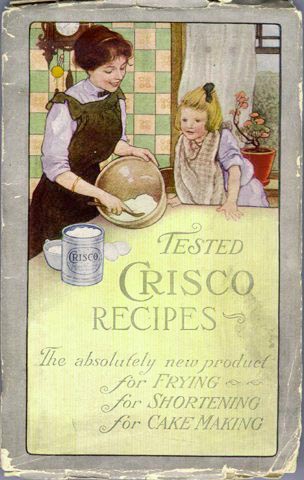
But surprisingly, science has only been against trans fats for the past few decades. Through the late 1980s, animal fat substitutes like Crisco and margarine were all the rage, and for a brief moment were even considered a health product. Here’s the story of how America fell in love with, and then quickly slid away from, hydrogenated oils.

In 1902, the scientist Wilhelm Normann found that adding hydrogen to vegetable oil would make it solid, creating trans fats in the process.

(WIKIMEDIA)

From the start, trans fats’ earthy origins were a selling point over that of their rivals, beef fat and butter. When Procter & Gamble debuted Crisco in 1911, it was billed: “It’s all vegetable! It’s digestible!” The shortening was also kosher, leading to the even better (worse?) slogan: “The Hebrew Race has been waiting 4,000 years for Crisco!”

Both shortening and its classier cousin, margarine, took off for obvious reasons—who wouldn’t want a butter substitute that was cheaper, lasted longer, and came with free cookbooks? (All the recipes called for Crisco, of course.)Sensing competition, dairy farmers convinced several states to stop allowing the more appetizing-looking, yellow-colored margarine in the early 20th century, but the bans were largely repealed by the late 1950s, and the golden-hued spread once again became the norm.

A 1961 Time magazine article railed against the dangers of saturated fat (the kind found in butter and lard), and eventually some consumers began to view margarine and shortening as healthier alternatives.

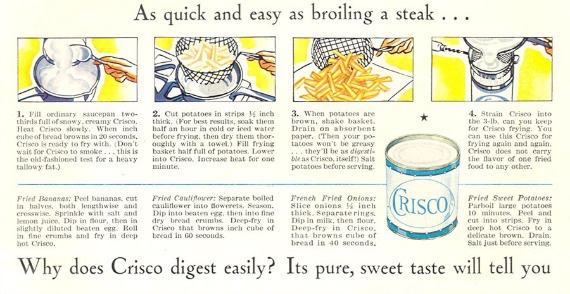
Crisco advertisement from 1932. (Wikimedia commons)

Oddly, some health groups also trumpeted hydrogenated oil’s benefits.

In the 1980s, some scientists began to associate heart disease with saturated fats, and in response, groups such as the Center for Science in the Public Interest and the National Heart Savers Association (NHSA) began to hound manufacturers for “poisoning America … by using saturated fats,” and as a result “nearly all targeted firms responded by replacing saturated fats with trans fats,” as David Schleifer wrote in 2012 for the journal Technology and Culture.

At the time, many restaurants used beef fat for frying, which groups like CSPI believed was far worse than hydrogenated oils, based on the research of the time. Schleifer writes:

[CSPI’S 1986] Fast-Food Guide specifically criticized Taco Bell, Arby’s, Hardee’s, and Wendy’s for frying in beef fat and tropical oils (that is, coconut and palm oils). But it praised Burger King for switching to vegetable shortening in 1986, which it described as “a great boon to Americans’ arteries.”  The guide also praised KFC, writing that the chain was “fortunately” frying in “partially saturated soybean oil . . . that is much less saturated than beef fat.”

Two years later, the same group released the report Saturated Fat Attack, which described trans fats as “more healthful” than saturated fats, Schleifer wrote.

In 1990, a New York Times food writer said CSPI’s campaign prompted fast-food chains to “slim down” by switching to frying in shortening.

***

In the 1990s, the health risks of trans fats began to eclipse those of the saturated variety. A 1990 New England Journal of Medicine found that they raised “bad” cholesterol levels. A 1993 Harvard study found that eating partially hydrogenated vegetable oils increased the risk of heart attacks. Today, it’s estimated that trans fats contribute to thousands of early deaths each year.

The food industry even funded its own study with the goal of proving that trans fats were perfectly safe. However, it only confirmed the earlier findings, and food manufacturers quickly began developing alternatives to hydrogenated oils. Today, even Crisco has changed its recipe, and it now has less that half a gram of trans fat per serving. Which means zero, if you use FDA-label math.

Surprisingly, it was the same organization, CSPI, that later urged the FDA to add trans fats to food labels, and nutrition panels have been required to list the substance since 2006. Though American consumption of trans fat has declined precipitously in recent years, it’s still common in food such as microwave popcorn, margarine, and some coffee creamers. But probably not for much longer.

Milk and parasites

Goat’s dairy and raw dairy products are best sources of dairy in terms of nutrition, beneficial enzymes and natural protein structure.  Ensure that it is certified free if harmful microorganisms such as parasites.

Internal Parasites in Beef and Dairy Cattle – eXtension


[PDF]

Internal Parasites of Dairy Cattle – Florida Dairy Extension


dairy.ifas.ufl.edu/dpc/1993/Courtney.pdf


[PDF]

internal parasites – Merck Animal Health


External parasites of dairy cattle. – NCBI

Insects such as stable flies, house flies, horn flies, face flies, mosquitoes, horse flies, deer flies, cattle grubs, and lice as well as ticks and mites are the major external parasites of dairy animals in the United States….


by CM Christensen – ‎1982 – ‎Cited by 11 – ‎Related articles

Dairy Sci. 1982 Nov;65(11):2189-93. External parasites of dairy cattle. Christensen CM. Insects such as stable flies, house flies, horn flies, face flies, …

Parasitic diseases of cattle impair health, reproduction, growth, and productivity. In severe cases, parasitic diseases may even cause death. These diseases are …

The top ten parasites that could be lurking in your food


theconversation.com/the-top-ten-parasites-that-could-be-lurking-in-your-food-29015


Jul 16, 2014 – Most people are fascinated, and probably equally repulsed, by parasites. And it may be something you think you only need to worry about if you …

External Parasites of Dairy Cattle – The Dairy Site


External Parasites of Dairy Cattle. 02 September 2009. One of the most challenging characteristics of flies is their behaviour of being in contact with livestock for …

Control external parasites to maintain cow comfort | Dairy Herd …


Nov 11, 2012 – Improving herd comfort can add to the bottom line. Follow these steps when developing a whole-herd external-parasite control program.

Treating for Internal Parasites of Cattle – Purdue Extension


Older cattle frequently have been exposed to the parasites and developed a degree … Dairy calves confined to small lots around the farmstead may need to be …

Milk and parasites

Internal Parasites in Beef and Dairy Cattle – eXtension


Jan 27, 2011 – Introduction. The need to control internal parasites will exist as long as cattle are grazing pastures. However, parasite levels are not the same …

[PDF]

Internal Parasites of Dairy Cattle – Florida Dairy Extension


dairy.ifas.ufl.edu/dpc/1993/Courtney.pdf

Whereas parasitic gastroenteritis an d coccidiosis are likely to be a problem on mos t large dairies, lungworms have been nearly eradicated by modern wormers …
Dairy cows exposed to low levels of parasites need to be treated only at freshening or as a herd once a year, preferably in late fall. DEWOrMiNg tHE traNSitiON …

External parasites of dairy cattle. – NCBI


by CM Christensen – ‎1982 – ‎Cited by 11 – ‎Related articles

Dairy Sci. 1982 Nov;65(11):2189-93. External parasites of dairy cattle. Christensen CM. Insects such as stable flies, house flies, horn flies, face flies, …

Parasitic diseases of cattle impair health, reproduction, growth, and productivity. In severe cases, parasitic diseases may even cause death. These diseases are …

The top ten parasites that could be lurking in your food


theconversation.com/the-top-ten-parasites-that-could-be-lurking-in-your-food-29015

Jul 16, 2014 – Most people are fascinated, and probably equally repulsed, by parasites. And it may be something you think you only need to worry about if you …

External Parasites of Dairy Cattle – The Dairy Site


External Parasites of Dairy Cattle. 02 September 2009. One of the most challenging characteristics of flies is their behaviour of being in contact with livestock for …

Control external parasites to maintain cow comfort | Dairy Herd …


Nov 11, 2012 – Improving herd comfort can add to the bottom line. Follow these steps when developing a whole-herd external-parasite control program.

Treating for Internal Parasites of Cattle – Purdue Extension


Older cattle frequently have been exposed to the parasites and developed a degree … Dairy calves confined to small lots around the farmstead may need to be …

Water filtering – reverse osmosis,charcoal filtering and deionization

Tap and well water may contain fecal coliform baceria, parasites and other water born pathogens and also contains chlorine and fluoride , both are toxic to the body.  Other water contents include runoff pollution, pesticides, arsenic, heavy metals , arsenic, insectides , parasites and bacteria.

Use any of the following water filtration system: reverse osmosis,charcoal filtering and deionization.

Many of the seniors we care for who has chronic diseases do not use any water filtration method.