408-854-1883 starts at $30 per hr home care

Affordable in home care | starts at $28 per hr

Need retirement income at 3% return, liquid using an Annuity

You are now 50plus and needed to safeguard your money and also be liquid with some portions taken each year from your retirement money that grows at guaranteed 3%. Where to put your money? Fixed Annuity. Contact Connie Dello Buono 408-854-1883 motherhealth@gmail.com CA Life Lic 0G60621 to generate a retirement income when you retire with safety and guarantees.

annuity p0

annuity p1.JPG

annuity p2.JPG

annuity p3.JPGannuity p4.JPG

annuity p5.JPG

Feeling sick, perspectives of an American and Japanese

Feeling a little sick from two cultural perspectives

American

I feel sick said an American, I should take Tylenol.

Japanese

I feel tired and fatigued, I should rest said the Japanese.

What do you notice in the above reactions?  The body needs to recharge and was over used. Why bombard it with more toxic medications?

As I send caregivers to bay area senior homes, I have inspected their homes and have seen more medications in their med cabinets. Back in the Philippines my grandma has only oil, garlic, ginger and warm soup to mend her aching body.

My favorite Bernie Sanders is telling us one of the major pain for the middle class, that of over priced medications.

We can stop the pain by not asking for more pain killers from our doctors when not warranted by our bodies.  Dance and exercise more and maybe you just need to drink warm soup and healthy water with no sugar.

Let us stop controlling others of how they take care of their reproductive rights, we are all free and have a free will.

When I asked a 100 yr old grandma in the nursing home about her secret to long life as she walked with me in the park without any mobility help like cane or rollator, she said it is in doing what you love to do best.

Let us not be captive in the challenges in life but be more patient waiting for our Uber driver, our waiter in the restaurant, and other helpers/caregivers.  And spend more time with our love ones, not worrying of little things  and our 2016 will surely be enjoyable and less medicated.

Happy Holidays!

———

Connie’s comments : The above cultural perspective was a story told to me by one of my passengers, a COO of a bank, as I was working as part time UBER driver to help send 7 students to college.

Donations (real estate/others) to Motherhealth Inc, a non-profit for affordable senior care are welcome at:

Motherhealth Inc, 1708 hallmark lane San Jose CA 95124

Eggplant

Eggplant has a compound that can exacerbate arthritis pain. It is rich in iron and copper (nutrients group 2), antagonists of calcium and zinc (nutrients group 1).  Calcium, magnesium, Vit B6, zinc and Vit D are important for cell growth.

So in eating a little of everything (nutrients 1 and 2), fish and veggies, we can balance what the body needs. Older adults need more calcium than iron/copper since excess copper can lead to mental health issues.

There are pain relieving foods, they are yellow in color (ginger and turmeric).  All these nutrients work better with Vit C and E.

Between processed foods and whole foods, I choose whole foods.

Eggplants Are Packed with Antioxidants

Eggplants contain fiber, copper, B vitamins, vitamin K, and potassium, but their brightly colored skin is a sign that they’re also rich in antioxidants. Anthocyanins are one type of phytonutrient that are responsible for that dark-purple color.

One variety, nasunin, has been found to have potent antioxidant and free-radical scavenging abilities. It’s also known to protect the fats in your brain cell membranes,3 and it has iron-chelating abilities, which is beneficial if you suffer fromiron overload.

The predominant antioxidant in eggplants is chlorogenic acid, which also has anti-cancer, antimicrobial, and anti-viral properties. Chlorogenic acid is also one of the most potent free-radical scavengers found in plants. One variety of eggplant in particular, known as Black Magic, has been shown to have nearly three times the antioxidants as other varieties.4

In addition, nasunin and other phytonutrients in eggplant, including terpenes, are thought to be beneficial for heart health. Animal studies show that eggplant juice has beneficial effects on cholesterol levels and also relaxes blood vessels for improved blood flow.5

Eggplant Extract May Kill Cancer Cells

A cream containing eggplant extract, known as BEC and BEC5, appears to cure and eliminate most non-melanoma skin cancers in several weeks’ time. There are reports that extracts of plants from the Solanaceae family of vegetables are effective for treating cancer dating back nearly 200 years to 1825, according to natural health pioneer Dr. Jonathan Wright.

However, it wasn’t until much later, after the 1950s, that they were formally studied. The leading researcher in this area today is Dr. Bill E. Cham, who reported as early as 1991 in Cancer Letters that:6

“A cream formulation containing high concentrations (10%) of a standard mixture of solasodine glycosides (BEC) has been shown to be effective in the treatment of malignant and benign human skin tumors.”

One of Dr. Cham’s more recent studies was published in the International Journal of Clinical Medicine.7 The paper includes two impressive case reports of 60-something men who were suffering from large basal cell carcinoma (BCC) or squamous cell carcinoma (SCC), which had plagued them for years. The results upon treatment with a cream formulation of BEC (eggplant extract) twice a day are astounding:

    • In the first case, treatment with the eggplant-extract cream resulted in rapid break down of the tumor. After two weeks, the lesion was reduced to about half its original size, and after 14 weeks the cancer was clinically eliminated with no scar tissue formation. Even the hairs had regrown where the tumor was originally.
    • In the second case, after six weeks of treatment with eggplant-extract cream, the large skin cancer lesion appeared “cleaner” and some of the cancerous tissue had been replaced with normal tissue.

In another three weeks, the lesion was much smaller and more normal tissue was apparent. After a total of 14 weeks, the lesion was completely eliminated with no scar tissue present.

Unfortunately, simply eating eggplant, tomatoes, peppers, or similar veggies, while beneficial for many reasons, will not induce this same effect because the active components are not able to effectively penetrate your cells. This requires the addition of glycosides, molecules with various simple sugars attached to them that can latch on to receptors found on skin cancer cells.

That being said, eggplant compounds have also been found to have anti-proliferative activities against human colon and liver cancer cells.8 The fact that eggplant has anti-cancer effects is one more testament to the benefits of eating a wide variety of natural foods.

How to Choose and Prepare Eggplant

For best flavor, choose eggplants that are glossy in color, firm, and heavy for their size. The stem should be bright green, and if you push on the flesh with your thumb, it should bounce back. A lasting indentation is a sign that the eggplant may be overripe. Overripe eggplants tend to be more bitter in flavor, as do those that are stored too long.

You can store an uncut eggplant in your refrigerator’s crisper drawer (in a plastic bag), but they are quite perishable. Ideally, look for eggplants that are locally grown and use them as soon as possible after harvest.

One of the allures of eggplants is their versatility. They can be baked, roasted, steamed or boiled, mashed, pureed, diced, and sliced. Although it’s not a requirement, many people “sweat” their eggplant prior to using it in recipes to help draw out some moisture, tenderize the flesh and reduce any bitterness. To do so, the George Mateljan Foundation recommends:9

To tenderize the flesh’s texture and reduce some of its naturally occurring bitter taste, you can sweat the eggplant by salting it. After cutting the eggplant into the desired size and shape, sprinkle it with salt and allow it to rest for about 30 minutes.

This process will pull out some of its water content and make it less permeable to absorbing any oil used in cooking. Rinsing the eggplant after ‘sweating’ will remove most of the salt.”

Healthy Grilled Eggplant Recipe

Eggplant is a perfect addition to soups, stews, casseroles, and side dishes, and it’s often used as a replacement for meat in those following a vegetarian or vegan diet. But it’s also quite tasty on its own. To savor the unique flavor and texture of eggplant, all you need is a bit of healthy oil, salt and pepper. The grilled eggplant recipe below, from the Rodale Recipe Index, is one well worth keeping:

Grilled Eggplant4

Ingredients

  • 4 eggplants (1 lb each), with peel, cut lengthwise into 1″ thick slices
  • 2 tsp kosher salt, divided
  • 4 tbsp extra virgin olive or coconut oil
  • 1/2 tsp freshly ground black pepper

Directions

  1. Layer several paper towels on baking sheet. Place half of eggplant on top in single layer. Sprinkle with 1 teaspoon of the salt and cover with paper towels. Arrange second layer of eggplant, sprinkle with remaining salt, and cover with paper towels.
  2. Let eggplant stand 30 minutes, then rinse each piece and blot dry. (This helps extract excess water, reducing bitterness and preventing eggplant from absorbing excess oil during cooking.)
  3. Brush both sides of an eggplant slice with oil to coat and transfer to large bowl. Repeat with remaining oil and eggplant slices. Season with pepper.
  4. Heat grill to medium. Grill eggplant, with cover closed, 16 to 20 minutes, turning once, until lightly browned and tender. Refrigerate leftovers in airtight container for a day or two.

More eggplant recipes from Dr Axe:


 1. Almond-Crusted Baked Eggplant

Crispy eggplant sans frying is possible. Grounded almonds are used in place of traditional breadcrumbs to coat eggplant slices and then are baked to achieve ultimate crunch. Serve with marinara sauce, in a sandwich, or with a salad.

Almond-Crusted Baked Eggplant
Photo: Almond-Crusted Baked Eggplant / Jessica in the Kitchen

2. Baba Ganoush

One of my favorite eggplant recipes, this Middle Eastern staple is perfect for dipping crackers, veggies, or spreading on a sandwich. Broiling the skins adds a smoky flavor to the dip — I recommend you make a double batch. You’ll want it!

Baba Ganoush
Photo: Baba Ganoush / Inspired Taste

3. Balsamic Roasted Eggplant

This delightfully simple healthy recipe is full of flavor thanks to Dijon mustard, garlic, fresh thyme, and, of course, balsamic. Try adding other veggies like zucchini, onions, or carrots for a hearty side dish.

Balsamic Roasted Eggplant
Photo: Balsamic Roasted Eggplant / iheartyum

4. Beef and Eggplant Casserole

Reminiscent of lasagna, this beef and eggplant casserole is the type of dish that’s excellent on a cold night when you need something cozy for dinner.

Ground beef is cooked with garlic and marinara sauce and then layered atop fresh eggplant slices and Parmesan cheese. The result is a crisp oven-baked casserole that’s carb-free and delicious. Top with fresh basil.

Beef and Eggplant Casserole
Photo: Beef and Eggplant Casserole / Not Enough Cinnamon

5. Cashew-Less Vegan Queso

Former cheese-loving vegans, get excited: this dip tastes super similar to traditional queso dips except it has no cashews, soy, dairy, or gluten. But thanks to roasted eggplant as its base, this dip does have lots of creamy, spicy goodness. Top it with smoked paprika for extra color.

Cashew-Less Vegan Queso
Photo: Cashew-Less Vegan Queso / Minimalist Baker

6. Chicken Eggplant Lasagna

Skip the gluten, carbs, and calories normally found in lasagna and add in tons of taste with this dinner. Eggplant slices stand in for noodles while a mix of meaty mushrooms, onions, and bell peppers take the place of ricotta. The result is a guilt-free lasagna everyone will enjoy. Hint: Omit the chicken to keep this vegetarian-friendly.

Chicken Eggplant Lasagna
Photo: Chicken Eggplant Lasagna / Plentytude

7. Chinese Eggplant With Spicy Garlic Sauce

Homemade Sichuan-style eggplant is the perfect antidote to greasy takeout Chinese food. It’s also crazy quick to whip up, great for busy weeknights. Serve it with a side of brown rice, veggies, or even eat it solo (but make sure to use coconut oil!). You won’t regret it.

Chinese Eggplant With Spicy Garlic Sauce
Photo: Chinese Eggplant With Spicy Garlic Sauce / Steamy Kitchen

8. Crisp Eggplant Chips

Put down the bag of store-bought chips and snack on these instead. Eggplant slices are slow-roasted in smoky seasonings for a perfectly crisp chip. And because an entire eggplant is just 150 calories, you can snack on these and feel great about it!

Crisp Eggplant Chips in bowl
Photo: Crisp Eggplant Chips / Healthful Pursuit

9. Crispy Eggplant and Tomato Hash

Forget potatoes and swap in eggplant in this breakfast hash. Drying the eggplant before cooking will let help it reach ultimate crispiness. Try this for a weekend brunch or on breakfast-for-dinner night!

Crispy Eggplant and Tomato Hash
Photo: Crispy Eggplant and Tomato Hash / Baker By Nature

10. Cumin Rice With Eggplant and Peas

Brown rice is baked with eggplant, peppers, and tomatoes in this easy main dish. Because of spices like turmeric, ginger, and cinnamon, it’s packed with flavor. Sneak in more veggies or swap in your favorites..


11. Eggplant and Wild Mushroom Stuffing

Think you can’t get a good stuffing without bread? Think again. Eggplant and your favorite mushrooms absorb the goodness of the other ingredients — think grass-fed butter, bacon (opt for beef!), and turkey juices — while keeping their own shape. Try this once and you won’t look back at your usual stuffing again.


12. Eggplant Benedict

 Make a restaurant favorite at home — and keep it low-carb and gluten-free — with this Benedict recipe. Eggplant slices stand in for English muffins in this impressive breakfast. Use turkey or beef bacon and, to make this extra special, serve with asparagus on top or on the side.

Eggplant Benedict
Photo: Eggplant Benedict / All Day I Dream About Food

13. Eggplant Bruschetta

Need an easy appetizer? I love the idea of using eggplant slices in place of bread for a fresh bruschetta that comes together right on the grill during warm months — broil when it’s too cold out!


14. Eggplant Gratin With Tomato, Herbs and Crème Fraiche

With such few ingredients required to make this gratin, sticking to fresh herbs will turn this main into a show-stopping meal. Pair this with a side salad for a warm, filling meal.

Eggplant Gratin With Tomato, Herbs and Crème Fraiche
Photo: Eggplant Gratin With Tomato, Herbs and Crème Fraiche / The Iron You

15. Eggplant Hole in the Head

In this non-traditional take on the classic “hole in the head” breakfast, eggplant stands in for bread, with eggs cooking right in the center. It’s easy to make and fun to eat!


16. Eggplant Jam

Eggplant jam?! It sounds crazy, but it tastes amazing on everything from grilled meats to grilled bread. Harissa keeps things spicy, but sub in hot sauce if you don’t have this Mediterranean condiment. Try it out at your next cookout!


17. Eggplant Parmesan With Fresh Mozzarella

Eggplant Parmesan sounds like a healthier alternative to the chicken version but after dredging and frying eggplant slices, it’s easy to load up on calories, too. This baked version is good for you and easy too: eggplant “boats” serve as the base while the other delicious ingredients gets stuffed right into them — no slicing or dicing here. Opt for gluten-free breadcrumbs or almond meal.

Eggplant Parmesan With Fresh Mozzarella
Photo: Eggplant Parmesan With Fresh Mozzarella / She’s Cookin’

18. Eggplant Vegetable Soup

Eggplant plays well with other vegetables in this easy soup. Because the soup gets blended at the end, mix and match other veggie favorites to tweak the taste — celery would be a nice addition.

Eggplant Vegetable Soup
Photo: Eggplant Vegetable Soup / Maria Ushakova

19. Eggplant-Wrapped Goat Cheese

Bite into creamy goat cheese and buttery eggplant when you make this amazing side dish or snack. Raisins add a hint of sweetness while basil adds fresh flavor — and a hint of green!

Eggplant-Wrapped Goat Cheese appetizer
Photo: Eggplant Wrapped Goat Cheese / Dr. Axe

20. Grilled Eggplant, Halloumi, and Pesto Burgers

Grilled, meaty eggplants make a wonderful substitution for traditional beef burgers. Topped with halloumi cheese and pesto, this is a veggie burger even carnivores will love.

Grilled Eggplant, Halloumi, and Pesto Burgers
Photo: Grilled Eggplant, Halloumi, and Pesto Burgers / Veggie Belly

21. Grilled Eggplant With Mozzarella

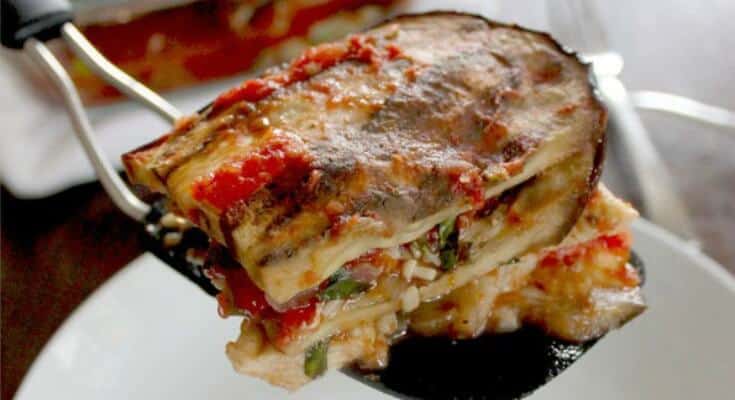
Eggplant and mozzarella are a natural fit and there’s no better way to munch on them together than in this side dish/appetizer. Eggplant slices are grilled and then stacked with mozz, tomatoes, and basil. Use a grill pan to get those great grill marks if it’s too cold outside!

Grilled Eggplant With Mozzarella and Basil
Photo: Grilled Eggplant With Mozzarella / Dr. Axe

22. Grilled Miso Glazed Japanese Eggplant

This caramelized Japanese-style eggplant is melt-in-your-mouth good. Grilling gives it a smoky flavor, but the stovetop works in a crunch, too. Use coconut sugar in place of regular and don’t forget to top with scallions at the end!

Grilled Miso Glazed Japanese Eggplant
Photo: Grilled Miso-Glazed Japanese Eggplant / Recipe Tin Eats

23. Julia Child’s Eggplant Pizza

Who needs pizza crust when you have eggplant? Slather your favorite ‘za toppings (don’t skimp on the fresh basil!) onto eggplant slices, bake, and enjoy. Pizza night has never been this easy.


24. Mediterranean Eggplant Chickpea Salad With Feta and Parsley

Get your Mediterranean fix with this loaded salad. Bursting with chickpeas, garlic, and cheese, it’s healthy and tastes delicious to boot. And did I mention it’s really simple to make, too?


25. Oven-Baked Eggplant Fries

You’ll be eating your burgers with a side of yum after making these eggplant fries. Almond meal helps the fries crisp as they bake, while maple syrup, sea salt, and paprika infuse flavor. Bye bye, potato fries!

Oven-Baked Eggplant Fries
Photo: Oven-Baked Eggplant Fries / Veggies Don’t Bite

26. Quinoa and Veggie Stuffed Eggplant

If you’re tired of eating quinoa the same way, this should perk up your taste buds. Quinoa, which is loaded with protein and fiber, gets stuffed into eggplant, along with veggies, flaxseed, and a sprinkle of Parmesan cheese. You’ll love this meatless main dish.

Quinoa and Veggie Stuffed Eggplant
Photo: Quinoa and Veggie Stuffed Eggplant / Lemons and Basil

27. Roasted Eggplant Pesto Sandwich

Biting into a hearty vegetarian sandwich can be difficult sometimes. That’s not the case with this one. Oven-baked eggplants slices are topped with avocado, cheese, and a kale-based pesto. Throw it all on a sprouted grain hamburger bun and you’ve got yourself one amazing sandwich.


28. Roasted Eggplant, Raisin, Pine Nut, and Quinoa Pilaf

If your idea of pilaf is of the boxed rice variety, prepare to be pleasantly surprised. This version is quinoa based and brimming with juicy raisins, crunchy pine nuts, and roasted eggplant. It’s a fine side dish, but serve with a side salad and it’s a great vegan main, too.


29. Roasted Eggplant With Spinach, Quinoa, and Feta

This is one of those tasty eggplant recipes that is comfort food at its best: good for your body and your mind. It’s also perfect for beginners in the kitchen: it’s ready in just a few steps. This delicious stir fry-esque meal will become a new family favorite.

Roasted Eggplant With Spinach, Quinoa, and Feta
Photo: Roasted Eggplant With Spinach, Quinoa, and Feta / Julia’s Album

30. Roasted Vegetable Pasta Salad

Do the words “pasta salad” conjure up images of limp, mayonnaise-slathered pasta? Think again. This wholesome pasta dressing is made with olive oil and freshly squeezed lemon juice and loaded with veggies. Crumbled feta adds saltiness and fresh basil ties it all together. Use brown rice or gluten-free pasta and inhale.

Roasted Vegetable Pasta Salad
Photo: Roasted Vegetable Pasta Salad / Cookin’ Canuck

31. Slow-Roasted Ratatouille

Not only an animated movie, ratatouille is also one of the most classic eggplant-based dishes. It’s a standout meal brimming with fresh veggies — hit the farmer’s market for this one.

Because it takes several hours to roast in the oven (and tastes even better the second day!), I recommend you make this during the weekend and then enjoy on a hectic weeknight.

Slow-Roasted Ratatouille
Photo: Slow-Roasted Ratatouille / Feeling Foodish

32. Spicy Asian Eggplant and Quinoa

When you’ve got a hankering for Chinese fried rice, this spicy eggplant and quinoa will hit the spot — and has more nutritional value. Plus, like most stir fry dishes, the veggie ingredients are entirely customizable based on what’s on hand.

Spicy Asian Eggplant and Quinoa
Photo: Spicy Asian Eggplant and Quinoa / Julia’s Album

33. Sweet and Smoky Eggplant Spread

This “poor man’s caviar” is a smooth spread that can be eaten as either an appetizer or a side dish. Try it on crackers, as a sandwich spread, or with your scrambled eggs. Yum!


34. Sweet Potato and Eggplant Burger

Who says a veggie burger has to be second class? This veggie patty, made from potassium-packed sweet potatoes and eggplants, isn’t just a meat substitute — it’s a great burger in its own right. Try it with a side of baked French fries for a healthy happy meal.


35. Thai Basil Eggplant

Pretend you’re in Bangkok while indulging in this dish. It’s full of Thai flavor goodness, but it uses common Asian-cooking ingredients like hoisin and soy sauces. Sub tempeh in for tofu and arrowroot powder for cornstarch and keep this quick dish healthy and tasting good.

Thai Basil Eggplant
Photo: Thai Basil Eggplant / Vegetarian Gastronomy

36. The Best Vegan BLT

You can be a vegan and get your bacon, too. Smoky eggplant “bacon” meets lettuce, tomatoes, and cashew mayo for the ultimate veggie BLT. Use sprouted grain bread and almond milk for the cashew mayo. This is one sandwich you’ll want to make again and again!

The Best Vegan BLT
Photo: The Best Vegan BLT / Oh My Veggies

37. Turkish Eggplant Casserole

Get your healthy fats in with this eggplant- olive oil- and tomato-based dish. With just a few ingredients like diced tomatoes and fresh parsley, you’ll have a restaurant-worthy meal. Save yourself a slice!

Turkish Eggplant Casserole
Photo: Turkish Eggplant Casserole / Feed Me Phoebe

38. Vegan Eggplant Meatballs

One of the eggplant recipes you should definitely try tonight: Meatballs!

Combine eggplant, white beans, and gluten-free crumbs which all lend an unbelievable texture to these vegan meatballs. Enjoy them over brown rice pasta, in a sandwich, or, as suggested, with zoodles (zucchini noodles). No matter what vehicle you use, you’ll love these meatballs!

Vegan Eggplant Meatballs
Photo: Vegan Eggplant Meatballs / skinnytaste.com


Senior resources list

Please email motherhealth@gmail.com to be added to the list of senior resources.  Not on the list are organizations that promote wellness such as dance lessons for Parkinson’s or Alzheimer’s and other movement exercise for seniors. In the future we should see: healthy meals for seniors ordered online, online demand for other services and so on.

I am looking for an app developer to help me create an UBER like app matching seniors with caregivers on demand starting in the USA and the world. Any investors are welcome.

Blessings,

Connie Dello Buono 408-854-1883 motherhealth@gmail.com

Motherhealth Caregivers, compassionate bay area caregivers since 2004

http://www.clubalthea.com


The following websites offer all kinds of information relevant to caregivers and their loved ones. Many sites include assessment tools, expert advice, directories of local resources, and links to public health organizations and services.

50 most important health info for women by Dr Mercola

Below are the Mercola.com health & wellness e-newsletter’s 50 most popular articles geared toward women’s health and well-being ever, as determined by our automated tracking system. This means that out of the thousands and thousands of pages of useful health information you can search on Mercola.com (just enter any health term into the search box above!), these are the most accessed and read articles for women!

I urge you to bookmark this page (or add to “Favorites” in Explorer browsers) as there is a lot of highly valuable information you will want to come back to read.

In every twice-weekly edition of the FREE Mercola.com health & wellness e-newsletter, you will find ten or more original, timely health and wellness articles — with insights you can use that you won’t find anywhere else!

If there is a woman you know who can benefit from any or many of these articles, I encourage you to email this bonus page to a friend.

  1. The Benefits of Probiotics – The 100 trillion bacterial cells found in the human body serves many biological functions needed for survival. Learn the crucial roles of these “friendly” bacteria to your health and where to get the best sources of good bacteria.
  2. The Secret to Beautiful Skin – Looking for the secret to beautiful skin? The key is eating the right foods that nourish the organs that keep your skin healthy. Find out the best foods to eat to get radiant, blemish-free skin — they may surprise you!
  3. Look and Feel Younger by Avoiding the Top Contributors to Aging – It is a proven fact that sugar increases insulin levels, which can lead to one of the many contributors of premature aging. Find out other causes of premature aging and how you can add more healthy years onto your life.
  4. Healthy Lifestyle Reduces Menopause Risks – Women who are reaching menopause could significantly reduce their risk of cardiovascular disease through healthy eating and daily exercise. Learn how to dramatically cut your risk of cardiovascular disease by making some simple lifestyle changes.
  5. Premarin Alone Increases Strokes – A group of women stopped estrogen replacement therapy after finding out the pills may be increasing their risk of a stroke. Find out when it’s safe to take estrogen and the consequences of taking it unnecessarily.
  6. Broccoli for Prostate & Breast Cancer – A chemical produced when digesting such greens as broccoli and kale can stifle the growth of human prostate cancer cells. 3,3′-diindolylmethane (DIM) acts as a powerful anti-androgen that inhibits the proliferation of human prostate cancer cells.
  7. Antibiotics may Increase Breast Cancer Risk – Women who used antibiotics had more than double the risk of breast cancer as women who did not take any. Find out how the bacteria in your gut may play a major role in this connection, and how to protect yourself.
  8. Mammograms Risky for Obese Women – A recent study found obese women are more likely to be inaccurately diagnosed with abnormal mammogram readings in comparison to lighter women. Why does the medical profession still feel mammograms are necessary?
  9. Twelve Reasons to Avoid the South Beach Diet – If you or anyone you care about is on, or has considered, “The South Beach Diet,” read the top twelve reasons why I strongly urge you to avoid this popular but irresponsible and dangerous diet.
  10. How to Shop for the Right Food in Your Regular Grocery Store in 10 Easy Steps – You know that you should be buying organic vegetables, free-range meat and other healthy foods, but don’t have access to a health food store or are working on a tight budget. Sound familiar? Find out how to shop for the best-quality food no matter where you are or what your budget with these 10 simple principles.
  11. They Changed the Size of Your Clothes and You Didn’t Even Notice – Have you gone shopping for clothes lately and found that your size in clothing dropped a couple sizes even though you’ve put on a few pounds? Well, this is just one more way that Americans are quietly accepting their increasing waistlines. Find out how more retailers are accommodating overweight people, plus learn how you can regain your normal weight by following a few basic principles.
  12. Antioxidants and Free Radicals: What to Eat to Protect Your Health – You should be eating antioxidants everyday in order to protect against the potential damage that excess free radicals can create. But what are the best sources? Find out my top two recommendations to fortify your diet with health-boosting antioxidants.
  13. How to Avoid the Coming Alzheimer’s Epidemic – Alzheimer’s disease is increasing at an alarming rate, even though it is not a “normal” part of aging. Follow these steps to minimize your risk of developing Alzheimer’s.
  14. Nine Steps for Healthy Living Can Reduce Women’s Cancer Risk – The more dietary recommendations post-menopausal women followed, the higher their protection against the development of cancer. Find out the nine recommendations by the American Institute on Cancer Research on cancer prevention. Also, learn how to change your lifestyle and take a proactive approach to cancer.
  15. Healthy Heart Equals Less Risk of Alzheimer’s – A healthy heart throughout your middle years could mean a decreased risk of developing Alzheimer’s in your later years. Find out how your heart health is closely related to age-related diseases and learn about eight steps you could take to reduce your risk of Alzheimer’s.
  16. Progesterone Reduces Premature Births – Progesterone may be useful in preventing premature births, as a study found that the hormone reduces the risk of pre-term birth among women with high-risk pregnancies by more than one-third.
  17. Why Soy Can Damage Your Health – From the potential of severe allergic reactions and kidney stones to cancer and pregnancy complications, soy is not the “health food” it has been advertised as. Check out this important compilation of the top articles on the dangers of soy.
  18. The Only Way to Optimize Your Weight Permanently: A Multi-Disciplinary Approach – If you haven’t permanently reached your optimal weight, read this article by Dr. Kendra Pearsall providing straightforward facts on why a “whole” approach is really the only approach for permanent success.
  19. The #1 Way to Succeed on a Healthy Diet: Address Your Emotional Issues – Emotional challenges can sabotage your food choices and make your motivation to diet difficult to maintain. Learn how to overcome these challenges and set your sites for true health success.
  20. Eating to Fight Boredom, Stress and Loneliness – Many people, especially women, eat to quell feelings of boredom, loneliness or stress, only to feel guilty or unhappy. According to a recent U.K. study, 43 percent of adults eat to try to change a negative mood, and a new breed of eating disorder patients may be evolving.
  21. 10-Minute Exercise Schedule Good for Your Heart – Setting aside just 30 minutes of moderate exercise a day could improve your cardiovascular health. Find out how the combination of exercise and a good nutrition program hold the keys to warding off many chronic diseases such as heart, depression, diabetes and cancer.
  22. How to Stay Healthy While Working in an Office — Six Important Tips – Many of us spend more than one-third of our day in an office environment, often sitting at a desk or working on a computer. While these long hours may be good for business, you may sense that they’re not so good for your health. Use these tips to make your workspace a healthier, more enjoyable place to be.
  23. How Men and Women Dish Out Rejection – Rejection is quite a difficult for anyone to face. Read about how we deal with this obstacle in our everyday lives.
  24. Stress Affects Your Immune System: Clearly Defined Patterns Revealed – While psychologists have known for some time the impact of stress on the body’s ability to fight infections, they have now found it could actually break down the immune system. Discover the most dangerous life stressor and learn some effective tools to coping with stressful events in your life.
  25. Important Information for Women Considering Breast Implants – Breast implants often rupture and can result in serious complications. If you are considering breast implants, this is a must-read.
  26. Women Don’t Get Enough Vitamin D — How That Could Ruin Their Health – A new article by the leading vitamin D researcher in the world who explains how the current vitamin D standards are atrociously inadequate.
  27. Why do Women go Through Menopause? – It was no accident that your grandmother helped your mother raise you: It actually helped your mother survive and have more children. Find out how the “grandmother hypothesis” is impacting the lives of daughters and grandchildren.
  28. Vitamin D Deficiency is Major Health Risk – An increasing number of cases of vitamin D deficiency have been surfacing among Americans, particularly African Americans. Discover the many health consequences associated with vitamin D deficiency and learn how you can test your vitamin D levels to make sure you’re in the healthy range. Also, see where to get the best natural source of vitamin D if you live in a climate without sufficient sunshine.
  29. Fish Provides Heart-Healthy Benefits for Diabetic Women – Eating fish can lower the risk of heart disease for diabetic women. Find out some ideal ways to add these heart-healthy benefits to your diet.
  30. Estrogen Replacement Can Be Healthy or Dangerous – Many menopausal and post-menopausal women are putting themselves at an increased health risk by taking hormone replacement therapy (HRT). Discover how to treat symptoms like hot flashes without causing harm to your body.
  31. Endometriosis and Women’s Health – 5.5 million American women live with endometriosis, a painful disease that could cause infertility. Find out how naturopath, Carolyn Dean, explains the important roles estrogen and progesterone play in this disease and learn about the simple and natural alternatives to turning the tables on this disease.
  32. How to Treat Yeast Infections Naturally – One of the most common reasons why women seek medical attention is because of vaginal infections, most often yeast infections. But you may be able to avoid going to the doctor by using these natural remedies to treat and prevent this pesky problem.
  33. Fosamax Type Osteoporosis Drugs Noted to Cause Serious Eye Problems – Drugs commonly prescribed to osteoporosis and cancer patients may also cause serious problems in the eyes in some cases. There are natural solutions available so that you can avoid taking these potentially harmful drugs.
  34. Vitamin K May Help Build Strong Bones – Will the RDA for vitamin K actually help you build your bones, or do you need a dose that may by 50 times higher than the RDA to treat or prevent osteoporosis?
  35. Women Have Higher Risk of Dying from Osteoporosis than Breast Cancer – About one-quarter of people will get osteoporosis, and it kills more women than breast cancer. Here’s what you need to know to prevent this disease.
  36. Many Osteoporosis Sufferers Left Undiagnosed – Millions of Americans are living with osteoporosis and don’t even know it. Find out why so many people with warning signs of osteoporosis have gone undetected until a fracture occurs. Also, learn about the natural options that are essential to keeping your bones strong.
  37. Pregnant Women May Not Be Getting Enough Omega-3 – Omega-3 fat DHA is essential to the healthy development of your child, even during pregnancy. But, pregnant women may not be getting enough of this important nutrient.
  38. This Vital Vitamin Reduces Diabetes, High Blood Pressure, and Pre-eclampsia in Pregnancy by 30 Percent  From what is considered the first scientific trial that meets the most stringent criteria for “evidence-based inquiry” into vitamin D and pregnancy, it has been found that the nutrient can slash your risk of preeclampsia and certain pregnancy-related conditions.
  39. How to Avoid Having a Premature Delivery – There are simple steps that you can take to make sure your baby gets a healthy start to life. Find out some of the best ways to prevent premature delivery that all pregnant woman and potential parents-to-be must know.
  40. Adults With ADHD: Don’t Become the Next Drug Target … Here’s How to Treat it Naturally – Adults with ADHD are next in line as targets for the increasingly popular attention-deficit drugs. If you or someone you know, whether adult or child, is struggling with ADD/ADHD, don’t miss the three drug-free steps you can take to improve your ADHD naturally.
  41. Protect Yourself From Heart Disease With Simple Lifestyle Changes – Heart disease doesn’t have to be the leading cause of death in the United States. Learn the steps it takes to minimize your risk and strengthen your heart health.
  42. Six Ways Garlic Can Improve Your Health – Looking for something to fight viruses, fungus and bacteria while preventing heart disease and cancer? Try garlic, an incredibly inexpensive and simple way to improve your health.
  43. Why Junk Food is so Tempting, And How to Beat Your Temptation – What is it about junk food that keeps Americans coming back for more? If you’re tired of falling prey to junk food temptations, learn how to conquer your cravings once and for all.
  44. Are Thin People Healthier? – Is being thin healthier than being overweight? Find out the health effects of being very thin and learn a reliable method to help you achieve the optimal weight you were naturally meant to have.
  45. Is Insomnia Wreaking Havoc on Your Health? – Insomnia affects almost 40 percent of Americans with dire consequences to their health, public safety and even the economy. For anyone who has had trouble sleeping, this article will shed some light on the effects of a sleepless night and offers some tips that may help you finally achieve a good night’s sleep.
  46. Love, Heartbreak and Your Health – Is heartbreak for real, and does love actually give us happier lives? Find out the answers to both of these questions whether you’re happily in love or facing relationship hurdles.
  47. Five “Health Foods” to Avoid – You may be surprised to learn that these five foods that are commonly considered healthy are actually not good for your health. Learn what they are and find out some truly nutritious alternatives.
  48. Laugh and Smile Your Way to Health – Laughing and smiling has a positive impact on your health and mental outlook — be sure you don’t miss the bit of humor at the end of the article.
  49. The Potential Dangers of Sucralose (Splenda™) – The new artificial sweetener on the block is already in a wide range of products, some even sold in health food stores and manufactured by nutritionally oriented companies. But is it proven safe? Does it provide any benefit to the public? Does it help with weight loss? Are there any long term human studies? Has it been shown to be safe for the environment? The answer to all of these questions is unfortunately a resounding NO.

Benefits of Giving Blood by Dr Mercola

Most people donate blood because they want to help others, and, indeed, donating blood a single time may help save the lives of up to three people.1Still, less than 10 percent of the US population eligible to donate blood actually does so every year.

Why don’t more people donate blood on a regular basis? According to the American Red Cross, the most common reasons given by people who don’t give blood are because they “never thought about it” or “don’t like needles.”

It may be time to start thinking about it today, or muster up the courage to overcome your fear of needles, as giving blood doesn’t only help others… it helps you too.

Four Benefits of Giving Blood

Someone in the US needs blood every two seconds,2 so if you’re up for doing a good deed, donating blood is a phenomenal choice. More than 41,000 blood donations are needed each day, and because blood cannot be manufactured, the only way to supply this need is via generous blood donors. It’s certainly an altruistic act… but it’s also one that offers important yet little-discussed benefits.

1. Balance Iron Levels in Your Blood

In my view, this is clearly the most important reason. For each unit of blood donated, you lose about one-quarter of a gram of iron.

You may at first think this is a bad thing, since too little iron may lead to fatigue, decreased immunity, or iron-deficiency anemia, which can be serious if left untreated. This is common in children and premenopausal women.

But what many people fail to realize is that too much iron can be worse, and is actually far more common than iron deficiency (especially in men and postmenopausal women).

So for many, the fact that donating blood helps to rid your body of excess iron is one of the greatest benefits it offers. It has been long known that menstruating women have fewer heart attacks. This was previously thought to be due to hormones but is now thought to be due to lower iron levels.

Similar to premenopausal women, blood donors have been found to be 88 percent less likely to suffer from a heart attack,3 and this is thought to be due to its effects on iron levels. Researchers explained:

Because high body iron stores have been suggested as a risk factor for acute myocardial infarction, donation of blood could theoretically reduce the risk by lowering body iron stores.”

Interestingly, in a study published in the April 2013 issue of American Journal of Public Health,4 researchers found that statin cholesterol-lowering drugs improved cardiovascular outcomes at least partially by countering the pro-inflammatory effects of excess iron stores.

In this study, the improved outcomes were associated with lower ferritin (iron) levels but not with “improved” lipid status. Researchers concluded iron reduction might be a safe and low-cost alternative to statins, and according to logic this means that donating your blood, which reduces iron, could potentially help too.

2. Better Blood Flow

Do you know what a high-sugar diet, smoking, radio frequencies, and other toxic electromagnetic forces, emotional stress, anxiety, high cholesterol, and high uric acid levels do to your blood?

All of these make your blood hypercoagulable, meaning it makes it thick and slow moving, which increases your risk of having a blood clot or stroke. Hypercoagulable blood contributes to inflammation, because when your blood does not flow well, oxygen can’t get to your tissues.

For example, early (and some current) birth control pills were notorious for causing heart attacks in women. One of the mechanisms that cause this increased risk is that synthetic estrogens and progesterones increase blood viscosity.

Repeated blood donations may help your blood to flow better, possibly helping to limit damage to the lining of your blood vessels, which should result in fewer arterial blockages. (Grounding can also help to thin dangerously thick blood.) Phillip DeChristopher, M.D., Ph.D., director of the Loyola University Health System blood bank, told TIME:5

What is clear is that blood donors seem to not be hospitalized so often and if they are, they have shorter lengths of stay… And they’re less likely to get heart attacks, strokes, and cancers.”

3. You Get a Mini Physical

Every blood donor gets a “mini physical” prior to donation. Your temperature will be checked along with your blood pressure, pulse, and hemoglobin. Your blood will also be tested for 13 infectious diseases like HIV, hepatitis B and C, West Nile Virus, and syphilis.

Donating blood is certainly not a replacement for medical care, but it does give you a (free) glimpse into your health (as well as notice if you’ve been exposed to an infectious disease without knowing).

4. A Longer Life

People who volunteer for altruistic reasons, i.e. to help others rather than themselves, appear to live longer than those who volunteer for more self-centered reasons. Altruistic volunteers enjoyed a significantly reduced risk of mortality four years later according to one study,6 with the study’s lead author noting:7

“This could mean that people who volunteer with other people as their main motivation may be buffered from potential stressors associated with volunteering, such as time constraints and lack of pay.”

What You Should Know About Excess Iron Levels

Iron is essential for life, as it is a key part of various proteins and enzymes, involved in the transport of oxygen and the regulation of cell growth and differentiation, among many other uses.

One of the most important roles of iron is to provide hemoglobin (the protein in red blood cells that contains iron at its core), a mechanism through which it can bind to oxygen and carry it throughout your tissues, as without proper oxygenation, your cells quickly start dying.

However, because your body has a limited capacity to excrete iron, it can easily build up in organs like your liver, heart, and pancreas. This is dangerous because iron is a potent oxidizer and can damage your body tissues contributing to serious health issues. Cancer researchers have found evidence that bowel cancers are two to three times more likely to develop when dietary iron is too high in your body.8 High iron levels have also been linked to:

Cirrhosis Liver cancer Cardiac arrhythmias
Type one diabetes Alzheimer’s disease Bacterial and viral infections


This is a personal issue for me, as getting my dad’s iron levels checked saved his life 20 years ago. I discovered he had a ferritin level close to 1,000. It was because he has beta-thalassemia. With regular phlebotomies, his iron levels normalized and now the only side effect he has is type 1 diabetes. His high iron levels damaged his pancreatic islet cells triggering what is called “bronze” diabetes, and so he requires the use of insulin.

I also inherited beta-thalassemia from him but thankfully, I am able to keep my iron levels normal by removing about a pint of blood a year. This is removed not all at once but over a few dozen deposits. I screen myself with ferritin levels several times a year. I also screened my patients with ferritin levels and noticed nearly one-fourth of them had elevated levels. So I would strongly encourage you and your family to be screened annually for this, as it is SO MUCH easier to prevent iron overload than it is to treat it.

Hemochromatosis is one of the most prevalent genetic diseases in the US. The C282Y gene mutation is thought to be responsible for the majority of hemochromatosis cases. It takes two inherited copies of the mutation (one from your mother and one from your father) to cause the disease (and even then only some people will actually get sick). If you have just one mutation, you won’t become ill but you will absorb slightly more iron than the rest of the population, a trait that may have given people an advantage when dietary sources of iron were scarce.

Have You Had a Ferritin Screen?

Checking your iron levels is easy and can be done with a simple blood test called a serum ferritin test. I believe this is one of the most important tests that everyone should have done on a regular basis as part of a preventive, proactive health screen. The test measures the carrier molecule of iron, a protein found inside cells called ferritin, which stores the iron. If your ferritin levels are low, it means your iron levels are also low.

The healthy range of serum ferritin lies between 20 and 80 ng/ml. Below 20 is a strong indicator that you are iron deficient, and above 80 suggests you have an iron surplus. The ideal range is between 40-60 ng/ml. The higher the number over 100 the worse the iron overload, with levels over 300 being particularly toxic. Levels this high will eventually cause serious damage in nearly everyone that sustains those levels long term.

Four Common Factors That Increase Your Risk of Iron Overload

People with hemochromatosis are not the only ones who may accumulate more iron than is healthy. While premenopausal women who are menstruating regularly rarely suffer from iron overload due to the monthly loss of blood, most adult men and postmenopausal women tend to be at a high risk, as they don’t have a monthly blood loss (one of the best ways you can get rid of excess iron is by bleeding). Another common cause of excess iron is the regular consumption of alcohol, which will increase the absorption of any iron in your diet. For instance, if you drink wine with your steak, you will likely be absorbing more iron than you need. Other potential causes of high iron levels include:

  1. Cooking in iron pots or pans. Cooking acidic foods in these types of pots or pans will cause even higher levels of iron absorption.
  2. Eating processed food products like cereals and white breads that are “fortified’ with iron. The iron they use in these products is inorganic iron, not much different than rust, and it is far more dangerous than the iron in meat.
  3. Drinking well water that is high in iron. The key here is to make sure you have some type of iron precipitator and/or a reverse osmosis water filter.
  4. Taking multiple vitamins and mineral supplements, as both of these frequently have iron in them.

If you find out that your iron levels are elevated or you have hemochromatosis, donating your blood is the safest, most effective, and most inexpensive approach to remedy this problem. If, for some reason, a blood donor center is unable to accept your blood for donation, you can obtain a prescription for therapeutic phlebotomy. At the same time, you will want to be sure to avoid consuming excess iron in the form of supplements, in your drinking water (well water), from iron cookware, or in fortified processed foods.

How to increase estrogen from WikiHow

Estrogen is a natural hormone found in both men and women. Keeping estrogen at a healthy level is important for both sexes, but women need more estrogen for normal bodily functions, such as conceiving children. During menopause, estrogen levels in women decrease significantly. Learn about how simple changes to your lifestyle and diet may increase your estrogen.

Part 1 of 3: Seeking Medical Care

  1. 1
    Watch for symptoms. If you are experiencing symptoms that indicate that your hormone levels are imbalanced, or symptoms that interfere with your well-being, visit your doctor. Remember that hormonal changes are quite common, particularly in women going through menopause. However, if you are not within the normal age range for menopause or perimenopause or if your symptoms are intense, you may want to visit the doctor. Symptoms may include:[1]

    • Hot flashes or trouble sleeping
    • Changes in mood or moodiness
    • Changes in sexual function or decreased fertility
    • Altered cholesterol levels
  2. Increase Estrogen Step 1
    2
    Visit your doctor. Before you start an estrogen treatment program, ask your doctor about the effects of estrogen on your body. While estrogen insufficiency can result in problems, estrogen levels that are too high (or prolonged exposure at the wrong times) can lead to menstrual disturbances, ovarian cysts, and breast cancer.[2]

    • There are many conditions that can cause symptoms such as hot flashes, loss of libido, and other symptoms associated with low estrogen levels. Do not assume that estrogen levels are the cause of your symptoms. Consult with your doctor before starting any treatment to increase your estrogen, including taking natural or herbal supplements.
  3. 3
    Have your estrogen levels tested. There are a variety of tests available for determining hormone levels. Your doctor will likely have you take a blood test. Your blood may also be tested for FSH (Follicle-Stimulating Hormone), which is responsible for regulating estrogen and progesterone production in the ovaries.[3]

    • You should tell your doctor about any medications and supplements you are taking before having the test done. You should also inform your doctor about any hormonal contraceptive you use, as this could affect your test. You should discuss medical conditions including thyroid disease, sex-dependent hormone tumors, ovarian cysts, and unusual vaginal bleeding with your doctor, as they could affect your FSH levels.[4]
    • The FSH test is usually drawn on the second or third day of your period.
    • There are three types of estrogen; estrone, estradiol, and estriol.[5] Estradiol is the type of estrogen that is normally measured with testing, and a normal range is 30-400 pg/mL for premenopausal women (depending on where you are in your menstrual cycle) and 0-30 pg/mL for postmenopausal women.[6] Levels lower than 20 pg/mL may cause hormonal symptoms such as hot flashes.
  4. 4
    Try estrogen therapy. There are a variety of estrogen therapies available, including pills, skin patches, and topical gels and creams. There are also vaginal estrogens available in the forms of tablets, rings, or creams that are inserted directly into the vagina.[7] Talk to your doctor about the option that would be best for you.

Part 2 of 3: Changing Your Lifestyle and Diet

  1. Increase Estrogen Step 8
    1
    Quit smoking. Smoking may have negative effects on the endocrine system, limiting the body’s ability to produce estrogen effectively.[8] Smoking in pre-menopausal women has been linked with menstrual dysfunction, infertility, and earlier menopause.[8]
  2. Increase Estrogen Step 3
    2
    Start exercising moderately. Exercise has been linked to a drop in estrogen levels. Avoid excessive exercising, but get regular exercise in. Not only is moderate exercise healthy, it may also decrease the risk of breast cancer in women and increase overall longevity.[9][9] and overall longevity[10]

    • Athletes may experience a drop in estrogen levels. This is because women with low levels of body fat have more trouble producing estrogen. If you are an athlete or have low body fat levels, see your doctor for a good way to replenish your estrogen.[11]
  3. Increase Estrogen Step 2
    3
    Maintain a healthy diet. Your endocrine system needs a healthy body in order to work properly and produce normal levels of estrogen. Women cannot obtain estrogen from their diet, but eating a wide variety of fresh foods gives your system the best chance to naturally produce estrogen.[12]
  4. Increase Estrogen Step 5
    4
    Eat soy and drink soy milk. Soybean products, especially tofu, contain genistin, which is a plant product that mimics the effects of estrogen. In large quantities, these may be able to lessen menopausal symptoms, but soy may not make a significant difference in hormone levels.[13] If you want to try incorporating soy products into your diet, you may try the following:[14]

    • Edamame
    • Miso, in small amounts
    • Soy nuts
    • Tempeh
    • Textured Soy Product (TSP), or foods made from textured soy flour.
  5. 5
    Reduce your sugar intake. Sugar can lead to a hormone imbalance in the body.[15] Switch from simple carbs to a lower-carb, whole-grain diet.

    • For example, instead of white flour, opt for whole grain flour. Use whole grain pasta or brown rice.
  6. Increase Estrogen Step 9
    6
    Drink coffee. Women who drink more than two cups of coffee (200 mg of caffeine) per day may have higher estrogen levels than women who don’t. While caffeine may increase estrogen levels, it does not seem to increase fertility. If you’re trying to increase estrogen in order to ovulate, coffee and caffeine may not help much.[16]

    • Use organic coffee. Most coffee is a heavily sprayed crop, so drinking organic coffee should reduce your exposure to herbicides, pesticides, and fertilizers. Use unbleached filters. Many white coffee filters contain bleach that can leach out into the final product, so try to find unbleached coffee filters for a safer brew.
    • Consume coffee and other caffeinated beverages in moderation. You should not consume more than 400mg of caffeine per day, and you should aim to consume much less than that on average.[17]

Part 3 of 3: Using Herbal Remedies

  1. Increase Estrogen Step 7
    1
    Take chasteberry supplements. This herb can be found in pill form in most health stores. Follow the package instructions for the specific dosage. Chasteberry may help relieve symptoms of premenstrual syndrome, although scientific evidence is currently limited.[18] However, it has not been proven to reduce menopausal symptoms, increase lactation, or increase fertility.[19]

    • Chasteberry has been shown to influence estrogen levels.[20] However, the exact nature and level of the effect has not been widely established.[21]
    • Avoid taking chasteberry if you are using: birth control pills, antipsychotic drugs, medications used to treat Parkinson’s disease, or Metoclopramide, a dopamine-affecting drug.
  2. 2
    Choose foods that are high in phytoestrogens. Phytoestrogens act like an estrogen substitute in the body and occur naturally in several plants and herbs. Consider using phytoestrogens if you’re trying to alleviate symptoms of low estrogen levels, or menopause. Take phytoestrogens in moderation. You may actually want to avoid phytoestrogens if you’re trying to conceive. Phytoestrogens have been linked to infertility and developmental problems, although you would need to consume massive quantities of these foods to ingest clinically significant levels of phytoestrogens.[22]Foods and herbs that contain phytoestrogens include:[23][24]

    • legumes: soybeans, peas, pinto and lima beans
    • fruits: cranberries, prunes, apricots
    • herbs: oregano, black cohosh, sage, licorice,
    • whole grains
    • flaxseed
    • vegetables: broccoli and cauliflower[25]
  3. 3
    Make an herbal tea. Several herbal teas or tisanes may increase your estrogen levels or provide relief for symptoms of menopause or premenstrual syndrome without affecting your estrogen levels. Steep the herbs in a cup of hot water for five minutes.[26]

    • Black and green tea. Black and green teas contain phytoestrogens.[27]
    • Dong quai (Angelica sinensis). Used in Chinese traditional medicine, this herbmay reduce symptoms of premenstrual syndrome. Do not use it if you use blood-thinning drugs like warfarin.[28]
    • Red clover. Red clover contains isoflavones, which may help reduce symptoms of menopause or premenstrual syndrome.[29]
    • Black cohosh. This herb appears to provide some benefits of estrogen, but does not increase estrogen levels. It may provide relief from menopause symptoms such as hot flashes and vaginal dryness. Ask your doctor before taking black cohosh, as it interacts with several medications.[30]
  4. Increase Estrogen Step 4
    4
    Eat flax seeds. Flax seeds have one of the highest concentrations of phytoestrogens. Eat up to 1/2 cup of ground flax seeds to get the most effect. They’re also high in omega-3 fatty acids, which may reduce your risk of heart disease, cancer, stroke, and diabetes.[31]

    • Adding flax seed to your breakfast cereal or in healthy smoothies is a good way to easily eat the seed.