Summary: Researchers find brain areas associated with pain and empathy may be involved in the social transfer of pain in mice.
Source: SfN.
Pain sensitivity associated with alcohol withdrawal may activate the same brain region in both drinking and non-drinking mice, finds a study published in eNeuro.
Monique Smith and colleagues previously showed that “bystander” mice housed with mice undergoing withdrawal from opioids or alcohol experience hyperalgesia, a heightened sensitivity to pain, just like the induced-withdrawal mice. In this study, the authors explored whether brain regions associated with pain and empathy for pain in humans — the somatosensory cortex, insula (INS), and anterior cingulate cortex (ACC) — might be involved in the social transfer of pain in mice.
Smith and colleagues compared the brain activity of “primary” mice with access to increasing concentrations of ethanol, bystander mice housed in the same room, and control mice housed in a separate room. The primary mice showed increased activity in the dorsal medial hypothalamus when access to alcohol was removed, which may indicate a role for this area in alcohol withdrawal. In contrast, bystander mice showed increased activity in the ACC and INS. The authors found that inhibiting activity in the ACC reversed hyperalgesia in both primary and bystander mice. These results suggest a potential neural overlap between physically-induced and socially-transferred hyperalgesia.
ABOUT THIS NEUROSCIENCE RESEARCH ARTICLE
Source: David Barnstone – SfN Image Source: NeuroscienceNews.com image is in the public domain. Original Research:Abstract for “Anterior Cingulate Cortex Contributes to Alcohol Withdrawal-Induced and Socially Transferred Hyperalgesia” by Monique L. Smith, Andre. T. Walcott, Mary M. Heinricher and Andrey E. Ryabinin in eNeuron. Published online July 24 2017 doi:10.1523/ENEURO.0087-17.2017
Anterior Cingulate Cortex Contributes to Alcohol Withdrawal-Induced and Socially Transferred Hyperalgesia
Pain is often described as a “biopsychosocial” process, yet social influences on pain and underlying neural mechanisms are only now receiving significant experimental attention. Expression of pain by one individual can be commun-icated to nearby individuals by auditory, visual, and olfactory cues. Conversely, the perception of another’s pain can lead to physiological and behavioral changes in the observer, which can include induction of hyperalgesia in “bystanders” exposed to “primary” conspecifics in which hyperalgesia has been induced directly. The current studies were designed to investigate the neural mechanisms responsible for the social transfer of hyperalgesia in bystander mice housed and tested with primary mice in which hyperalgesia was induced using withdrawal from voluntary alcohol consumption. Male C57BL/6J mice undergoing withdrawal from a 2-bottle choice voluntary alcohol-drinking procedure served as the primary mice.
Mice housed in the same room served as bystanders. Naïve, water-drinking controls were housed in a separate room. Immunohistochemical mapping identified significantly enhanced Fos immunoreactivity in the anterior cingulate (ACC) and insula (INS) of bystander mice compared to naïve controls, and in the dorsal medial hypothalamus (DMH) of primary mice. Chemogenetic inactivation of the ACC but not primary somatosensory cortex reversed the expression of hyperalgesia in both primary and bystander mice. These studies point to an overlapping neural substrate for expression of socially transferred hyperalgesia and that expressed during alcohol withdrawal.
Significance Statement Pain is not a direct function of tissue damage, and is highly influenced by psychosocial context. Social influences on pain and underlying neural mechanisms have received limited attention in animal studies, although the available data suggest that social influences on pain in rodents are complex and bidirectional, as in humans. The present studies investigated mechanisms underlying hyperalgesia associated with alcohol withdrawal, and with socially transferred hyperalgesia in bystander animals housed and tested in the same room, both of which could be considered “top-down” drivers of enhanced pain responding. Neural activity was differentially enhanced in the two groups, but chemogenetic inactivation pointed to an at least partially overlapping substrate for withdrawal-related and socially transferred hyperalgesia in the anterior cingulate cortex.
“Anterior Cingulate Cortex Contributes to Alcohol Withdrawal-Induced and Socially Transferred Hyperalgesia” by Monique L. Smith, Andre. T. Walcott, Mary M. Heinricher and Andrey E. Ryabinin in eNeuron. Published online July 24 2017 doi:10.1523/ENEURO.0087-17.2017
Long-term use of proton pump inhibitors is associated with increased microbial product translocation, innate immune activation, and reduced immunologic recovery in patients with chronic HIV-1 infection
Dear reader, The Post recently made changes to the system we use to send newsletters, and some of you have told us Today’s WorldView is now being filtered out of your inbox. We’re working to fix the problem, but, in the meantime, adding email@washingtonpost.com to your safe-sender list may help. You can also try dragging the newsletter back into your primary inbox. And, as always, please email me if you’re having any problems receiving Today’s WorldView. Thanks for your patience and apologies for the problems; we’ll hopefully have everything sorted out soon.
Best wishes,
Ishaan
Poland’s war on democracy was aided by Trump
The right-wing government in Poland is on a collision course with the European Union.
Over the weekend, a bill overhauling the country’s judiciary passed both chambers of the parliament. If it gets adopted, the ruling Law and Justice Party will be able to fill Poland’s Supreme Court with its hand-picked allies. Critics warn it would be a profound step toward authoritarianism.
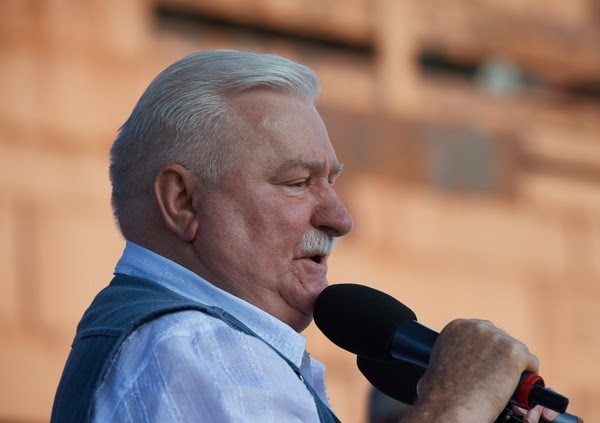
The measure has led to the biggest street protests since the populist conservative party came to power in 2015. Lech Walesa, the 73-year-old former president, joined demonstrators in the city of Gdansk, where he led landmark strikes in the 1980s that helped topple communism. He warned that the freedoms won by the anti-communist struggle are now under risk.
“Our generation managed, in the most improbable situation, to lead Poland to freedom,” he said to the crowd in the city’s Solidarity Square. “You cannot let anyone interrupt this victory, especially you young people … You must use all means to take back what we achieved for you.”
Lech Walesa speaks near the Monument of Fallen Shipyard Workers in Gdansk, Poland, on July 22. (Adam Warzawa/European Pressphoto Agency)
Donald Tusk, the president of the European Council and a former Polish prime minister, described the legislation as “a negation of European values and standards” that would “move us back in time and space — backward and to the East.” The “East” was less a geographic signifier than a marker for a different, darker era of Polish politics, when Warsaw was subject to the whims of Moscow and isolated from Europe’s liberal democracies.
A statement from the U.S. State Department urged the government to reconsider the bill, which it declared would “undermine judicial independence and weaken the rule of law in Poland.” Yet the White House seems to have sent a different message.
After all, it was in Warsaw earlier this month that President Trump championed his vision of the West to a crowd of supporters bused in by the ruling party. Trump said nothing then about the importance of rule of law or the preservation of democratic institutions. Instead, he delivered a paean to blood-and-soil nationalism, anchored in antipathy to Islam and airy appeals to Christian values and the sacrifices of “patriots.”
Michal Kobosko, the director of the Atlantic Council’s Warsaw Global Forum, told The Post that Trump’s rhetoric clearly “encouraged to move forward with their offensive against the courts.”
“In giving such a speech in such a place, Trump has confirmed Poland’s nationalist government in its isolationist and anti-democratic course,” wrote Post columnist Anne Applebaum.
That course has been charted by Jaroslaw Kaczynski, the Law and Justice Party’s co-founder and boss and the de facto leader of Poland. Both the country’s prime minister and president are seen as loyal accomplices to Kaczynski’s agenda. Protesters were staking their hopes on the latter — President Andrzej Duda — to veto the widely unpopular legislation, but he is expected to sign it into law after a few amendments.
Its implications are staggering. “Here’s the crowning blow in ending judiciary independence in Poland,” wrote Monika Nalepa of the University of Chicago. “Since the Minister of Justice already simultaneously holds the position of Prosecutor General, the ruling majority may now choose both the prosecutor AND the judge in every single court case.”
People participate in a protest in front of the Senate building in Warsaw, July 20. (Bartlomiej Zborowski/European Pressphoto Agency)
For Kaczynski and his allies, though, the takeover is part of their project to “renationalize” Poland. Kaczynski sees the judiciary as infested with crypto-communists and liberals “subordinated to foreign forces.” He peddles various conspiracy theories, including his belief that Tusk and his liberal colleagues hatched a plot that led to a 2010 plane crash in which Kaczynski’s twin brother died.
When the incident came up during a parliamentary debate about the judicial reforms last week, Kaczynski exploded. “Don’t wipe your treacherous mugs with the name of my late brother,” he said to his liberal adversaries. “You destroyed him, you murdered him!” This sort of polarizing rhetoric has become the stock-in-trade of politicians in nearby Hungary or Turkey, where illiberal conservatives have also set about subverting and transforming democracies in their image.
Kaczynski’s populist platform — built on Catholic piety, anti-cosmopolitan nationalism and generous cash handouts — won his party the support of close to 40 percent of Polish voters, and he may seek to consolidate that position through elections later this year. The liberal opposition, meanwhile, is floundering, as Der Spiegel observed.
“The bedrock of [the liberal] political platform has always been the E.U.,” noted the German magazine. “Its vision is basically that so long as Poland is a reliable European partner, aid from Brussels will ensure prosperity for all. The trouble is that few people believe in this vision in the remote east of the country, in villages and small towns.”
The protests against the new judicial reforms may present a galvanizing moment for the opposition. Last year, the government was forced to back down from an abortion ban after mass protests hit the streets.
“We will show that we refuse to live without freedom,” said Radomir Szumelda, a 45-year-old liberal activist, to my colleague Isaac Stanley-Becker. “Young people who didn’t live under communism may not know what that was like, but they are also joining us, and together we are saying that we can’t go back.”
But they may not get much assistance from the European Union. Despite the scolding statements coming from various corners, real punitive measures can only be slapped on Warsaw by a unanimous vote within the bloc. Hungary’s illiberal prime minister, Viktor Orban, has already made clear that he would veto such censure.
And, looking further west, it’s unlikely the American president — another politician at war with liberalism and convinced of judicial plots against his rule — will lift a finger to prevent Warsaw’s slide away from Europe.
• Trump’s Warsaw speech is still yielding rounds of insightful commentary. The latest entry comes from Stephen Wertheim, a historian on the emergence of U.S. global leadership, in an op-ed in the New York Times. Trump’s embrace of a kind of civilizational war against “barbarism” was the blunt edge of a clear foreign policy that is emerging:
“To be precise, Mr. Trump appears to be evolving into a kind of neoconservative. Before becoming associated with George W. Bush’s ‘freedom agenda,’ many neoconservatives reviled Soviet Communism but were less than enamored with the goal of exporting democracy and human rights. Scorning the flabby norms of the liberal international order, they placed their trust in the muscular assertion of American power, deeming it the real guarantor of their country’s interests and the world’s civilized values alike.
“Like earlier neocons, Mr. Trump looks at the world and sees unceasing threats that experts understate. In the 1970s, prominent neoconservatives formed a ‘Team B’ to challenge the C.I.A.’s estimate of Soviet capabilities and reinvigorate the Cold War. Later, George W. Bush’s administration created an intelligence unit that hyped the Iraqi threat. Mr. Trump, too, mistrusts professionals in the State Department, whose funding he seeks to slash, and in the intelligence agencies, whose honesty and competence he has impugned. Like neoconservatives, he glorifies martial values and seeks to build up the military. Unsurprisingly, this foreign policy has received recent praise from neoconservatives like Elliott Abrams, an erstwhile critic and former Bush and Reagan foreign policy staffer. The commentator Charles Krauthammer, a frequent Trump critic, conferred the gold standard on the Warsaw speech: ‘Reaganesque.'”
• On Friday, White House press secretary Sean Spicer resigned, ending a tumultuous half-year as Trump’s main spokesman. The proverbial writing had been on the wall for some time. Spicer, whose close ally, White House chief of staff Reince Preibus, is also on thin ice, was never part of Trump’s inner circle and endured a torrid time in his post, struggling to clean up after Trump’s incessant tweets and persistent falsehoods. He was even frozen out of the president’s meeting at the Vatican, despite Trump knowing Spicer was a devout Catholic eager to meet the pope.
The move that finally prompted Spicer’s departure was Trump’s appointment of Anthony Scaramucci as the White House’s new communications director. Sarah Huckabee Sanders, who had already assumed a number of Spicer’s duties, was installed as the new press secretary. On Sunday, Sanders and Scaramucci seemed to offer contradictory statements on the White House’s approach to new sanctions legislation on Russia.
Scaramucci, a Wall Street veteran who swam in the same circles of Manhattan high finance as Trump, cuts a very different figure than Spicer, a veteran GOP operative. He was a permanent fixture at the World Economic Forum’s annual confab in Davos — that bastion of “globalism” so reviled by Trump on the campaign trail — and espoused liberal positions on a range of issues, from immigration to gun control. (Scaramucci deleted a series of his old tweets articulating these positions hours after assuming a formal role in the Trump administration.)
Suave and charismatic, it’s easy to see why he is liked by Trump. Watching his first briefing, CNN’s Dana Bash observed that Scaramucci is “the guy that the President thinks that he sees in the mirror.”
• There’s an escalating crisis over access to the Al-Aqsa Mosque in Jerusalem, one of the holiest sites in Islam. Israeli authorities installed metal detectors there in the wake of a shooting rampage earlier this month. That has triggered further upheaval, protests and clashes. The metal detectors are controversial because they are an assertion of Israeli sovereignty at a spot whose status remains at the heart of broader Palestinian-Israeli disputes.
“Captured by Israel in 1967, the site — regarded by most of the international community as ‘occupied’ although claimed by Israel — is seen as a centre of Palestinian national identity that exists above both factional politics and disagreements over strategy.
“A unifying idea, its significance as a national symbol is embraced by secular and religious, making it one of the conflict’s most dangerous flashpoints. The location — as commentators on both sides have been quick to point out — triggered the Second Intifada in 2000 after a similar Israeli political misjudgment when then opposition leader Ariel Sharon visited the site.”
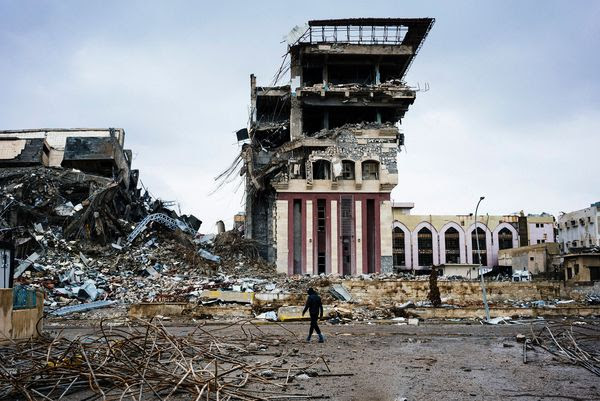
An Iraqi man walks outside the ruins of the University of Mosul on Jan. 22, 2017, a week after Iraqi forces retook it from the Islamic State. (Dimitar Dilkoff/Agence France-Presse via Getty Images)
The closest of calls
On the day the Islamic State overran the Iraqi city of Mosul in 2014, it laid claim to one of the greatest weapons bonanzas ever to fall to a terrorist group: a metropolis dotted with military bases and stocked with guns, bombs, rockets and even tanks.
But the most fearsome weapon in Mosul on that day was never used by the terrorists. Only now is it becoming clear what happened to it.
Locked away in a storage room on a college campus were two caches of cobalt-60, a metallic substance with lethally high levels of radiation. When encased in a radiotherapy machine, cobalt-60 is used to kill cancer cells. In terrorists’ hands, it is the core ingredient of a “dirty bomb,” a weapon that could be used to spread radiation and panic.
Western intelligence agencies were aware of the cobalt and watched anxiously for three years for signs that the militants might try to use it. Those concerns intensified in late 2014 when Islamic State officials boasted of obtaining radioactive material, and again early last year when the terrorists took over laboratories at the same Mosul campus.
In Washington, independent nuclear experts drafted papers and ran calculations about the potency of the cobalt and the extent of the damage it could do. The details were kept under wraps on the chance that Mosul’s occupiers might not be fully aware of what they had.
Iraqi military commanders were apprised of the potential threat as they battled Islamic State fighters in the sprawling complex where the cobalt was last seen. Finally, earlier this year, government officials entered the bullet-pocked building and peered into the room where the cobalt machines were kept.
They were still there, exactly as they were when the Islamic State seized the campus in 2014. The cobalt apparently had never been touched.
“They are not that smart”” a relieved health ministry official said.
U.S. officials and nuclear experts speculate that the terrorists may have been stymied by a practical concern: how to dismantle the machines’ thick cladding without killing themselves. A person standing three feet from the unshielded core would receive a fatal dose of radiation in less than three minutes.
More certain is the fact that the danger has not entirely passed: With dozens of Islamic State stragglers still loose in the city, U.S. officials requested that details about the cobalt’s current whereabouts not be revealed. — Joby Warrick and Loveday Morris
White House senior advisor Jared Kushner at the Royal Court in Riyadh, Saudi Arabia, on May 20. (Jonathan Ernst/Reuters)
The big question
The president’s son-in-law and senior adviser Jared Kushner comes to Capitol Hill this week for a doubleheader of closed-door testimonybefore the House and Senate Intelligence Committees. It’s another big moment in the ever-expanding investigations into Russian election interference and President Trump’s possible ties to the country. Last week saw a slew of new revelations about the Trump team’s interactions with Russians, and fissures in the president’s political team are starting to show. So we asked Post national security reporter Karoun Demirjian: What’s so important about Kushner’s upcoming — and private — testimony?
“Kushner’s appearances are the first chance committee investigators will have to grill someone who participated in a June 2016 meeting with a Russian lawyer who claimed to have information damaging to Hillary Clinton — and who they believed had Kremlin ties.
“Former campaign chairman Paul Manafort and Donald Trump, Jr., were supposed to appear for a public hearing before the Senate Judiciary Committee this week, but they got a pass after agreeing to testify behind closed doors at a still-undetermined date.
“But it isn’t all about that June 2016 meeting. These interviews are happening with the permission of special counsel Robert B. Mueller III, who is running a much wider probe into alleged ties between the Trump campaign and the Russian government; they are also happening as new details are emerging of previously undisclosed interactions Kushner, Attorney General Jeff Sessions and others had with Russian officials during the campaign. The information lawmakers get from Kushner could provide additional grist for Mueller’s now-sprawling inquiries.
“It’s the second strike in only a week for Sessions, whose job security appeared shaky last week after the president told the New York Times he thought it was ‘very unfair‘ to him that Sessions had recused himself from the Russia probe. And with campaign surrogates and current administration members only coming under closer scrutiny, it’s hard to say how the White House will handle things as new revelations keep mounting.“
If Poland’s new law stands, what comes next? Foreign Policy has some ways the E.U. could respond. And what comes next if President Trump in fact tries to pardon himself in the Russia investigation? Nothing good, says Politico, while national-security blog Just Security has ideas what should happen after that investigation, no matter the results. And The Post runs down the reasons why the White House shouldn’t give up on removing Syrian dictator Bashar al-Assad.
Why would the administration embrace a Syria policy that serves Russian and Iranian interests and harms American interests?
By Michael G. Vickers | The WashingtonPost • Read more »
The U.S has a problem: too much cheese. More than a billion pounds too much. Bloomberg tells the story of the government-sponsored “cheese Illuminati” tasked with solving this problem. Meanwhile, Frontline breaks down the surprising child marriage numbers across America, while High Country News details one teenaged Alaskan’s rite of passage that took a dark turn thanks to social media.
Internet death threats hound a young Alaskan after a successful hunt.
By Julia O’Malley | High Country News • Read more »
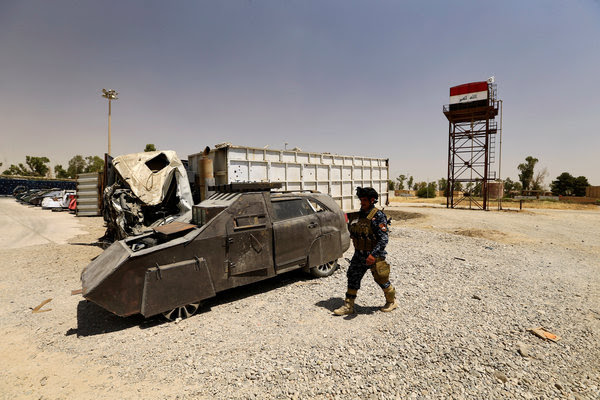
The Islamic State may not have gotten their hands on dirty bomb material, but they did find plenty of supplies to fashion Mad Max-esque armored cars to launch suicide car bombs. The group deployed a steady stream of those bombs as the U.S.-led coalition began its campaign to push the militants out of Iraq and Syria. After taking Mosul, Iraqi forces captured many of the cars, which are now simply monuments to the deadly ingenuity of the jihadists. (Thaier Al-Sudani/Reuters)
You are reading Today’s WorldView, our daily email newsletter covering events and opinions from around the globe.
Santa Clara Family Health Plan (SCFHP) offers you easy access to a variety of community resources. Select one of the organizations below to learn more about their programs and services and to get contact information. This information is provided as a public service.
SCFHP is not a sponsor of the organizations or events referenced here. https://www.scfhp.com/community/resources
2-1-1 Santa Clara County
Alum Rock Counseling Center
Benefits CalWIN
Cal MediConnect – CalDuals
CalFresh
CalWORKS
City of San Jose Parks, Recreation & Neighborhood Services
Covered California – California’s new marketplace for health insurance
DDTP (Deaf & Disabled Telecommunications Program)
Domestic Violence Prevention
FIRST 5 Santa Clara County
Head Start and Early Head Start
The Health Trust (support and health self-management)
Immigrant Relations and Integration Services (IRIS)
In-Home Supportive Services (IHSS)
To be eligible for IHSS, you must be receiving Medi-Cal, be blind, disabled, or 65 years of age or older, AND be unable to live at home safely without help. IHSS provides services according to the IHSS recipient’s ability to perform daily activities, and can include feeding, bathing, dressing, housekeeping, laundry, shopping, meal preparation and clean up, respiration, bowel & bladder care, moving in and out of bed, rubbing the skin (to prevent skin breakdown), accompaniment to medical appointments, paramedical services, and protective supervision. Phone: 1-408-792-1600
Indian Health Center (diabetes management & fitness program)
Lifeline Assistance Program (Cell Phones)
Meals on Wheels, Hot Lunches
Medi-Cal
OUTREACH
Rebuilding Together Silicon Valley
Sacred Heart Community Service
Santa Clara County Health Connection
Second Harvest Food Bank
Silicon Valley Independent Living Center (SVILC)
Social Services Agency, Santa Clara County
Sourcewise (formerly Council on Aging Silicon Valley)
Email Connie , motherhealth@gmail.com , for an estate planner who will help you navigate IHSS so that you can still avail some of its services with your income and wealth.
The Company Behind Many Surprise Emergency Room Bills
Early last year, executives at a small hospital an hour north of Spokane, Wash., started using a company called EmCare to staff and run their emergency room. The hospital had been struggling to find doctors to work in its E.R., and turning to EmCare was something hundreds of other hospitals across the country had done.
That’s when the trouble began.
Before EmCare, about 6 percent of patient visits in the hospital’s emergency room were billed for the most complex, expensive level of care. After EmCare arrived, nearly 28 percent got the highest-level billing code.
Photo
A small, rural hospital in Washington State, Newport Hospital and Health Services, outsourced its emergency room, as many hospitals have. Soon it started hearing from patients confused by getting large bills from the E.R. doctors.CreditRajah Bose for The New York Times
On top of that, the hospital, Newport Hospital and Health Services, was getting calls from confused patients who had received surprisingly large bills from the emergency room doctors. Although the hospital had negotiated rates for its fees with many major health insurers, the EmCare physicians were not part of those networks and were sending high bills directly to the patients. For a patient needing care with the highest-level billing code, the hospital’s previous physicians had been charging $467; EmCare’s charged $1,649.
“The billing scenario, that was the real fiasco and caught us off guard,” said Tom Wilbur, the chief executive of Newport Hospital. “Hindsight being 20/20, we never would have done that.” Faced with angry patients, the hospital took back control of its coding and billing.
Newport’s experience with EmCare, now one of the nation’s largest physician-staffing companies for emergency rooms, is part of a pattern. A study released Monday by researchers at Yale found that the rate of out-of-network doctor’s bills for customers of one large insurer jumped when EmCare entered a hospital. The rates of tests ordered and patients admitted from the E.R. into a hospital also rose, though not as much. The use of the highest billing code increased.
“It almost looked like a light switch was being flipped on,” said Zack Cooper, a health economist at Yale who is one of the study’s authors.
‘Like a Light Switch’
In several hospital emergency rooms, out-of-network rates for customers of one large insurer jumped to nearly 100 percent after EmCare took over. Below, the year before and the year after a switch.
Percent of in-network E.R. visits where doctors’ fees were billed as out of network
Hospital A
100%
Hospital B
100%
Hospital C
100%
Hospital D
100%
Hospital E
99%
Hospital F
100%
Hospital G
33%
Hospital H
71%
Before
After
In a statement, EmCare described the study as “fundamentally flawed and dated.” But it acknowledged that surprise billing, as the billing is called when the doctor is unexpectedly not part of an insurance network, is “a source of dissatisfaction for all payors, providers and patients in our current health care system.” It said that the issue was not specific to any one company, and that it had already publicly committed to reaching agreements with insurers for the majority of its doctors within the next two years. This study, and others, have found that EmCare is not alone in the practice of sending out-of-network bills.
EmCare said that it allowed hospitals to treat sicker patients when it takes over, and that an increase in such patients explained the higher billing in Newport.
In the study, the researchers examined nearly nine million visits made to emergency rooms run by a variety of companies between 2011 and 2015, using data from a single insurance company that does business in every state. In exchange for access, the researchers agreed not to identify the insurer. Insurers and health care providers typically sign contracts forbidding them to reveal the prices they have agreed to, and the national trends in surprise billing detected by the Yale team are consistent with a broader study by government researchers.
The new data suggests that EmCare, part of publicly traded Envision Healthcare, did not sign contracts with the insurance company and was able to charge higher prices.
Fiona Scott Morton, a professor at the Yale School of Management and a co-author of the paper, described the strategy as a “kind of ambushing of patients.” A patient who goes to the emergency room can look for a hospital that takes her insurance, but she almost never gets to choose the doctor who treats her.
Sometimes, insurers simply pay higher out-of-network bills, but the cost is often passed on directly to patients.
Photo
A broken ankle sent Debra Brown of Crescent City, Calif., to the Sutter Coast Hospital’s emergency room. She was surprised to get an additional bill from a doctor who she said never identified himself and only briefly touched her ankle.CreditEzra Marcos for The New York Times
After slipping on some wet leaves outside her house in Crescent City, Calif., in February, Debra Brown, a 60-year-old county accounting clerk, wound up at Sutter Coast Hospital. She is paying off her deductible, but her insurer covered most of her remaining hospital bill. She was shocked to get an additional bill from a doctor who she said never identified himself and only briefly touched her broken ankle. That physician worked for EmCare. Her portion of the bill is more than $500.
“Now I’m going to have to pay this bill off, and I can’t afford to see a doctor about my high blood pressure medication,” Ms. Brown said. “This is insane, and it’s greedy.”
Nationwide, more than one in five visits to an in-network emergency room results in an out-of-network doctor’s bill, previousstudies found. But the new Yale research, released by the National Bureau of Economic Research, found those bills aren’t randomly sprinkled throughout the nation’s hospitals. They come mostly from a select group of E.R. doctors at particular hospitals. At about 15 percent of the hospitals, out-of-network rates were over 80 percent, the study found. Many of the emergency rooms in that fraction of hospitals were run by EmCare.
A Few Hospitals Are the Source of Most Surprise E.R. Bills
About 22 percent of emergency room visits at in-network hospitals resulted in out-of-network bills in 2015, according to data from one insurer. But most hospitals had few such bills.
1,500
1,000
500
0
20% O.O.N.
40
60
80
Most hospitals had almost no out-of-network E.R. bills.
⤶
Some hospitals had almost all out-of-network E.R. bills.
⤷
hospitals
When emergency room doctors work for a company that has not made a deal with an insurer, they are free to bill whatever they want, insurers say. “The more they bill, the more they get paid,” said Shara McClure, an executive with Blue Cross of Texas.
E.R. doctors say out-of-network billing isn’t their fault. Sometimes, insurance companies will offer only low payments, leaving physicians no choice, said William Jaquis, an executive with the American College of Emergency Physicians, who is also an E.R. physician employed by EmCare. Doctors would “prefer that we had better payment and better negotiation with the insurers, and the patients would be covered,” he said.
The researchers focused on 16 hospitals that EmCare entered between 2011 and 2015. In eight of those hospitals, out-of-network billing rose quickly and precipitously. (In the others, the out-of-network rate was already above 97 percent, and it did not go down.) They also looked at a larger sample of 194 hospitals where EmCare worked and found an average out-of-network billing rate of 62 percent, far higher than the national average.
More Surprise Bills, Hospital Admissions and High Codes
In the year after EmCare took over an E.R., customers of one large insurer who were served by it were more likely to receive out-of-network bills, be admitted to the hospital and be billed for the most complex types of care, according to a handful of examples identified by researchers at Yale.
The before-and-after analysis was limited to the small number of hospitals where the researchers could find public records of EmCare’s entrance, and it was based on claims from only one large insurance company. While the nationwide patterns are consistent with studies that have looked at other insurance companies, the single insurer in the study may not be typical in all cases: EmCare does participate in some insurers’ networks, such as Blue Cross of Texas. EmCare also says it has reached agreements with more insurers in Texas, Arizona, Florida and Virginia since 2015.
Researchers also examined what happened when one of EmCare’s top competitors — TeamHealth — took over a handful of mostly nonprofit emergency departments. There, they found a smaller increase in out-of-network billing and virtually no change in hospital admissions, testing or coding.
Analysts point out that hospitals, despite any patient complaints, can benefit financially from the increased testing and admissions EmCare has delivered. In the study, surprise bills were more common at for-profit hospitals than at their nonprofit competitors.
“They’d have to have their heads in the sand to be totally unaware” about the out-of-network billing, said Leemore Dafny, a professor at Harvard Business School, who reviewed the research.
EmCare’s emergency room management has come under scrutiny before. The company was named in a 2011 whistle-blower lawsuit against Health Management Associates, a for-profit hospital chain. The suit alleges that both EmCare and the hospitals pressured E.R. doctors to increase admissions and tests, even when the physicians believed they were not medically necessary. The company “repeatedly terminated physicians and E.R. medical directors” who pushed back, the suit says. The case, which was brought by a hospital chief executive and a former EmCare executive, is still pending. Envision said it does not comment on pending litigation.
Hospital emergency departments, which must take all comers regardless of their health insurance, were once viewed as financial drains. Then hospital leaders started to see the E.R. as the front door, critical to attracting paying patients. In the early 1990s, emergency departments accounted for a third of admissions to hospitals; today, they account for half, according to a RAND study.
As in so many other parts of the modern economy, turning operations over to large outside contractors has been a big part of the transition. Nearly a quarter of all emergency room doctors now work for a national staffing firm, according to a 2013 Deutsche Bank report.
EmCare in particular has thrived. Founded in the 1970s, it has grown rapidly in recent years.
Its sales pitch to hospitals is that it can find high-quality doctors and run emergency rooms more efficiently. It offers a software program called RAP & GO (short for Rapid Admission Process and Gap Orders) that it says speeds admissions and potentially produces “significant new hospital revenue.”
Some doctors say the staffing companies save them from the administrative headaches of billing and scheduling.
In addition to its work in emergency rooms, EmCare has been buying up groups of anesthesiologists and radiologists. In these hospital specialties, it is hard for patients to shop, and out-of-network billing is common.
EmCare’s size and reach have made some doctors wary of criticizing its practices. According to Dr. Carol Cunningham, an emergency room physician in Ohio, that is especially true in places where there is little alternative to working for a large staffing company. “You may have trouble finding something in the area,” she said.
But some doctors outside the E.R. have been less reticent. Dr. Gregory Duncan, chief of surgery at Sutter Coast Hospital in Crescent City, Calif., said patients started complaining about bills they received after EmCare took over the emergency room in 2015.
Photo
Dr. Gregory Duncan, chief of surgery at Sutter Coast Hospital in Crescent City, Calif., said patients started complaining about bills they received after EmCare took over the emergency room in 2015.CreditEzra Marcos for The New York Times
“I discovered a pattern of inflated bills and out-of-network bills,” he said. “What they are doing is egregious billing.”
Dr. Duncan, who also sits on the county health care district board, has joined with other elected officials in asking Sutter Coast to terminate its contract with EmCare.
In an emailed response, Mitch Hanna, the chief executive of Sutter Coast, said the hospital chose EmCare because of its ability to fully staff its emergency department. He added that he understood EmCare was working to bring two large commercial insurers into its network by the end of the year.
EmCare said in early February that it planned to reach agreements with insurers for most of its doctors. The company also said it was working with insurers, hospitals, lawmakers and others to make sure patients get appropriate care “without creating undue financial burden.” The American College of Emergency Physicians favors an approach in which out-of-network emergency room doctors are paid a standard rate.
California recently passed a law setting a maximum amount that out-of-network doctors can charge patients. Other states, including Florida and New York, have also passed laws to limit surprise bills.
But many state efforts to reduce surprise billing have been met by fierce lobbying from doctors who oppose efforts to weaken their bargaining position, said Chuck Bell, the programs director at the consumer advocacy group Consumers Union.
“The whole thing is really a mess,” he said. “Progress is really slow.”
Email motherhealth@gmail.com for the features you want added in a bay area health resource web site serving the elderly and those with health issues. We are also looking for seed funders/investors > $10,000 for marketing/customer service and web site redesign. You may donate your car or real estate to benefit affordable senior care and the environment to Green Research Institute 501c3.
Motherhealth
True health concierge listing Health Resources
Per city in the bay area to help health consumers with health promotion, finding care/caregivers, search for list of health care providers by cost and service
Helping health consumers navigate from symptoms, diagnostic tests, health care providers, hospitals, rehab, in home care with caregivers or care homes for 24/7 care, nursing facilities, hospice care
to build health data to find cancer cure
Business model: direct to health consumer, finding care, matching health care providers (nursing facilities, home health, hospitals, rehab, hospice care, home care, care home, CAM), telehealth for doctors, source of health consumer network per city where providers can do telehealth as independent providers direct to health consumers
Potential growth
Requirements
Target Area: Bay area cities, health consumers seeking care and resources for aging population and those with chronic health issues
Information Architecture
Present information by city, specialty or service, availability, limitations, cost
Health Navigation: Health assessments – > Symptoms -> Doctors or Care Provider list -> Hospital /Rehab -> Care homes or caregivers at home – > Nursing Homes – > Hospice Care
Health consumers must be able to find care, match their needs, find other resources, make decisions based on resources by city, be educated about health, find all choices from cheap to expensive care, a true health concierge with fine tunes search results,
Sorting
Organization
Labels
Health Resource Map by city: Relationship between things, diagram, representation
Connection of knowledge nodes
Context of use
Information hierarchy
Static page – content
Top navigation
Footer
Fully descriptive navigation
Web site within a web site: pool all medical and health related sites in one site….
Web site requirements
It shall list all facilities, centers, hospitals, RCFE, home care agencies per city and services and cost
It shall allow health consumer to find caregivers based on location, level of care and availability
Unique: One stop resource site for health continuity from tests/assessments, matching care doctor-hospital-home care-nursing home-hospice care , health monitoring and promotion (education,video,diagnostic aids for doctors)
Unique: How users think (process) , what they expect (mental model), how it relates to other info (classification), how they refer to specific things (taxonomy), where they are in a given environment (context)
IA:
Content strategy (How will content be managed and updated?)
Schema (How is this content organized?)
Navigation (Where is content located?)
Taxonomy (How is this content classified?)
Search (How are users searching for content?)
Customer service requirements online and with the following telephone area codes:
650
408
510
415
Clear path to achieve their goal or complete a task. Accessible, inclusive, and supportive of users
How do users navigate content on our site?
If our primary user has X as a goal, how do they go about completing this task?
How is important information being presented to our user?
What language or terminology do people use when referring to this process/service/product/thing?
What terms do people use to search for X?
Metadata for indexing of relevant articles that help you search by topic
Search bar___ to search by city , specialty or service , cost


 650-299-2015 Appt/Advice
















 The Islamic State may not have gotten their hands on dirty bomb material, but they did find plenty of supplies to fashion


