
Source: Downsizing seniors and moving to senior living apartments
Downsizing seniors and moving to senior living apartments

Moving to a senior living apartment or facility is a choice for some seniors who wanted to be close to city living and wanted to sell their homes that they cannot maintain any longer. Buying a one story home or living in a facility with elevators and in one level will help you prevent falls. Living in a senior care facility will give you peace of mind when you do not have to prepare for your meals and you can mingle with other seniors.
Call Motherhealth at 408-854-1883 for free referrals to senior care facilities or homes. It is best to budget around $6000 or more. For smaller facilities such as care homes with only 6 clients with 2 caregivers for 24/7 care, you can budget around $3500 and up.
There are times that you still need a personal caregiver, call 408-854-1883 for MOtherhealth caregivers for 24/7 care or 4-hour care.
Know what is important to you, space, amenities, day trips, and other services provided for by senior living communities, care homes or senior apartments.
Brief Interactions Spur Lasting Waves of Gene Activity in the Brain
Brief Interactions Spur Lasting Waves of Gene Activity in the Brain
Source: University of Illinois.
A five-minute encounter with an outsider spurs a cascade of changes in gene activity in the brain that can last for hours, researchers report in a study of stickleback fish.
The research, described in the journal PLOS Genetics, is one of three recent studies – the others conducted in honey bees and mice – to see waves of changes in gene expression in the brain 30 minutes to two hours after contact with an intruder.
“We are discovering that social interactions are extremely potent; they provoke big changes in gene expression in the brain,” said University of Illinois animal biology professor Alison Bell, who studies behavior in three-spined stickleback fish. “These very subtle social interactions are getting under the skin and becoming embedded in the brain. Studies like ours are beginning to show how that actually works.”
The observed changes included modifications to chromatin accessibility – a selective unpacking of the DNA that allows some genes, but not others, to be transcribed and translated into proteins.
“We used to think that DNA was so tightly packaged that it took a long time for that packaging to become unwrapped,” Bell said. “But our study shows that the unpackaging can happen fast – within minutes to hours – and we show that something really subtle, like a social interaction, can provoke dramatic changes in chromatin accessibility.”
Bell and her colleagues tracked changes in gene expression 30, 60 and 120 minutes after an encounter. They focused on two parts of the brain – the telencephalon, which is important to learning and memory; and the diencephalon, which integrates social information and hormonal influences.
“We compared experimental fish – those that had the encounter – with control fish, who remained alone in their tanks,” she said.
Hundreds of genes were expressed differently in the experimental and control fish. They also varied in the expression of numerous transcription factors, which regulate the activity of other genes.
Graduate Student Syed Abbas Bukhari, who is first author on the paper, led an analysis of the functions of groups of genes whose expression patterns paralleled one another at 30, 60 and 120 minutes.
“This revealed that the genes that change in tandem over time have similar functions,” Bell said. Such functional groups include genes that contribute to immunity, hormone activity, metabolism or homeostasis.
In the experimental fish, hormone gene expression was highest at 30 minutes, metabolism genes peaked at 60 minutes and genes linked to immune function and homeostasis were upregulated the most two hours after the encounter.
“We’re seeing changes in gene expression even two hours after the fish interacts with an intruder. Clearly, those changes are not about the animal’s initial behavior,” Bell said. “We haven’t studied learning and memory, but we think that these chromatin modifications and changes in gene expression are all about setting up their brains to respond to threats in the future.”
Previous studies suggest that the fish are learning the limits of their territory, Bell said. “Their territory basically ends where they successfully chased away an intruder,” she said.
“Our findings made me feel very humble; I really did not appreciate how much is going on in these guys’ brains,” Bell said. “If you watch sticklebacks in natural populations, they’re constantly fighting with their neighbors. Our study just looked at what happened after a five-minute interaction, once. They’re doing this all day long, over and over again.”
ABOUT THIS NEUROSCIENCE RESEARCH ARTICLE
Source: Diana Yates – University of Illinois
Image Source: NeuroscienceNews.com image is credited to Julie McMahon.
Original Research: Full open access research for “Temporal dynamics of neurogenomic plasticity in response to social interactions in male threespined sticklebacks” by Syed Abbas Bukhari, Michael C. Saul, Christopher H. Seward, Huimin Zhang, Miles Bensky, Noelle James, Sihai Dave Zhao, Sriram Chandrasekaran, Lisa Stubbs, and Alison M. Bell in PLOS Genetics. Published online July 13 2017 doi:10.1371/journal.pgen.1006840
CITE THIS NEUROSCIENCENEWS.COM ARTICLE
University of Illinois “Brief Interactions Spur Lasting Waves of Gene Activity in the Brain.” NeuroscienceNews. NeuroscienceNews, 17 July 2017.
<http://neurosciencenews.com/gene-activity-interactions-7104/>.
<http://neurosciencenews.com/gene-activity-interactions-7104/>.
Abstract
Temporal dynamics of neurogenomic plasticity in response to social interactions in male threespined sticklebacks
Animals exhibit dramatic immediate behavioral plasticity in response to social interactions, and brief social interactions can shape the future social landscape. However, the molecular mechanisms contributing to behavioral plasticity are unclear. Here, we show that the genome dynamically responds to social interactions with multiple waves of transcription associated with distinct molecular functions in the brain of male threespined sticklebacks, a species famous for its behavioral repertoire and evolution. Some biological functions (e.g., hormone activity) peaked soon after a brief territorial challenge and then declined, while others (e.g., immune response) peaked hours afterwards. We identify transcription factors that are predicted to coordinate waves of transcription associated with different components of behavioral plasticity. Next, using H3K27Ac as a marker of chromatin accessibility, we show that a brief territorial intrusion was sufficient to cause rapid and dramatic changes in the epigenome. Finally, we integrate the time course brain gene expression data with a transcriptional regulatory network, and link gene expression to changes in chromatin accessibility. This study reveals rapid and dramatic epigenomic plasticity in response to a brief, highly consequential social interaction.
“Temporal dynamics of neurogenomic plasticity in response to social interactions in male threespined sticklebacks” by Syed Abbas Bukhari, Michael C. Saul, Christopher H. Seward, Huimin Zhang, Miles Bensky, Noelle James, Sihai Dave Zhao, Sriram Chandrasekaran, Lisa Stubbs, and Alison M. Bell in PLOS Genetics. Published online July 13 2017 doi:10.1371/journal.pgen.1006840
YouTube Ads Leaderboard: June 2017
YouTube Ads Leaderboard: June 2017
The YouTube Ads Leaderboard showcases the top ads that people choose to watch each month.
1
#MoreThanARefugee
2
Xbox One X – E3 2017 – World Premiere 4K Trailer Xbox
3
Hay Day 360 Hug
4
#ProudToBe: Celebrate Brave Voices this Pride
5
Boot Camp – A Best Fiends Animation
6
Audi “Driver’s Test” – Spider-Man: Homecoming
7
Disney’s Moana As Told By LEGO – Mini Movie
8
WWDC 2017 — APPOCALYPSE — Apple
9
Foot Locker x “Father’s Day” feat. Lonzo Ball, De’Aaron Fox, Jayson Tatum and Jonathan Isaac
10
Clash of Clans: Welcome To The Builder Base
Three “private American citizens” who are suing Donald Trump’s presidential campaign and his political adviser Roger Stone for data breach
See Also: Moving from Vulnerability Management to Effective Vulnerability Response
If a federal district judge determines the case could proceed to the discovery phase, that could require the defendants to be deposed and hand over documents, potentially revealing previously unknown facts about the hack of Democratic National Committee computers by the Russians in the run up to the 2016 U.S. presidential election. “Emails, texts and other communications from the Trump campaign would be fair game for discovery,” privacy and cybersecurity lawyer Christopher Pierson, who is not involved in the case, tells me.
“Ultimately, these particular plaintiffs may or may not care whether they get a check in the end. They care about finding out what happened.”
The plaintiffs could declare a moral victory even if they don’t eventually prevail. “Ultimately, these particular plaintiffs may or may not care whether they get a check in the end,” says cybersecurity lawyer and author Mark Rasch. “They care about finding out what happened, publicizing it. That’s not uncommon, particularly in a highly charged political environment.”
The plaintiffs include two Democratic Party donors – Roy Cockrum, a former Episcopal monk, and Eric Schoenberg, a businessman who served in the Foreign Service during the Reagan administration – as well as Scott Comer, a mid-level staffer at the DNC. Representing the plaintiffs is Project Democracy, a watchdog group founded by former Obama administration lawyers.
The lawsuit, filed July 12 in the U.S. District Court for the District of Columbia, contends the plaintiffs’ private information – Social Security numbers, medical information and details of their private lives – was published as a calculated political strategy in which the Trump administration and Stone played a central role.
The lawsuit comes as the Justice Department special counsel, former FBI Director Robert Mueller, investigates the Russians for interfering in the 2016 presidential election and whether the Trump campaign was involved. Rasch says if Mueller feels the plaintiffs’ lawsuit would interfere with his probe, he could ask the court to stay the discovery. But he says that usually only occurs when the government is a party to the legal action, which is not the case with this lawsuit. “Private litigants have a right to litigate private matters on their own,” Rasch says.
Looming Deadline
The plaintiffs acted as a one-year statute of limitation deadline for filing privacy invasion lawsuits loomed. WikiLeaks first published stolen DNC emails last July 22.
“These plaintiffs are using the law and the American civil justice system the way it was intended: to vindicate important rights and values, such as the right to privacy and the right to participate in the political process; and to deter others who might consider colluding with a foreign government for political gain,” Project Democracy Executive Director Ian Bassin, a former associate counsel in the Obama White House, says in a statement. “Each of these victims expressed a sense of duty at various times to seek justice, even after a tumultuous year resulting from their private information being published for the world to see, and even knowing that stepping forward could bring new attacks.”
A spokesman for President Trump’s outside legal team did not respond to a request for comment, according to The New York Times. But Stone – who has said he had communications with WikiLeaks founder Julian Assange and a “completely innocuous” Twitter exchange with the DNC hacker known as Guccifer 2.0 – issued a statement, published by the online news outlet LawNewz.com, characterizing the lawsuit as baseless and completely without merit. “Essentially someone has pasted together a series of questionable media claims for which there is no evidence whatsoever,” he said.
Building a Circumstantial Case
Indeed, in making a circumstantial case of conspiracy against the defendants, the suit lists details about the Russian hacking and interference in the election that can be found in news reports, congressional testimony and government documents. One example: the email string released this past week by the president’s son, Donald Trump Jr., of the meeting he, senior presidential adviser Jared Kushner and then-Trump campaign chairman Paul Manafort held with Russian lawyer Natalia Veselnitskaya on June 9, 2016, with the purported intent of receiving political dirt on Democratic Party presidential nominee Hillary Clinton.
To be successful, the plaintiffs will have to prove they were harmed by the leaks and that the Trump campaign and/or Stone were responsible. The lawsuit furnishes a lengthy list of harms it contends befell the defendants, including the outing of one of the defendants to his grandparents who did not know he was gay and emotional distress he experienced by harassing phone calls he received. Often, to succeed in such a lawsuit, the plaintiffs must show financial harm caused by defendants’ actions.
To prove a conspiracy, the plaintiffs needn’t show [that] the defendants colluded with WikiLeaks. What they must prove is that the Trump campaign and Stone plotted with the Russians who were behind the hack and that the Russians colluded with WikiLeaks to publish the stolen emails and documents. “The biggest challenge here will be proving the defendants a part of this conspiracy through a proximate cause analysis,” Pierson says. Proximate cause is an event sufficiently related to a legally recognizable injury to be held as the cause of that injury. “Was it foreseeable that the alleged actions of trying to get Russian operatives to hack and leak sensitive information to WikiLeaks .. would cause the harm that is alleged?” he asks.
Russia, WikiLeaks Not Among Defendants
The lawsuit neither names Russia nor WikiLeaks as defendants, which could suggest a political motive for the legal action. “If the suit were intended as a real effort to mitigate a harm, it would name all of the people who caused the harm,” says Paul Rosenzweig, a cybersecurity lawyer and consultant who teaches a course in cybersecurity law and policy at George Washington University. “Perhaps not Russia, which is likely immune, but certainly WikiLeaks.”
But the process of the lawsuit – seeking the truth about who should be held liable for the DNC hack and the leaking of personal information – could be as important as the final verdict. As Rasch warns: “A lawyer with subpoena power is a dangerous thing.”
Condoms don’t work, smoking doesn’t kill, GOP is saving Medicaid—the world class lies of Mike Pence
- Incredible CNN interview with Trump voters: Half of panel participants now regret their vote
- Sean Spicer: It’s ‘inappropriate’ to ask whether Trump’s businesses will be making things in America
- John McCain’s surgery would cost at least $76,000—on Medicare
- Daily Kos is prepared to resist Trump every single day until his resignation or impeachment. Can you chip in $1 to support independent, progressive media?
- Fox News moves from slanted reporting, to active involvement in cover-up of collusion
Cartoon: Voter fraud fail - Trump is a total loser and only getting losing-er
- Condoms don’t work, smoking doesn’t kill, GOP is saving Medicaid—the world class lies of Mike Pence
- Memos prove Kansas’ Kris Kobach pitched Team Trump on nationwide voter suppression plan in November
- Unarmed white woman shot by police in Minneapolis—a reminder that police reform is for everyone
- Mitch McConnell doesn’t have the votes to pass Trumpcare, so he wants to repeal Obamacare with no replacement. Call your senators at (202) 224-3121, and tell them “No Obamacare repeal.” After your call, let us know how it went.
- Trump holds the fate of Kushner’s security clearance in his stubby little hands
- Trump kicks off ‘Made in America’ week while Ivanka’s company says they won’t make goods in the US
- McConnell to take one last shot with a wreck-it-and-run repeal, like juvenile car thieves
- Republicans don’t have the votes to pass Trumpcare
- Texas teens to fight ‘show me your papers’ bill with quinceañera-themed protest
Senior care cost in the bay area
Source: Senior care cost in the bay area
Senior care cost in the bay area
Live-in care is cheaper than hourly care. Motherhealth caregivers charges $250 for 24-hr care versus $350 or $450 with other home care agencies. There is a discount when two clients per house are being cared for. It would be difficult for an older spouse to care for his/her spouse.
Most of our clients call for caregivers during the late stage of cancer or life of their parents. We have live-in clients in Richmond and other places 1-2 hours away from the bay area. Each of our caregivers provide references but we still train them again based on the needs of each client. Our case managers monitor both the clients and caregivers regularly.
Why live-in care is preferred? Most home emergencies happen early morning and middle of the night. Our caregiving fees include cooking, light housekeeping, assistance in daily living, medication management, driving, and other tasks needed to coordinate care for seniors at home.
Caregivers are trained to treat seniors like family so that most of our clients prefer to work with us.

Analysis | Vice President Pence’s bushel of false and misleading claims about health care
|


|
||||||||||


|


|

|

|

|

|
||||||||||


|
|
Dietary needs of seniors with Parkinson’s disease
Cost of senior care services
Source: Cost of senior care services
18.6 miles for justice – we couldn’t have done it without you!
|
|||||||
|
|||||||
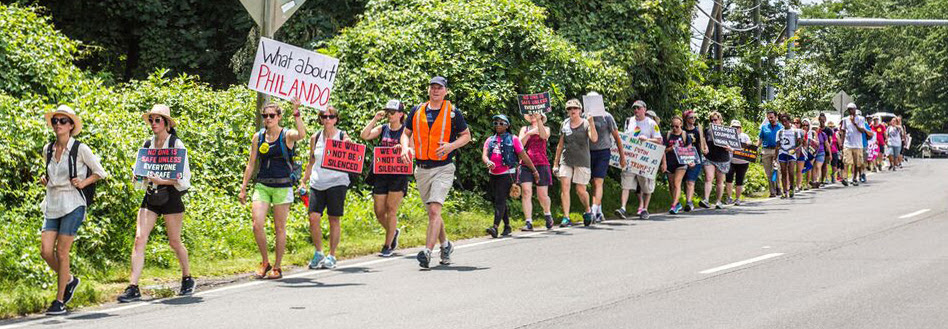 Photo by David Moriya
 Photo by David Moriya
 Photo by David Moriya
 Photo by David Moriya
 Photo by David Moriya
 Photo by David Moriya
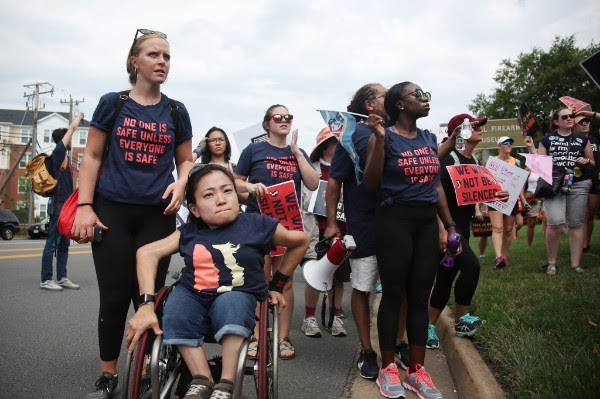 Photo by David Moriya
 Photo by David Moriya
 Photo by Kyle O’Leary
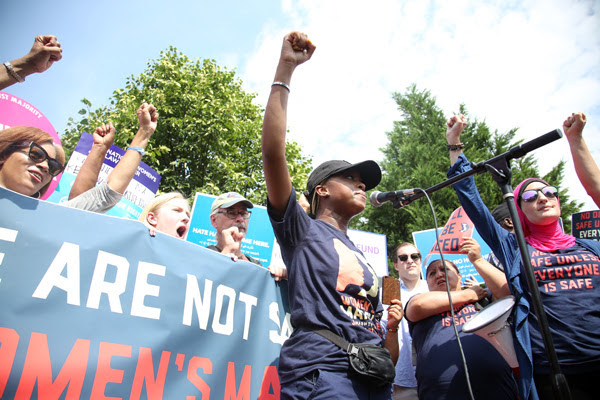 Photo by David Moriya
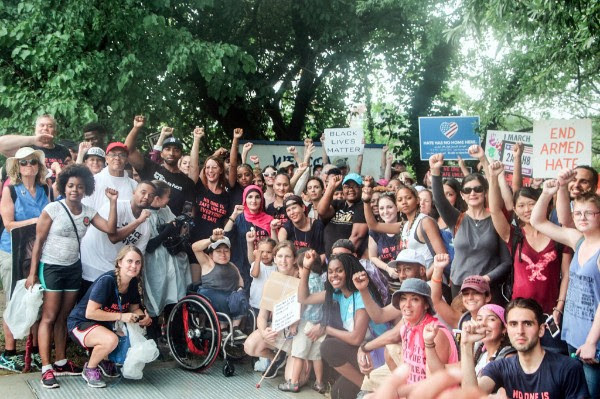 Photo by Kyle O’Leary
Trump meeting may have been ‘the green light Russia was looking for’
- McCain’s surgery may be more serious than thought
- Cartoon: The Negotiator-in-chief
- Thief, traitor and liar edition
- Senate Republicans are hell-bent on passing Trumpcare THIS WEEK, and the newest version is the worst yet. Call your Senators at (202) 224-3121, and tell them ABSOLUTELY NO WAY, NO HOW, NO TRUMPCARE. After your call, tell us how it went.
- Rev. William Barber verbally smites Evangelical preachers who prayed for Trump in Oval Office
- Trump meeting may have been ‘the green light Russia was looking for’
- POTUS by proxy
- New Hampshire GOP passes new law to suppress votes following close 2016 races
- Trump takes to Twitter to defend his lying Russia-colluding son
- Action needed: Senate Finance Chair wants to cut services to give billionaires tax breaks
- Trump associates are pushing the RNC to pick-up the legal bills for ‘billionaire’ Donald Trump
- Trump using donors’ campaign cash to pay for his idiot son’s legal defense
- What will be the Trump-Russia equivalent of Watergate’s smoking gun?
- VIDEO: Republican Susan Collins exposes Trumpcare’s devastating Medicaid cuts
- Only a progressive renaissance can rebuild the middle class
- Ida B. Wells-Barnett fought to make black lives matter