408-854-1883 starts at $30 per hr home care

Skip to main content

Affordable in home care | starts at $28 per hr

Retirement Checklist or Bucket List in 2014

How do we allocate our money?  This year, I plan to allocate my money as follows: 1/3 in long-term savings, 1/3 in short term and 1/3 to create experiences with family, love ones and the community I live.  I will allocate my time to create more income and build relationships.  At 50plus, we all should save at least 20% of our earnings for retirement as we live long, have health threats or a retirement crisis.  For the self motivated 40plus, we are hiring part time financial planners (in 50 US states), with a life/health insurance license , as non-captive agents where you can take your clients with you when you move to another brokerage.

—————————

A typical job lasts for about five years, according to Forbes magazine. The average marriage lasts about eight years, according to the Census Bureau. But figures from the Social Security Administration show that the average American is retired for over 20 years.
Deciding when and where to retire is one of the most important decisions of our lives, and everyone should do their homework before taking this big step. If you’re already retired, you should continue to reassess your situation and be ready to adapt to changing conditions as well as your changing aspirations. You will probably want to look deeper into certain issues. But this checklist is a good place to start.
1. Figure out what you want to do in retirement. If you approach retirement like an extended vacation, you’ll probably be disappointed. There’s nothing wrong with wanting to do more gardening or play more golf. But most satisfied retirees also look beyond themselves to set real-life goals, whether it’s starting their own business, writing a family history, traveling to all seven continents or taking care of their grandchildren.
2. Are you going to work? According to one survey, three quarters of today’s workers expect to work part time after they retire. But only about one quarter of retirees actually do. Why the difference? Many people believe their old employer will hire them back as a consultant, or they think they can land an interesting new job. But expectations often don’t match reality. If you plan to work after retirement, scope out your opportunities ahead of time.
3. Decide where you’re going to live. The typical retirement dream involves riding off into the sunbelt, golf clubs and beach umbrella in hand. Many retirees do take that route and are happy for it. Others decide to move near their grandchildren or retire overseas. But the majority of retirees never leave home. They may downsize, but they stay close to friends and relatives.
4. Figure out your health insurance. For most people this means signing up for Medicare at age 65, along with a supplemental insurance plan. Most of us might not retire before age 65 like my mom who worked till she is 78 to support her 12 grandchildren who are in college.

At 65, we really need a health insurance. Many people can keep coverage from an old employer, or get insurance through a professional association. The Affordable Care Act also now brings new options to early retirees. Whatever your situation, make sure your health insurance doesn’t lapse.
5. Take inventory of your assets. The main difference between working and retirement is that you no longer get a paycheck in retirement. Many experts insist you need $1 million in assets to support a comfortable retirement. Some say less; others say more. You should take a realistic picture of your financial assets, including pensions, retirement accounts and all other resources (don’t forget to factor in your debts) to see if you have the resources to support yourself for 20 or 30 years.
6. Determine where your retirement income will come from. You must turn your assets into the stream of income you’ll need to pay your bills. Add up your monthly income from pensions, Social Security and any other sources. Then figure out how you’re going to produce income from your retirement accounts and personal savings. It can be a complicated process, so consult a professional if you need help.
7. Decide when to sign up for Social Security. Conventional wisdom says you receive full benefits once you hit full retirement age, which is 66 for most of us. The better way to look at it: you’re eligible to begin benefits anytime between age 62 and 70, on a sliding scale. The longer you wait, the bigger your check.
8. Account for unexpected expenses. Consider how you’ll handle non-routine expenses in retirement such as a large medical expense or major home repair. Will you have to help support a grandchild? Do you want to leave an inheritance for children or a favorite charity? Also, consider the effects of inflation over time and the risk of outliving your assets.
9. Consult your spouse. Retirement planning is nothing but a pipe dream if you haven’t talked it over with your significant other. The sooner you start talking, the better your planning will be. Also, share your hopes and aspirations with your children and close friends so they know where you’re headed.
10. Make a plan. Now that you’ve collected your thoughts and analyzed your situation, don’t just sit there. Make your retirement plan. Dream big. Think outside the box. Share your thoughts. Then get ready to enjoy the retirement of your dreams.

 —————————————–

Connie’s retirement bucket list: A long-term retirement strategy includes: 13% return that does not participate in the downside of the market, based on SP500, tax-free, with health benefits added at no cost during health threats such as cancer, stroke or disability, leaves an estate to the next  generation, liquid that can be withdrawn and most of all, if you are still trainable can provide you a par time job as financial planner.

My choice that is not listed below is with a retirement strategy that is tax-free, less admin costs, liquid, safe, grows at 13%, long term savings with health benefits via the retirement plan/college plan with no age limits and better than a Roth IRA, in an IUL policy which I share with others.  Call Connie Dello Buono 408-854-1883 ; motherhealth@gmail.com in 50 states , CA Life Lic 0G60621

Plan for retirement

80% of employees who have taken our financial wellness assessment report not being on track for retirement. If your employer offers you a match on your contributions, at least contribute enough to max it out so you don’t leave any of that free money on the table. Beyond that, you’ll want to calculate how much you need to save to reach your retirement goals. But with any calculator, it’s garbage in/garbage out. Be sure to factor in the possibilities of reduced Social Security benefits, lower real investment returns, longer life spans, and higher health care costs in retirement.

Save for education expenses

With rising student loan debt in the news, saving for college is understandably a rising concern. However, make sure that your retirement is on track first because there’s no financial aid for that. In addition, understand that very few people are able to save enough to fully fund all education costs from savings so don’t let those numbers discourage you. You can start by estimating how much you would need to contribute to your child’s education expenses so you can calculate how much to save.

Take advantage of tax shelters

By using tax-sheltered accounts, Uncle Sam can help you save towards various goals. Your company may offer flex spending accounts to put money away tax-free for dependent care and health care expenses but be aware that you may lose whatever you don’t use by the end of the year. If you have a high-deductible health care plan, a health savings account can let you save and accumulate money tax-free for health care expenses (and for anything penalty-free after age 65). Your employer’s retirement plan and IRAs allow you to put money away tax-deferred or invest it to grow tax-free for retirement. Coverdell education savings accounts and 529 college savings plans allow tax-free earnings for education.

Make sure your investments are properly diversified

The biggest factor in determining the risk and return of your investment portfolio is your asset allocation or how your money is divided between basic asset classes like stocks, bonds, and cash. A simple way to a diversified portfolio is to invest in pre-mixed asset allocation fund. Some are based on a fixed level of risk while others reduce automatically reduce the risk level over time as you approach your target date for goals like retirement or education.

If you prefer a more personalized approach, see if your employer or retirement plan provider offers unbiased asset allocation guidance through a financial education company or advice through programs like Financial Engines and GuidedChoice. There are also low cost providers of online investment advice like WealthFront, Future Advisor, and Personal Capital. Finally, if you want your investment advice as part of a more comprehensive financial plan, you can find an unbiased investment adviser through  groups like the Garrett Planning Network or the Alliance of Cambridge Advisors.

Minimize your investment costs

Studies have shown that low fees are actually a better predictor of future mutual fund performance than past performance or even Morningstar ratings. To minimize mutual fund fees along with taxes and other trading costs, consider implementing your asset allocation plan with low cost index funds that simply track the market and generally end up outperforming more expensive actively managed funds. You can further minimize taxes on your investment income by keeping tax-inefficient investments like taxable bonds, REITs, commodities, and high turnover funds in your tax-sheltered accounts as much as possible.

Harvest tax losses

Although this year looks like another good year in the stock market, you may have some investments in taxable accounts that have lost value. By selling them at a loss, you can use the losses to offset other taxes. Just don’t repurchase the same investment within 30 days or you won’t be able to deduct the loss.

Treat yourself and those you love

Finally, don’t forget that the ultimate purpose of money is to provide for the needs of you and your family. How you do it is important though. Once your needs are taken care of, meet some of those wants with a vacation or occasional outings that let you spend more time together. Studies show that spending money on experiences creates more and longer lasting happiness than spending on material purchases.

Feeding with Mother’s Milk

breastfed babies

Most mothers around the world agree that:

  • The mother’s heartbeat is the baby’s lullaby music.
  • The mother’s milk has sleep inducing benefits.
  • The mother’s milk is not dropable like a bottle and is easy to carry around.
  • The mother’s milk stores the baby’s milk at just the right temperature.
  • The mother’s milk is readily available any time the baby sucks or cries.
  • The mother’s milk stays in a sterile place and stays warm.
  • The mother’s milks do not need sterilizing, boiling or cleaning with soap (for nipples).
  • The mother’s milks size does not matter since they always produce the right amount of milk for her baby.
  • The mother’s milks only absolutely need to be suckled by the baby.
  • The mother’s milk makes traveling easy for both baby and mom.
  • The mother’s milk appears pleasing in a natural way to dad’s eyes when nursing the baby.
  • The mother’s milk provides the comfort the baby needs when tired, hungry or sick.

The many benefits of milk for mothers and babies include:

  • Phosphorous which is important for brain growth and development.

  • Antibodies that will protect the baby against invading organisms.

  • The effect of a natural vaccine without the risk of artificial vaccines.

  • Being always in the right formulation with the baby’s age.

  • The absence of allergens.

  • Comforting the baby’s stomach rather than disturbing it.

  • More iron and other nutrients that are readily absorbed by the baby.


We can tell our partners and friends why we milkfeed our babies. The following sentences reaffirm our commitment to milkfeed our babies:

  • milkfeeding is the mother’s gift only the mother can give.

  • milkfeeding helps make more loving and caring children.

  • milkfeeding is the most human form of feeding.

  • milkfeeding makese it easier to discipline children.

  • milkfeeding is nature’s way of helping mom be in love with her baby.

  • milkfeeding makes dad happy when seeing his wife and baby nourishing each other.

  • milkfeeding helps remove mother’s worries for the day.

  • milkfeeding increases opportunity for the baby to be massaged by the mother.

  • milkfeeding helps mom know her child’s growth and developmental changes better.

  • milkfeeding helps bring greater rewards for the future generation.


Right Start milkfeeding Tips

  • Prepare your nipples, eat well, and sleep when your newborn is sleeping.

  • Maintain a healthy diet with four fresh vegetables and three kinds of fruits a day. Drink lots of water or juices. A hot soup or soupy dish rich in sea foods and grains is important.

  • Put your babies to your milk as soon after they are born as possible.

  • Seek the support of mothers who have milkfed their babies. If milk engorgement occurs: apply warm compress, soak your milk in warm water, make sure that the baby empties your milks, and follow proper positioning and latching on as instructed by your midwife.


milkfeeding More than one Baby

If you have twins, you are doubly committed to the task of milkfeeding. Your partner is an important resource in giving you time to milkfeed both your babies at the same time or one at a time. Since most twins are premature and tend to be sleepy, not sucking well for the first couple of weeks, a lactation counselor or consultant can help you with the proper latch-on techniques. Get the right start milkfeeding tips before sore nipples or milk supply problems occur. Research has shown that mothers who milkfeed twins simultaneously have higher elevations of the mothering hormone prolactin than those who nurse one baby at a time.

Mother’s needs: The needs of a mother are increased with each child to milkfeed so a recommended 3,000 cal/day and increased fluid intake are necessary to maintain the proper nutrition of the mother. Rest is important and support from family and friends can do a great deal in the success of milkfeeding twins or multiples.

Baby’s needs: If one of the babies is less demanding, wake that baby up for simultaneous feeding with the hungrier baby during the day. milkfeed him or her during the night to allow greater weight gain.


For milkfeeding Positions for Twins, ask your midwife, milkfeeding consultant or childbirth educator:

  • Double clutch hold

  • Cross-cradle position

  • Parallel position: One baby is in the cradle hold and one is in the clutch hold with their bodies lying in the same direction.

The Family sleeping together helps the baby slowly adjust to his or her environment.

My second child shared bed with us until he was three years of age.

I can feel the contrasting differences between him and his brother who did not shared bed with us. He is so loving to me and we know each other’s feelings. He was so attached to me that he cried when I left him and his brother for work abroad. Nurse, mother of two, Philippines

Sharing bed is an old tradition in the Far East. By necessity, a big family of six children shares bed usually on the floor with a mat. Until the children reach the age of about five or six years old.

———————-

From Connie’s “Birthing Ways Healing Ways” , an ebook on childbirth, baby care and breastfeeding

email motherhealth@gmail.com to get a free copy

and for a referral to Connie’s Financial Planning Business, now hiring 500 part time financial planners in 50 states

———–

Comments: The above pic was taken 6 weeks after these homebirth babies were born in San Jose California in 1994. Now the babies are 19 yr olds and doing well.  All  these babies were breastfed by homebirth moms who were cared for by bay area midwives.

Ask and you shall receive

I would like to ask for referrals in my financial planning business in 50 US States and in return I will grant your wish to:  

  • help you lose weight

  • be your health coach

  • be your finance coach

  • have a business for less than $1000 with full field training, support, best compensation and product

  • refer clients to you, your service listed in my web site

  • and other ways we can collaborate


The following are my prospect clients:


  • age 1-yr to 80-yr old who needs a retirement savings strategy, an estate to pass on to the next generation, a college plan, an asset protection, a health benefit protection in a life policy

  • access to funds when terminal, critical, chronic illness arise or disability at no additional cost from their life policy

  • 30 plus yr olds who wanted 13% return of their savings in form of indexed annuities

  • those who wanted a better an IRA or 401k retirement plan

  • those who wants to move their idle money, CDs or 401k

  • those with term life insurance and wanted tax-free cash accumulation of retirement savings

  • those who wanted an all in one policy at one cost: asset protection or life insurance, retirement savings at 13%, disability and 3 illness rider free at no cost to policy

  • those who are not happy with their income and wants a part time or full time with full field training and support and best compensation plan

  •  

Connie Dello Buono

Health and Finance Coach

Financial Planner

CA Life Lic 0G60621

408-854-1883

1708 hallmark lane san jose ca 95124

LSW , Best Indexed Annuities

LSW , Best Indexed Annuities

Most 30 yr olds are smart in their retirement savings. They dislike the 1% rate of return. If you want to give a savings plan to your grandchildren or children, call 408-854-1883.

Call for an estate you can give to the next generation with a stroke of a pen.

If you are 50plus, it is not late to save at least 25% of your income for your retirement plan.

We have one that is tax-free with no limits in many ways compared to an IRA or 401k.

Call Connie Dello Buono

408-854-1883 for up to 13% return of your savings, better than the 1% Bank CDs.
CA Life Lic 0G60621
1708 Hallmark Lane San Jose CA 95124
motherhealth@gmai.com

Call Connie  to direct you to agents in other 50 states.  We are hiring financial planners, self motivated and with enterprenueral spirit with full field training and support. Help others with tax-free retirement with health benefits, access to funds during health threats such as cancer, stroke, blindness or disability.

Picks the 25 Best Annuities – Barrons.com

The Art of Talking to Anyone

From the author of How to Say It, the million-copies-sold bestseller
If you want to improve your conversational skills–and achieve greater levels of personal and professional success–
The Art of Talking to Anyone is the ultimate book. Rosalie Maggio has built a career on teaching people how to say the right thing at the right time–and she’s made her techniques available to you.
This essential communication handbook includes: Sample dialogues, topics, and responses Quick-reference dos and don’ts Tips for handling special situations Confidence-building advice and quotations Key words that get to the business at hand

Whether it’s small talk or big, social or work-related, The Art of Talking to Anyone gives you all the tools you need to speak up with confidence, to charm and persuade, and to talk your way through any situation–successfully.
From the Back Cover Yes, you can learn to talk to anyone, anytime, anywhere. And here’s how. Conversation is one of the most decisive factors in our success in business and in life. It’s also an art anyone can learn—with the help of a few simple tips, guidelines and techniques.
The Art of Talking to Anyone makes it easy. Using sample scripts, real-life situations, and surefire strategies, this all-in-one handbook provides everything you need to become a more successful conversationalist. Whether you’re chatting with co-workers at a conference, meeting new people at a party, or just talking on the telephone, this confidence-building guide can help you jumpstart your own unique skills and make a positive, lasting impression. You’ll be surprised by how easy it is to express yourself, how self-assured you’ll feel, and how well people respond to the right words at the right time. Filled with ready-to-use conversations and useful suggestions, this life-changing book shows you:
How to be universally liked How to listen successfully How to keep a conversation going…and how to end one How to ask and answer questions How and when to tell jokes How to deal with difficult conversations How to charm and persuade others.

The Art of Talking to Anyone by Rosalie Maggio has good advice on conversational people skills for any situation. The book covers general conversation principles plus how to talk to anyone in the workplace, meetings and conferences,  business-social events, public places, the telephone, in times of trouble, family and friends and romantic encounters.
To succeed in any conversation, start to finish:
Decide you want to go to an event/place and be convinced of the reasons for doing it.  Have something to say. Take your best self with you. People will catch and mirror your emotional states. Remember people tend to behave as you expect them.
Check out your body language. Your posture… stand up straight, sit up straight. Avoid blushing, facial contractions, fiddling, crossing arms, clearing throat a lot and blinking too much.
Smile frequently to meaningful comments. A good smile works miracles used well.
When introducing someone to someone else, add how you know them. “We worked on a project together.”  “He’s my neighbor and makes the best home made pizza.”
Shaking someone’s hand will give the person the first impression of you. So work on a good handshake. Be the first to reach out your hand to shake the other persons. Avoid the finger grabbing handshake, and reach back to the web between the thumb and index finger. Be firm, hold for a second and look directing into the person’s eyes.
Basic conversational principles. 1. The goal of the first few seconds of someone you don’t know is to find a few things out about the other person, tell a few things about yourself, find some common ground between you. When you find common ground build on it.
2. A conversation should be back and forth. Not short quips like a tennis match, but more like golf. One hits the ball and the other comments on it, and back to the other person.
3. Vary the contributions to the conversation. Make a statement, ask a question, offer a piece of information about yourself, ask something(not too personal) about the other person. Use this as a pattern to go over and over again, and you will see a nice conversational flow.
4. A frequent way to start is to ask about a person’s work, or if not special activities they are part of. Set the tone by sharing some things about yourself, they can then match it to their own life.
5. Use the “you” word more than “I”.  “How did you get into this type work?”  And with other people as part of the conversation, bring the other person in too by asking them a similar question. Try to be a moderator when more than one is in the conversation and bring someone into it who may not speak as much.
6. When someone brings up a subject you don’t know much about, it is a good time to get them to share more or elaborate. “Honestly, I don’t know much about gardening, tell me more about what goes into it.” Most people love to explain what they do and love doing. So it’s a great time to let them tell you the intricacies about it.
7. Use details, precise descriptions, colorful nouns when explaining something. For example instead of just saying I’m a chef, go on to say for whom, and what you are good at preparing, and why you like it. Think about details of what you do and analogies you can use so others understand it.
8. Try to establish a feeling you are on the same wavelength. It’s finding that common ground and building on that.
9. Pick up the other person’s rhythm of speech and speak in the same way and style.
10. Match posture and mannerisms the other person uses.
Use touch to connect stronger. A handshake with a hand tapping the shoulder as you release a handshake. Touching the side of the arm as you speak. Tap on the shoulder as you depart. Or in some cases a squeeze on the upper forearm to show appreciation.
Ending the conversation Always express appreciation for the time to talk, and make a reference to something said.
Listening This is the most important part on your part. Listening is showing you are interested by being attentive, nodding or saying “ah-hah” occasionally. Keeping good eye contact, but not a fixed stare.  Model the other person… smiling, frowning, laughing when they do. Repeat back to them what they said in your own words so they can clarify it, if it is not what you wanted them to hear.
Keep the conversation moving with conversation fillers… phrases such as “and then what, oh, no kidding, how did that go, who, how does that work…”  It shows you are listening and encouraging more. Ask probing, expanding, clarification questions.
Asking good questions are important in a conversation. Bad questions are judgmental, or aggressive, intrusive, numerous, too broad, why, or something too personal. Good questions relate to what the other person just said, help you find the all important common ground, move the conversation along, lead to more detailed answers, are sensitive and neutral and concrete. When a person asks a bad question, divert to a question that a lot ask you that you want to answer, or have another story in your belt to tell them. “First, let me share a story with you.”
Rosalie Maggio continues on in her book to give guidance on telling jokes, dealing with conversation predicaments, being an unpopular conversationalist; and she explains the specifics of conversing in the workplace, meetings and conferences, business social events, public places, telephone, friends and romance.
More from Rosalie at

Joint pain gone with Anti-inflammatory yellow powder, UltraX360

ImageToday, I start my new day as Detox Specialist and Financial Planner. As I was walking yesterday, all of a sudden my left leg is giving up so I took the anti-inflammatory powder from Metagenics, Ultra InflamX360 Plus with Turmeric and Ginger and many medical foods and nutrients. The yellow powder worked wonders when I mixed it in cold drink or soups.  My 78 yr old mother who has arthritis felt the healthy effect of the Ultra Inflam powder in a day with all her major pains gone. So, now I am promoting it to all my senior clients, age 50plus who have joint problems.

 As a financial planner, I promote wellness since the retirement strategy which I recommend comes with full health living benefits, access to funds during illness such as stroke, cancer and disability.

 I am collaborating with doctors, life insurance agents, financial advisors and anyone who wanted to better their finances and income in 2014. I am hiring part time financial planners with full time income and profit sharing as non-captive agent, with self-motivation and entrepreneurial spirit with full field training.

Connie Dello Buono

408-854-1883

motherhealth@gmail.com

clubalthea.com

Healthy Recipes that taste good from hayhouse

12  Holiday Recipes from Your Favorite Hay House Authors
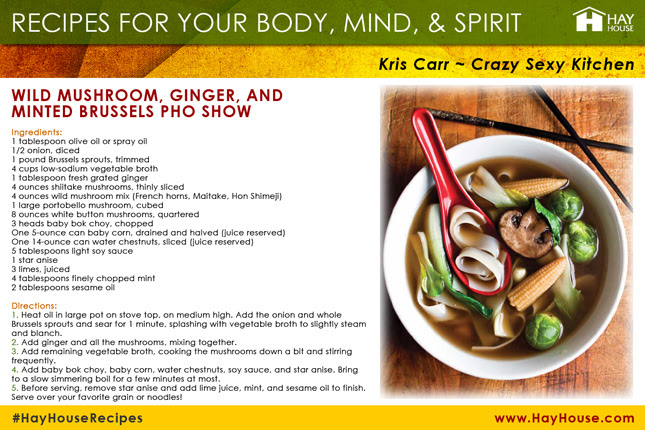
1. Wild  Mushroom, Ginger, and Minted Brussels Pho Show From Crazy Sexy  Kitchen by Kris Carr with Chef Chad Sarno
                   This  feisty flavored pho, which is a Vietnamese noodle soup, will have your buddies  begging for another bowl (and the recipe!). Slice the variety of mushrooms in  different ways for added texture and appeal. Serve with your favorite  brown-rice, buckwheat, or rice noodles.                   
Recipe
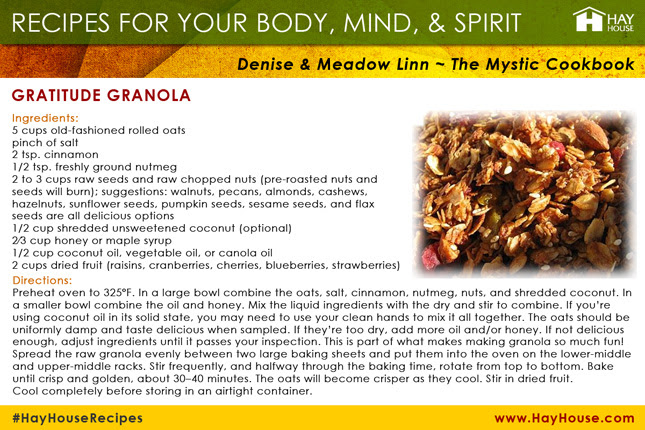
2. Gratitude Granola From The Mystic Kitchen by Denise & Meadow Linn
One morning I awoke feeling really grateful  for the blessings in my life, but a growling stomach interrupted my “attitude  of gratitude.” As it had been awhile since I’d been to the grocery store, my  refrigerator and cupboards were rather bare. I considered eating a frozen pizza  but then discovered a jar of old-fashioned oats sitting on the counter.
    Continuing in my attitude of gratitude, I  said to myself, I am grateful for the oats on my counter and the nuts and dried  fruit in the cupboard. With that in mind, I decided to make a batch of homemade  granola, and thus, Gratitude Granola was born.
Recipe
3. Holiday Mince Pie From Vegetarian Meals for People on the Go by Vimala Rodgers

Although most people save this recipe for the  holiday season, I enjoy mince pie so much I eat it any time of the year. This  recipe is fast, easy, delicious—and vegetarian!

Recipe
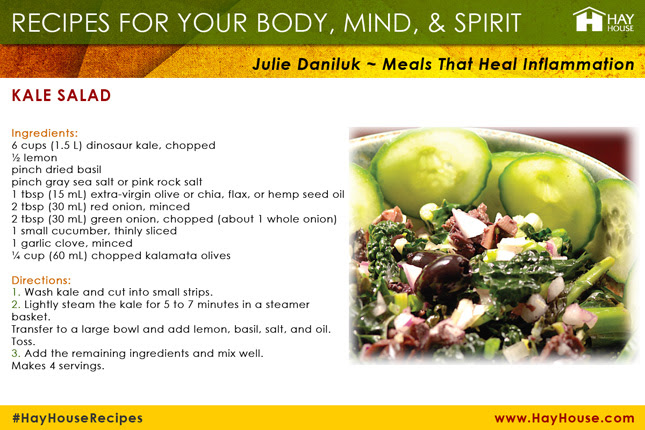
4. Kale Salad From Meals That  Heal Inflammation by Julie Daniluk
If  I could pick one vegetable to eat for life, it would be kale. An excellent  source of vitamin A, vitamin C, and manganese, kale is also a very good source  of fiber, calcium, vitamin B6, and potassium. I feel it has so much to offer  that I find myself eating it four to five times a week. Dinosaur kale (also  known as black kale, cavolo nero, Tuscan kale, or Lacinato kale) is a member of  the brassica family, which includes cabbages.                     This  slightly spicy and dark variety of kale is the easiest to clean because it is  not as curly. I love that it is one of the last vegetables found locally in  cool climates before winter sets in. Its flavor actually improves after the  first frost.                    
Recipe
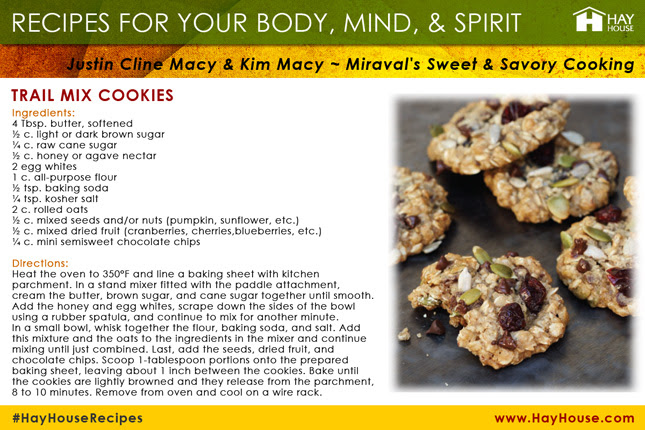
5. Trail Mix Cookies  From Miraval’s Sweet & Savory Cooking by Justin Cline Macy & Kim Macy
Making these cookies is  really easy—you use a simple “drop” method—and I never hesitate to give them to  our daughter because they’re so full of good ingredients. You get whole grains  from the oats, fantastic healthful oils from the seeds and nuts, vitamins and  antioxidants from the fruit, and of course lots of fiber. The recipe makes  quite a few cookies, but they freeze well if you seal them tightly in a freezer  bag. Makes about 3 Dozen Cookies.   
Recipe
6. Basil Pesto Pizza From Happy Hormones, Slim Belly by Jorge Cruise
You can also add some  extra veggies to this recipe. Chop us some baby spinach, dice a quarter cup of  tomatoes or red bell peppers and sprinkle them on with the cheese. Or make this  a salad pizza and top the pie with baby arugula and diced tomatoes just before  you eat. Add a drizzle of Italian dressing for extra flavor.
Recipe
7. Pimped-Out Pumpkin Pancakes From Looneyspoons by Janet & Greta Podleski
Recipe
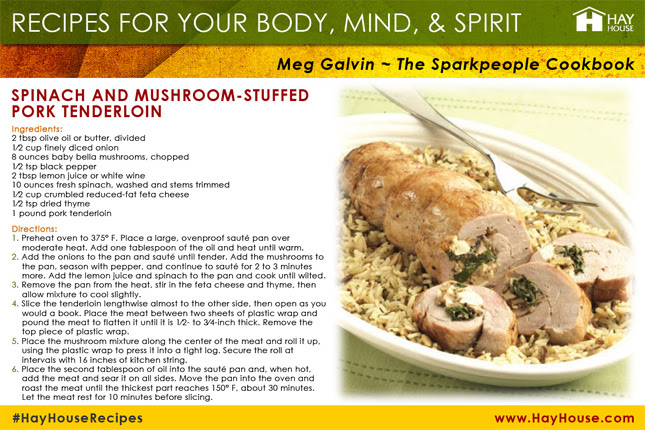
8. Spinach and Mushroom Stuffed Pork Tenderloin From The SparkPeople Cookbook by Meg Galvin & Stepfanie Romine
Recipe
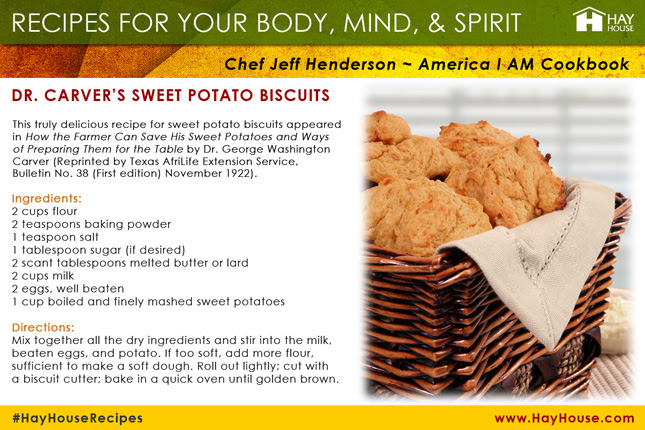
9. Dr. Carver’s Sweet Potato Biscuits From                      America I AM Pass It Down Cookbook by Jeff Henderson
Recipe
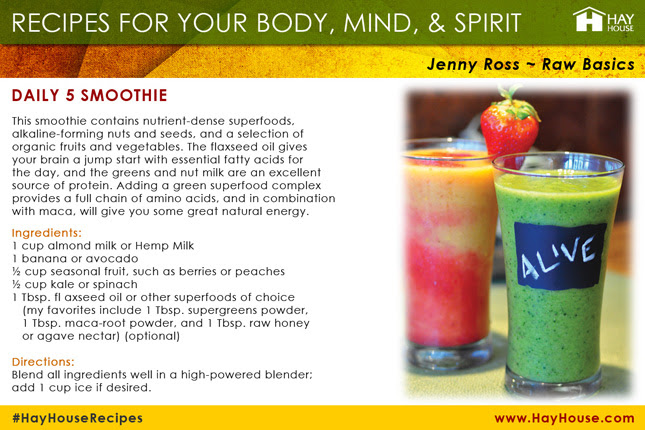
10. Daily 5 Smoothie From Raw Basics by Jenny Ross
Recipe
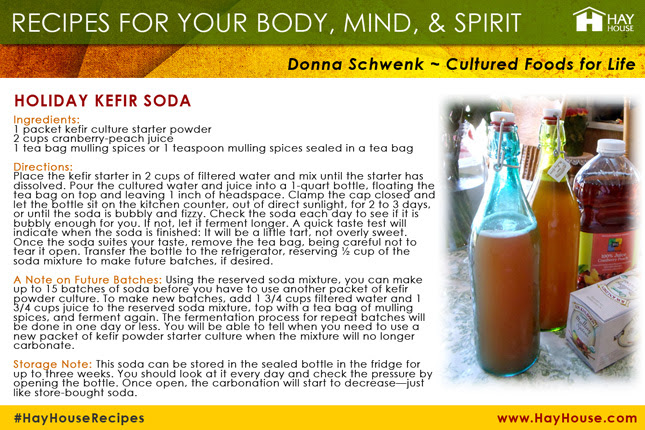
11. Holiday Kefir Soda From Cultured  Foods for Life by Donna Schwenk
I  gave some Holiday Kefir Soda to one of my good friends and workout buddies,  Jayme. This started a trend where I work out, and now everybody is making kefir  soda. They all ask each other if they’ve had their “kefir buzz.” This  excitement inspired me to dabble with some fun versions of this soda—I love the  original recipe—but now I’ve also made the soda using cranberry, apple, and  pomegranate juices. They’re all delicious.
A  note before you begin: Make sure you use sturdy swing-top bottles  (the caps clamp down) when making this recipe. You can repurpose beer bottles,  such as those from Grolsch, or you can buy new heavy glass bottles that are  specifically designed for brewing. Bottles bought at craft stores aren’t as  sturdy and may explode.
Recipe
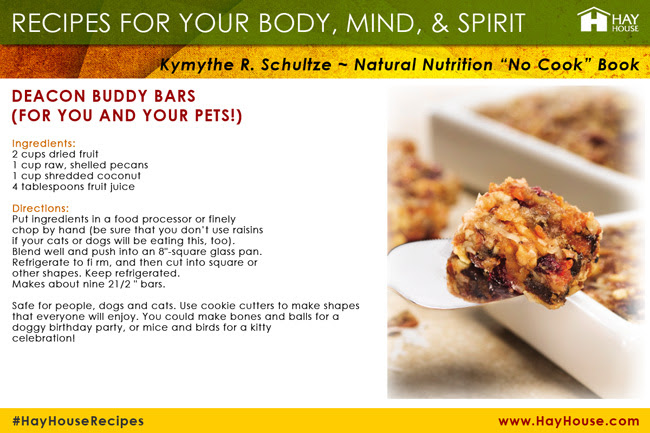
12. Deacon Buddy Bars (for you and your pets!) From Natural  Nutrition “No Cook” Book: Delicious Food for You and Your Pets by Kymythe  R. Schultze
If  you want to get fancy, you can make  a batch and place them in a nice box to give as a gift for any animal—human or not. The nonhuman may not  appreciate the fancy box very much, but their human will be so impressed!                      
Recipe

About Full of Life Community Holistic Health Center

About.

Full of life community is the brainchild of Louisa Ip and Connie Dello Buono.

Vision Statements

We wanted to build a bay area community of people who wanted to be empowered in the area of  wellness promotion and other holistic ways such as detox, pain and weight management, stress management which includes yoga, group activities, financial literacy or wealth management, and provide activities for others to promote health and well being.

We welcome all bay area residents who wanted to know or already know about holistic health and preventive health care, the hip generation into non GMO products, the vegan, the health conscious and those who wanted to heal their body.

We have life and health coaches available in the bay area.

We seek volunteers in the areas of wellness.

We aim to collaborate with doctors or health care pros to promote wellness in many forms via in person and this web site.

We wanted to build a network of like minded individuals who will create communities who can share their skills and knowledge in areas of health promotion.

We have referrals for in home care, caregivers, care homes, assisted living and nursing homes.

We aim to serve families with Alzheimer’s care in the area of health promotion and wellness.

We wanted to empower others in financial planning thru education.

Contacts: Louisa 408-834-9291 Connie 408-854-1883

Louisa is a health coach and specializes in detox, weight management, pain management and anti-cancer healing ways.  She completed 2010 BA Holistic Natural Health & Nutrition , Global College of Natural Medicine Students

Connie is a health and life coach for wellness and financial literacy.  motherhealth@gmail.com . She studied at Oregon School of Midwifery, taught pharmacy tech at SVC and Bryman College, trainer, author of women’s health ebook, health and finance blogger, completed BS Math/Chem.

States with lowest income taxes by Dan Caplinger

At the beginning of 2013, several big federal tax increases hit American taxpayers, including payroll tax climbing back to normal levels and the return of the 39.6% tax bracket, along with surcharges for high-income taxpayers. But several states decided to make tax cuts in 2013, giving their residents a reprieve from higher taxation. Let’s find out which ones made the biggest cuts over the past year.


Images courtesy U.S. Mint.

Arkansas
Arkansas’ new laws gave residents approximately $160 million in tax relief. Under the new provisions, the lowest bracket will go from 1% to 0.9% at the beginning of 2014, while all other brackets will see drops of a tenth of a percentage point that will take effect for the 2015 tax year. Arkansans will also benefit from a reduction in state sales taxes on groceries, but the state still suffers from the fact that neighboring Tennessee and Texas have no state income tax on wages and salaries at all. Some business advocates have argued that eliminating the income tax entirely would make Arkansas more competitive.

Indiana
Indiana passed a comprehensive tax package addressing inheritance taxes as well as personal and corporate income tax. For personal tax rates, a gradual reduction will happen from current 3.4% levels to 3.3% in 2015 and 3.23% in 2017. The state’s governor had initially asked for reductions that were twice as large, but legislators agreed to the small reduction in conjunction with the repeal of inheritance taxes for those dying in 2013 or after, accelerating an phase-out of the tax that had been passed earlier.

Iowa
Iowa’s $4.4 billion tax-cut package included both property tax and personal income tax relief. Property tax increases on homes and farm property will be capped at 3% annually, and a doubling of the earned-income tax credit from 7% to 14% in 2013 and then 15% in 2014 will help low-income taxpayers. Also, additional tax credits will be available to certain state income tax filers starting in 2014, providing about $90 million in annual income tax reductions in total.

Kansas
Kansas gave residents about $3.8 billion in tax relief through a combination of sales tax and income tax reductions. Income tax rates for top-bracket taxpayers will fall from 4.9% to 3.9% by 2018, while the lowest bracket will drop from 3% to 2.3% by 2017. The plan does come with some costs, though, slashing itemized deductions in half by 30% this year and in half by 2018, and also cutting standard deductions for joint filers and head-of-household taxpayers. Still, the law comes with provisions for more cuts if state tax revenue growth rises above 2% beginning in 2019.

North Carolina
North Carolina passed measures reducing several different taxes by about $500 million. For its income tax, the state established a flat-tax system, eliminating the current 6%, 7%, and 7.75% rates and putting in their place a single rate of 5.8% for 2014 and 5.75% for 2015. North Carolina boosted its standard deductions by 150%, from $6,000 to $15,000 for joint filers and from $3,000 to $7,500 for single filers.

Ohio
Ohio’s tax measures reduced small business and personal income taxes, providing about $2.7 billion in savings to residents. For income taxes, a phased-in 10% cut in all tax rates will take place between now and 2015, with 8.5% reductions in rates for 2013 and 9% drops for 2014. In addition, a new earned-income tax credit will provide help to nearly half a million low-income households in Ohio. The state did suspend inflation indexing of tax brackets and exemption amounts from 2013 to 2015, which will offset some of the tax breaks, and personal exemptions of $20 from tax will only be available to lower-income households earning less than $30,000.

Oklahoma
Earlier this year, Oklahoma passed personal income tax relief that would have saved residents about $237 million. The measure would have reduced the top income tax rate in the state from 5.25% to 5% beginning in 2015, and also would have created future reductions if revenue growth exceeded certain guidelines. But just days ago, the Oklahoma Supreme Court ruled the measure unconstitutional because the law that enacted the cuts also tried to create a fund for building repairs to the state’s Capitol, and judges ruled that those two provisions should have been put in separate laws. It’s unclear whether the state will try to re-establish the tax break as a separate measure now.

Wisconsin
Wisconsin spent $650 million reducing personal income taxes within the state. The cuts compressed five previous brackets into four and made cuts at all levels, with the bottom 4.6% rate going to 4.4%, 6.15% falling to 5.84%, 6.50% and 6.75% rates dropping to 6.27%, and the top 7.75% rate declining to 7.65%. More recently, the state’s governor has called for all-out repeal of the state income tax, potentially at the expense of raising sales taxes or eliminating tax exemptions.

More to come?
Oklahoma residents will have to wait to see if the legislature restores their tax cuts in the near future. But it’s entirely possible that more states will jump on the bandwagon and reduce state income taxes in 2014. For now, though, residents in the seven states whose cuts haven’t been overturned will enjoy getting a break on their tax burdens, even if many of them won’t take effect until future tax years.

———-

Let uncle Sam pay for your retirement plan, contact Connie Dello Buono 408-854-1883 motherhealth@gmail.com CA Life Lic 0G60621

Earn $2000 per client, we are hiring part time or full time retirement planners with full field training and unlimited support and education (profit sharing). Call 408-854-1883

Save taxes on future sale of your business, contact us for business selling strategy.